← All Projects

Project

Cedar Post-and-Beam Patio Cover Built From Scratch

LocationLangley, BC
Year2025
Duration6
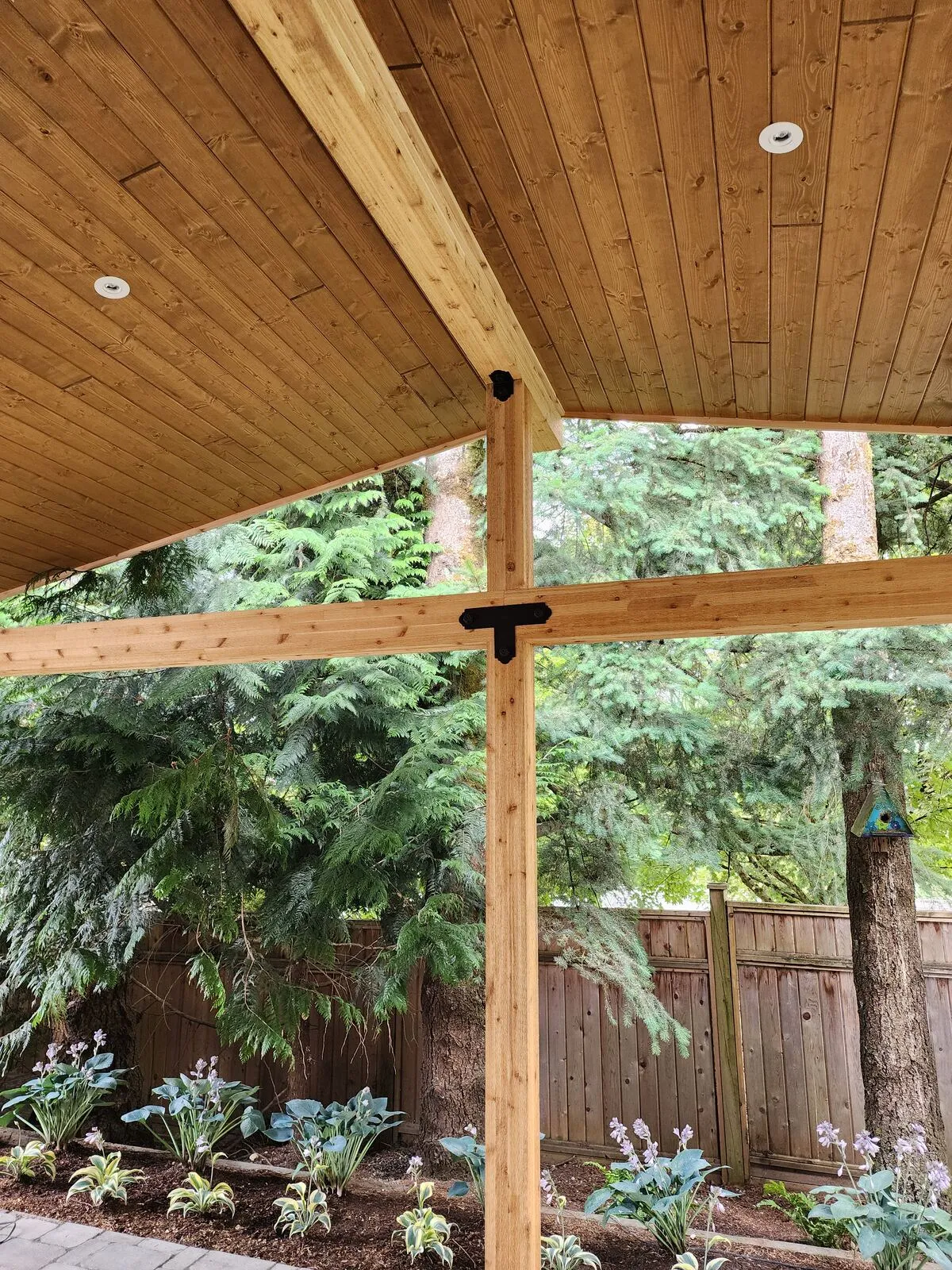
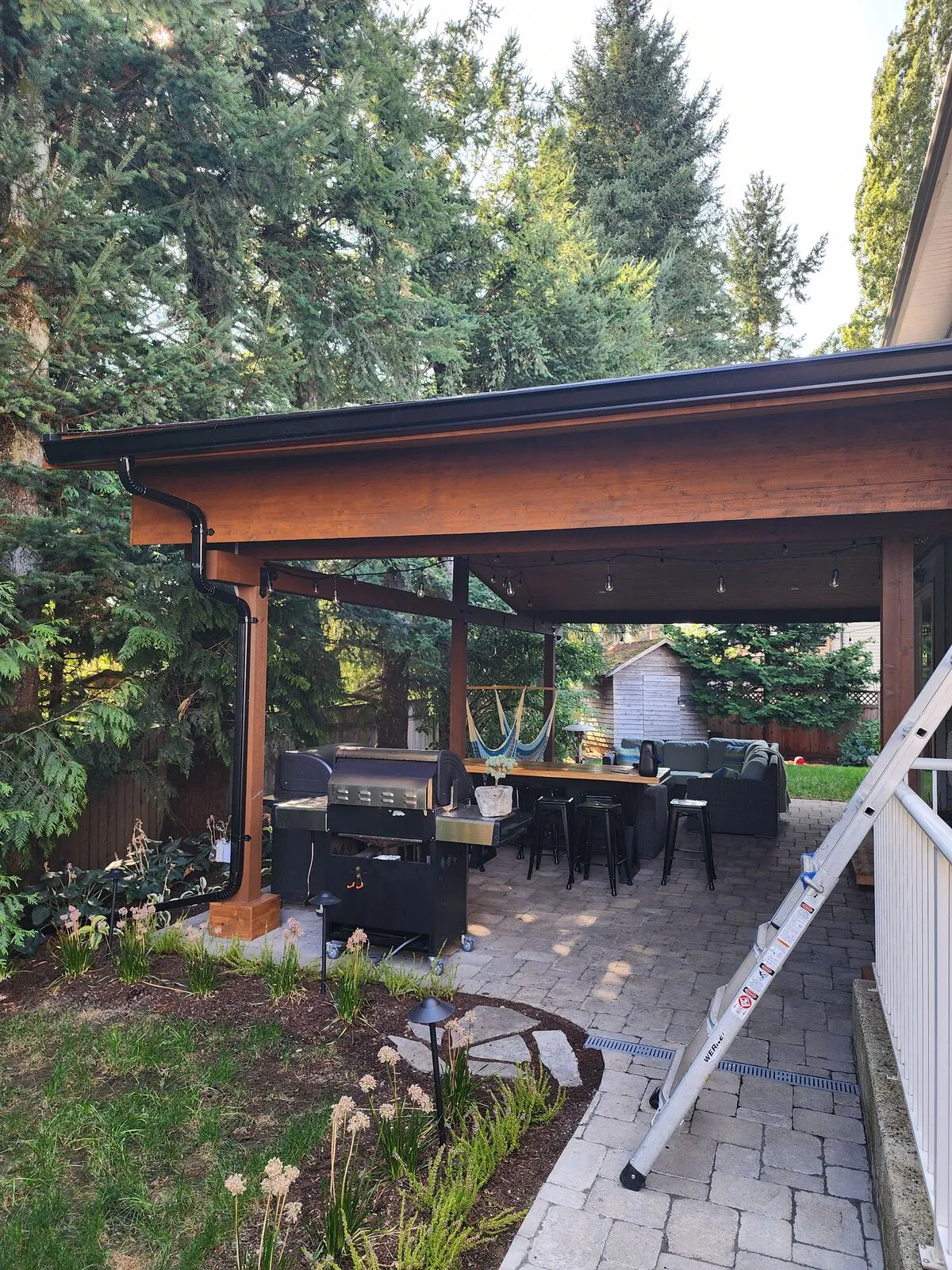
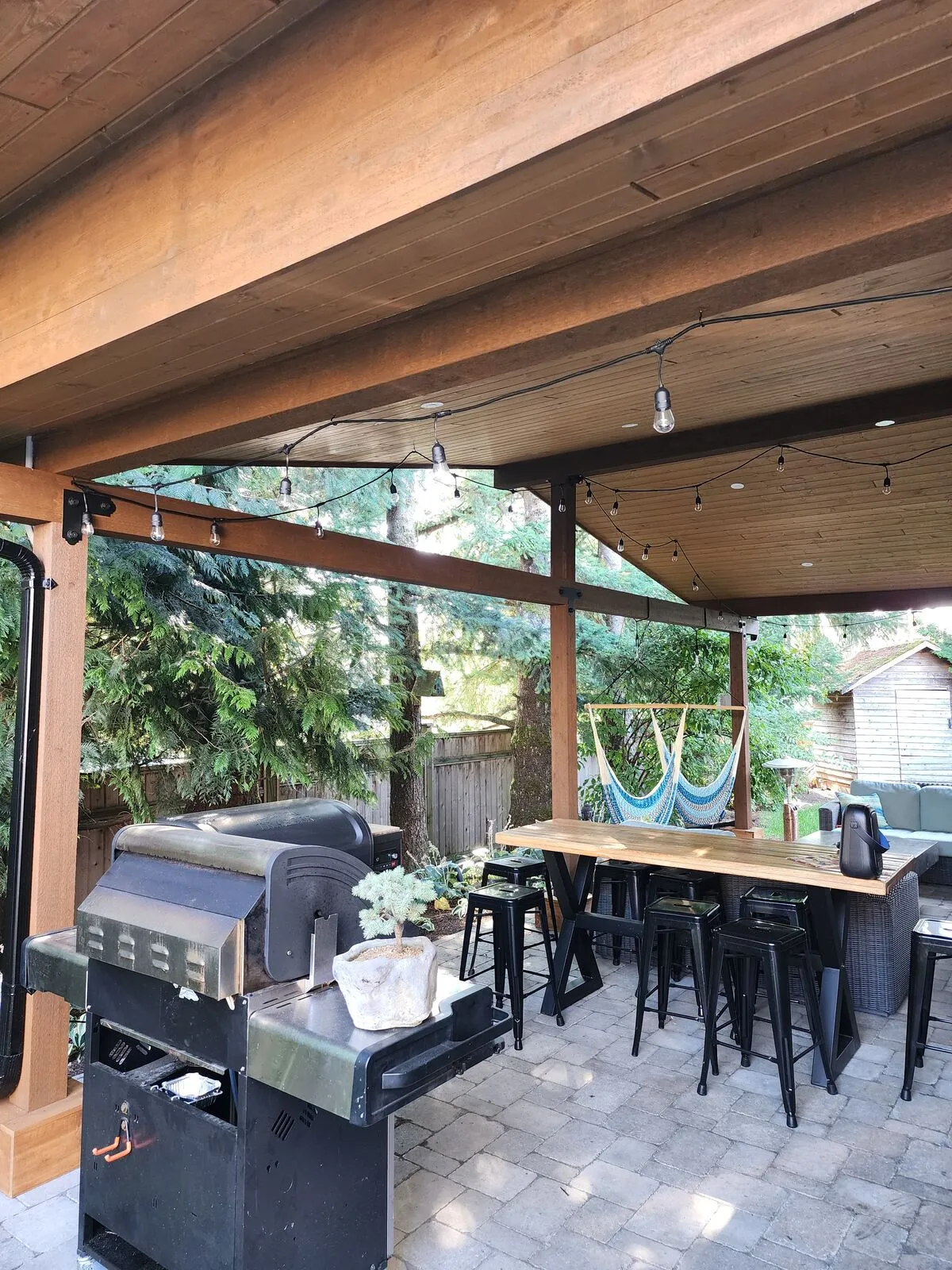
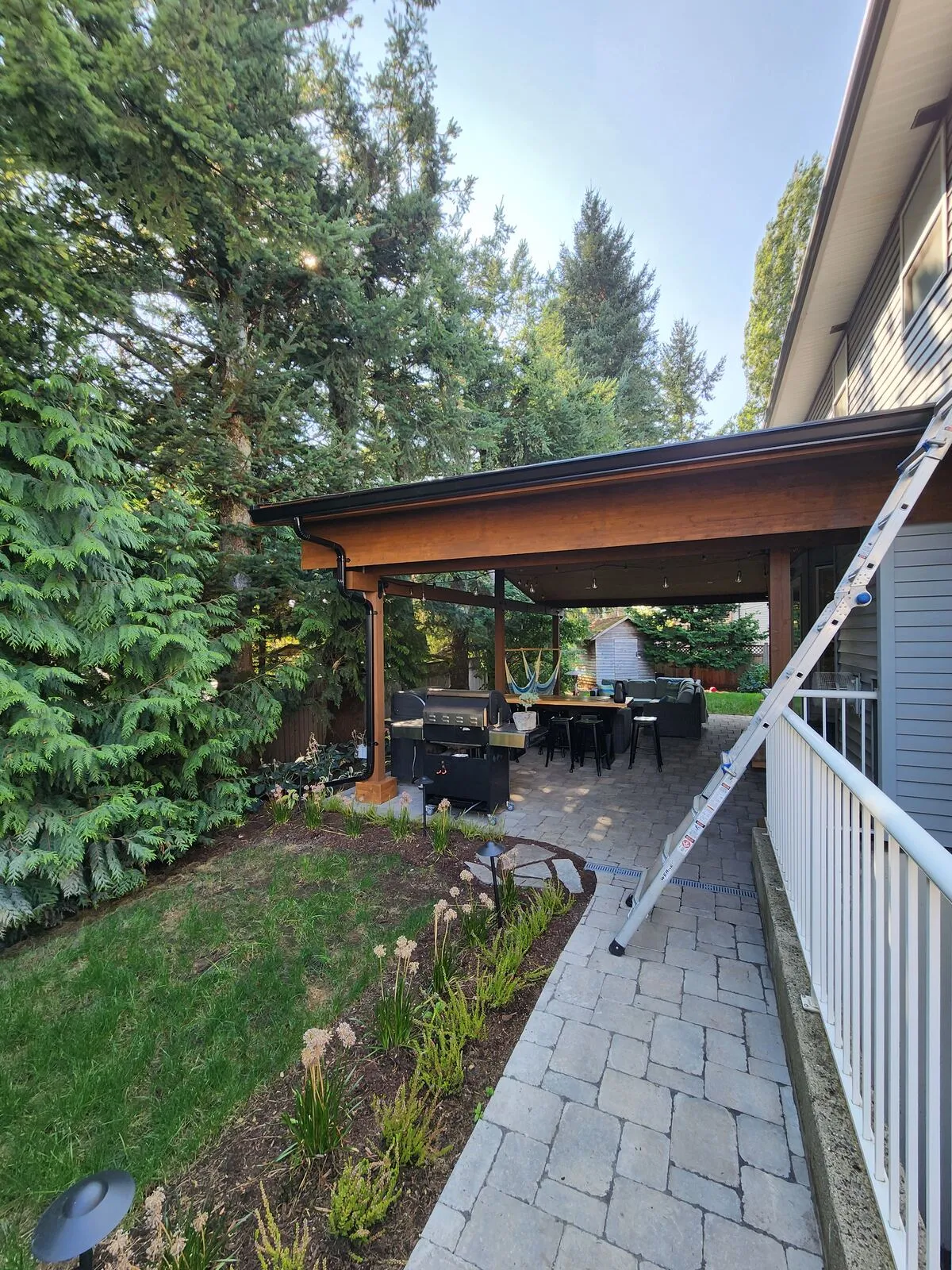
Finished cedar post-and-beam patio cover, stained warm amber — 6×6 cedar posts, exposed beams, T&G ceiling, string lights and a real outdoor room. Langley, BC.

Overview

The project in one paragraph

A full backyard transformation in Langley, BC — designed and built a covered cedar outdoor room from the ground up. Concrete footings, heavy 6×6 cedar post-and-beam frame, engineered trusses, and a clear cedar tongue-and-groove ceiling.

Where this project started

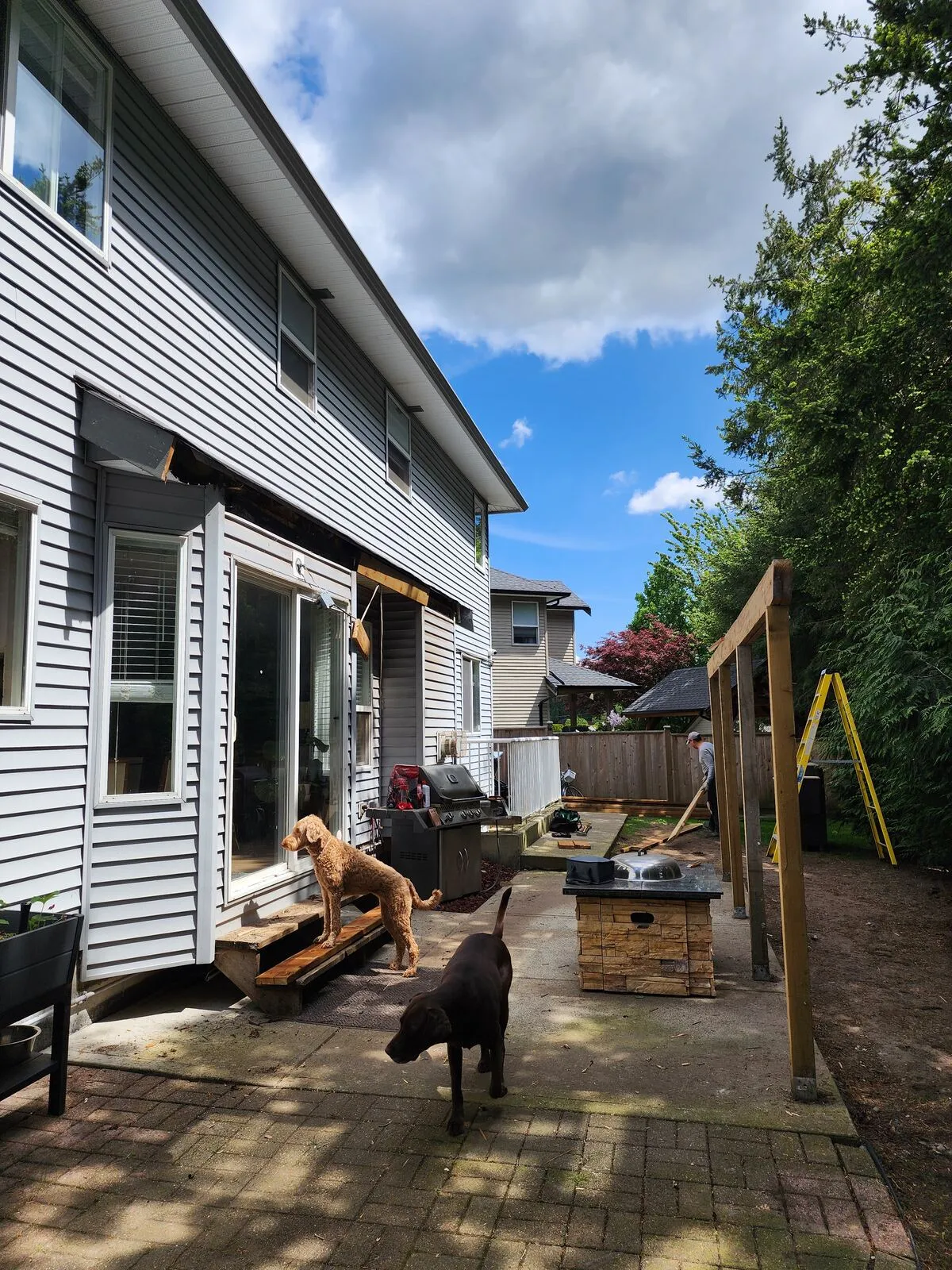
The homeowners had a small concrete patio off the back of the house with a tired little roof over part of it. They wanted to turn the whole back of the yard into a real outdoor room — somewhere the family could sit out of the rain in October, host friends in the summer, and let the dogs in and out without dragging mud through the house. We designed a full-size cedar post-and-beam patio cover from scratch and built it over about six weeks in May and June 2025.

Where this project started

Site prep and engineered footings

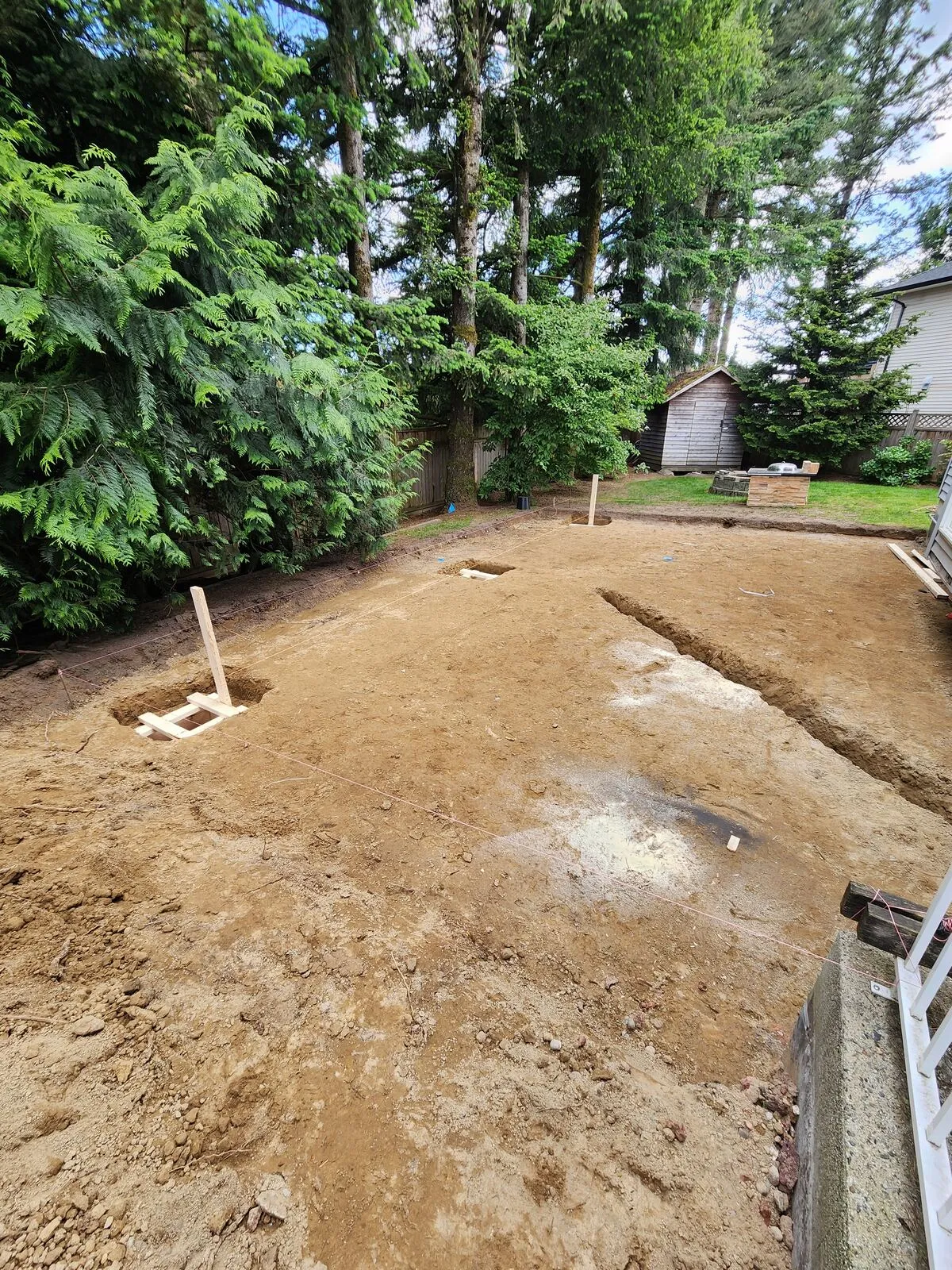
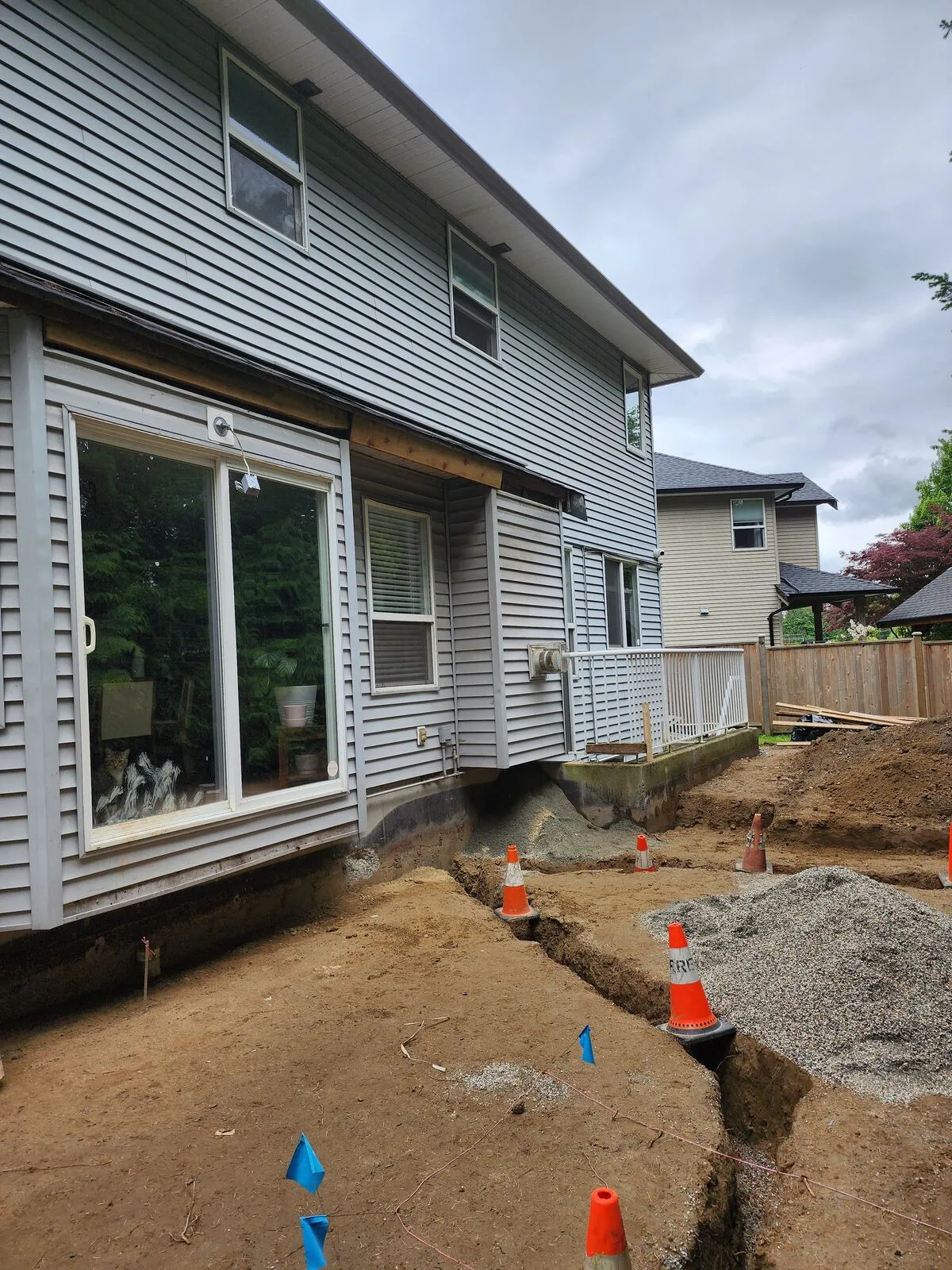
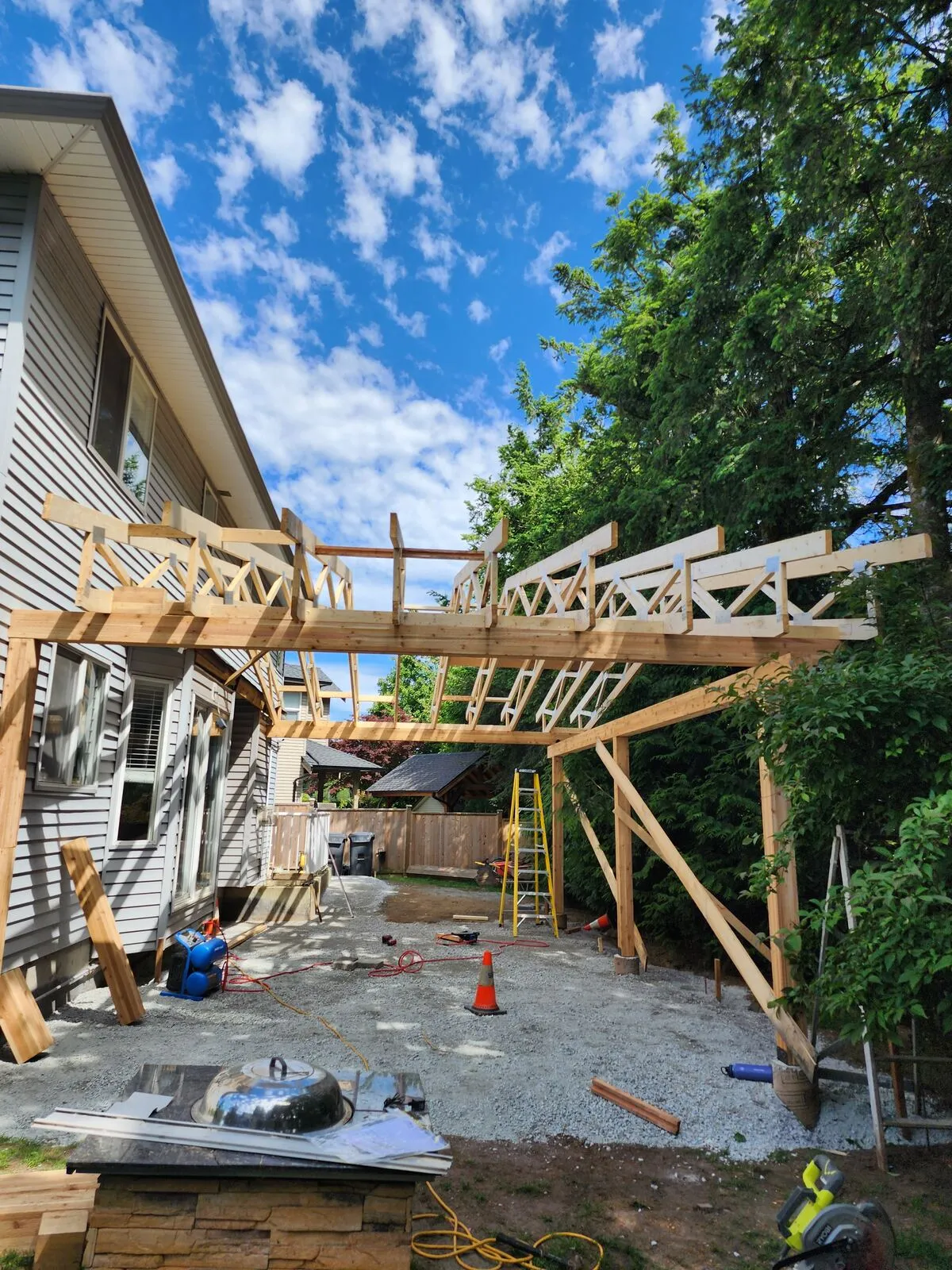
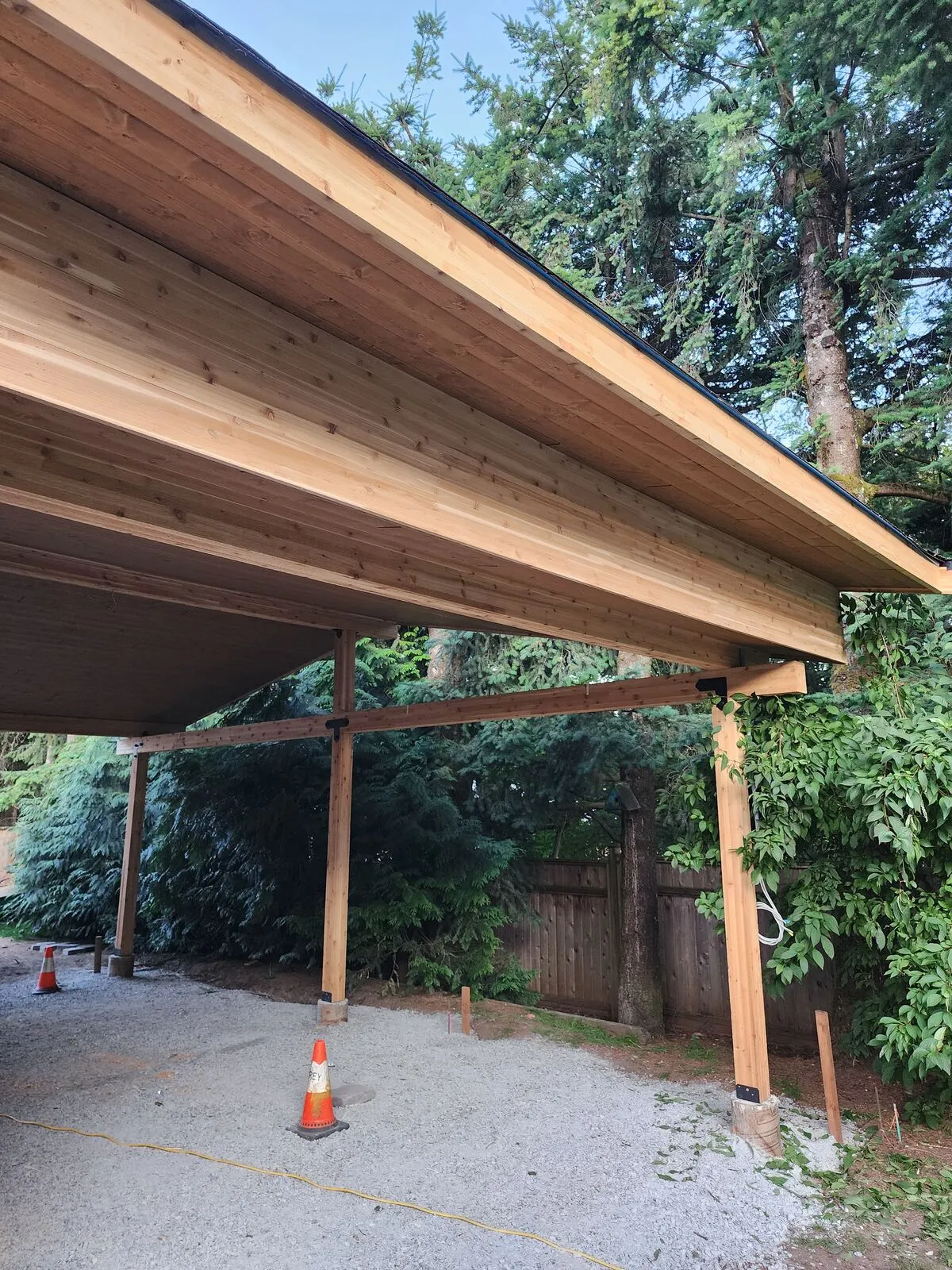
First step was clearing the old patio cover and laying out the new footprint. We marked the post locations from the engineered drawings, dug and formed Sonotube footings to the depths the engineer called for, and tied in rebar so each post sits on a proper concrete pier rather than just resting on the slab. At the same time we opened up the wall at the house to expose the rim joist where the new ledger would tie in.

Site prep and engineered footingsSite prep and engineered footings

Heavy 6×6 cedar post-and-beam frame

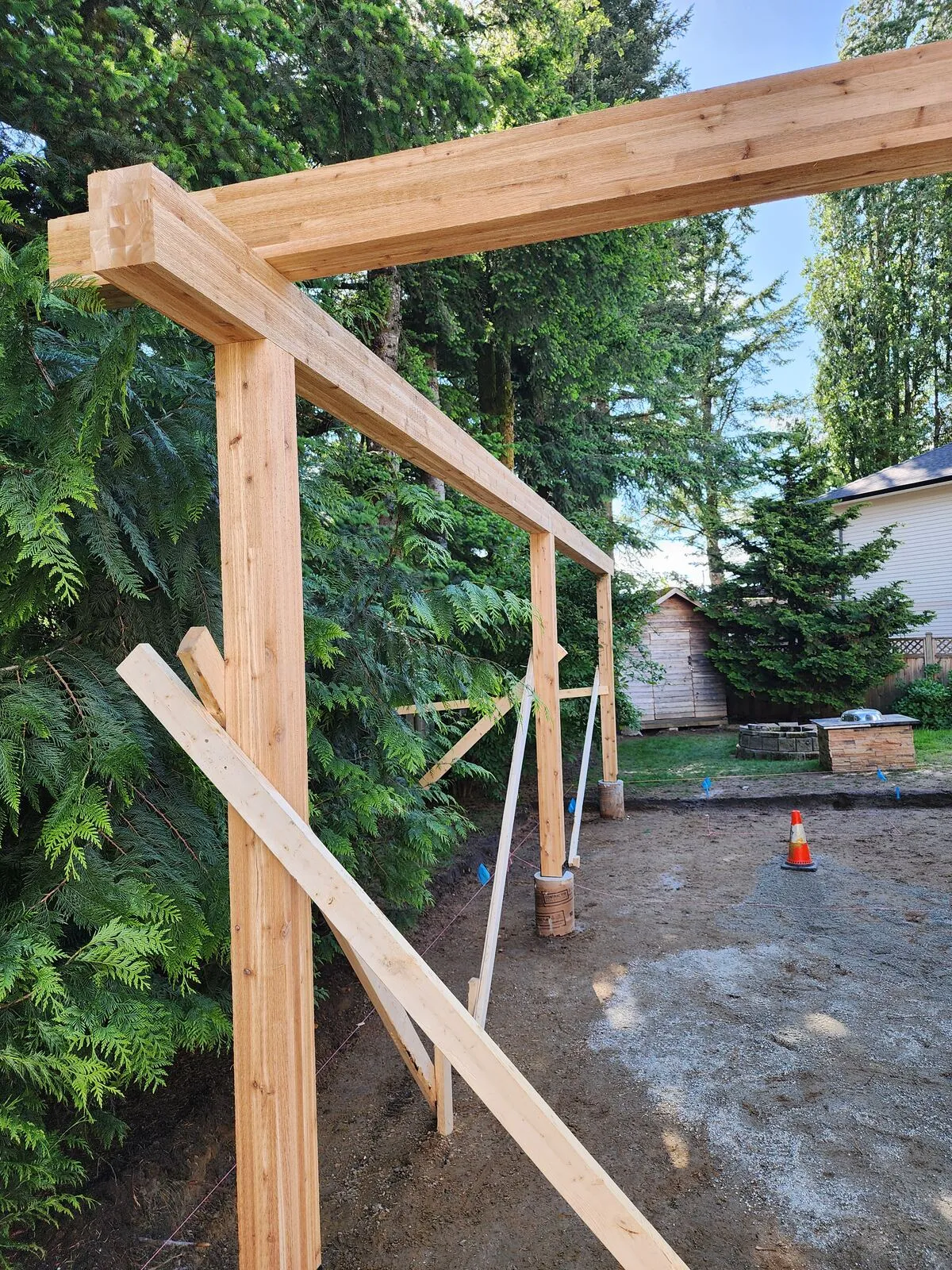
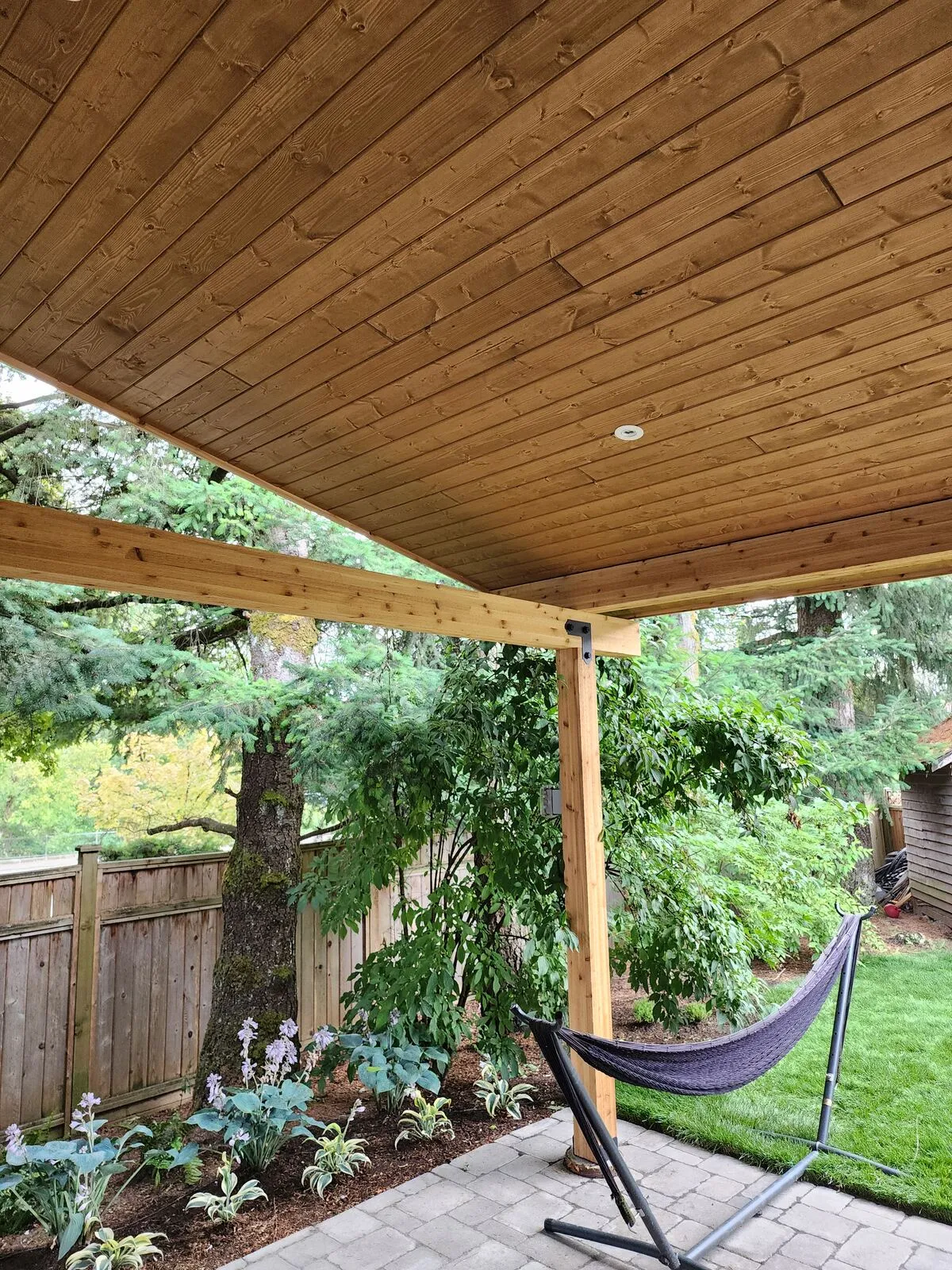
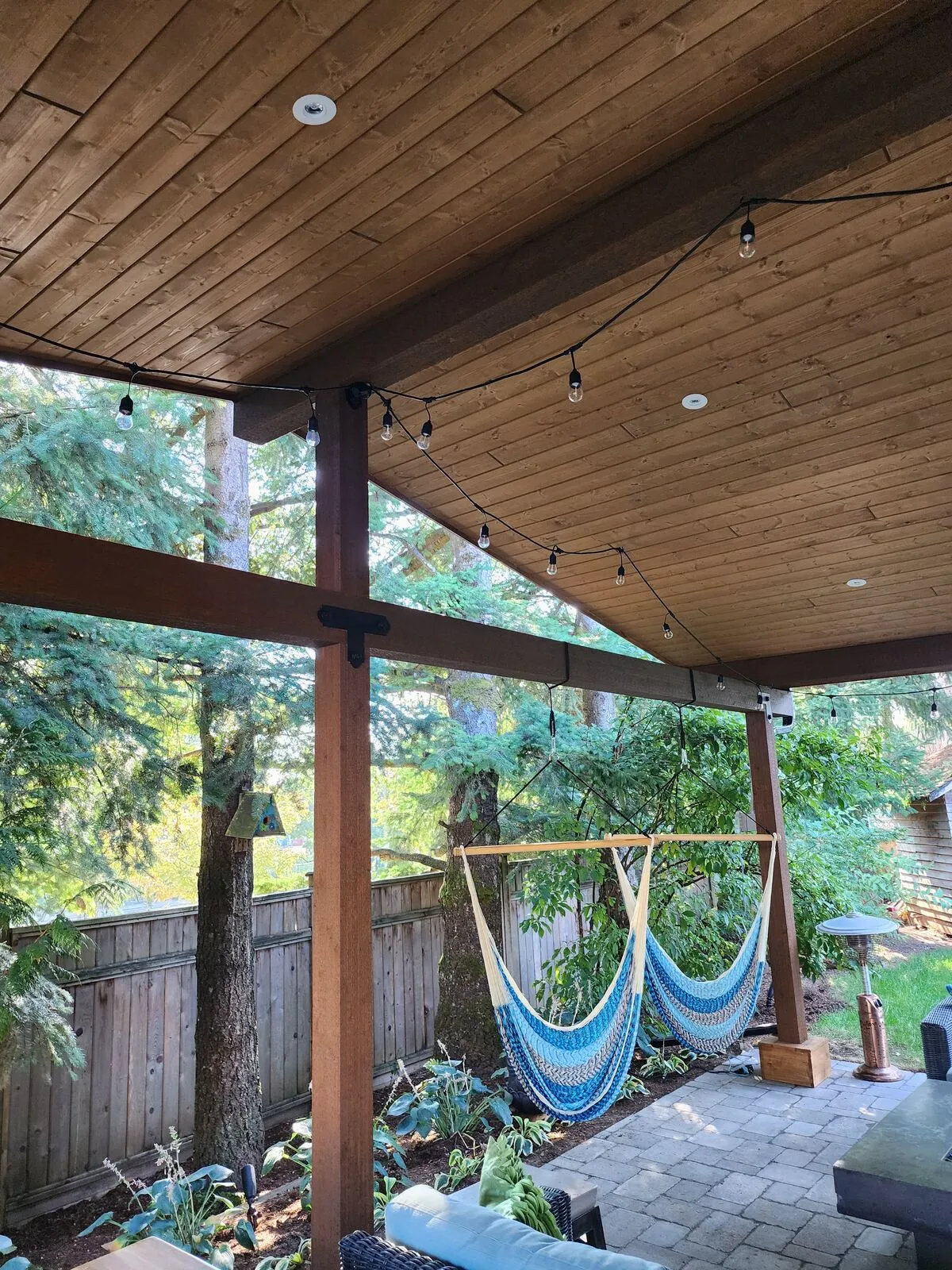
Once the footings cured we set the 6×6 western red cedar posts on engineered black metal post bases — those bases lift the posts off the concrete so end-grain never sits in water, which is what kills cedar posts over time. Beams came in next, joined to the posts with black steel knife-plate brackets concealed in saw kerfs through the beams. The result is a frame that's structural first and decorative second — the brackets and post bases are part of the look.

Heavy 6×6 cedar post-and-beam frameHeavy 6×6 cedar post-and-beam frame

Engineered trusses and roof deck

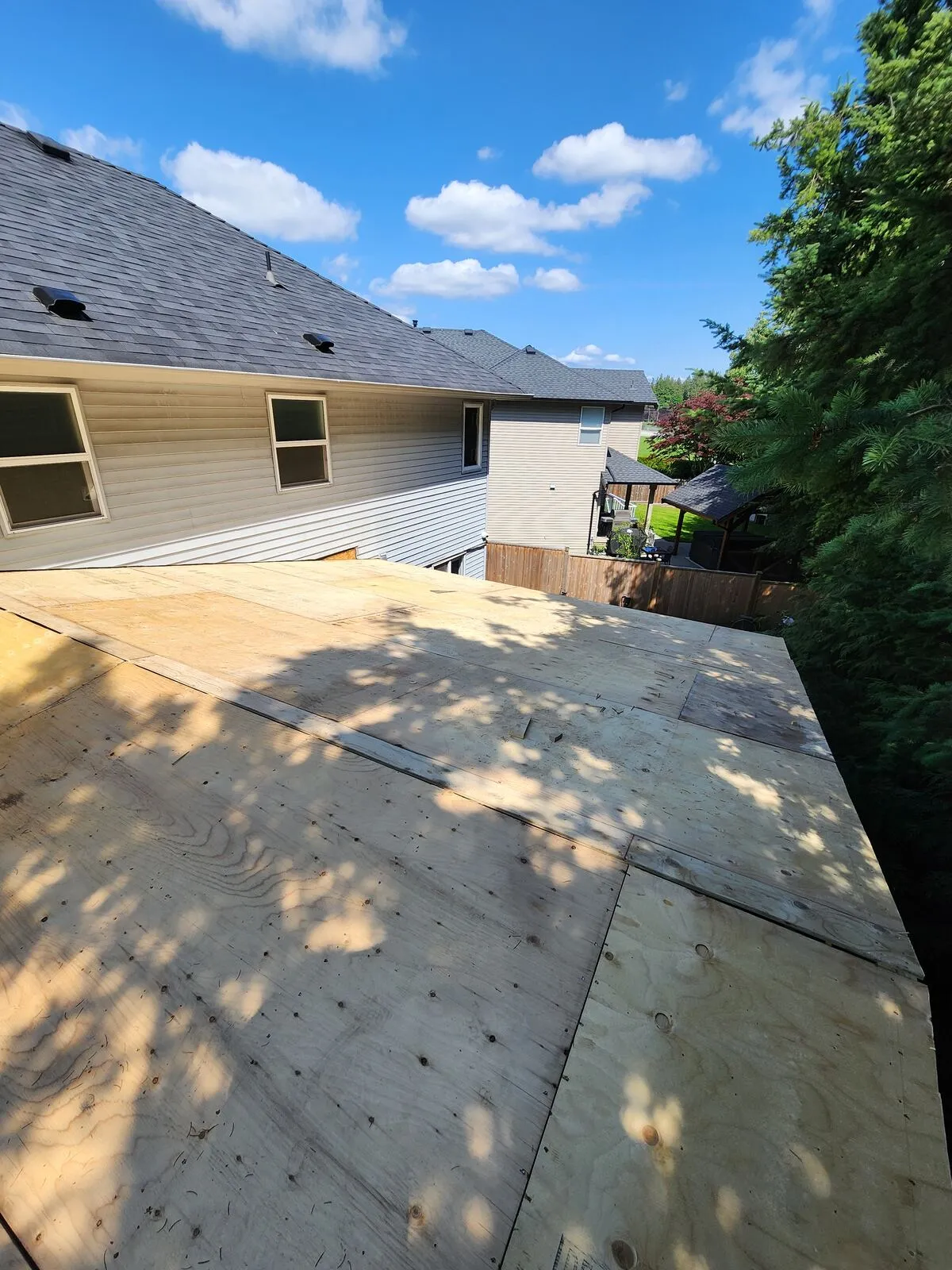
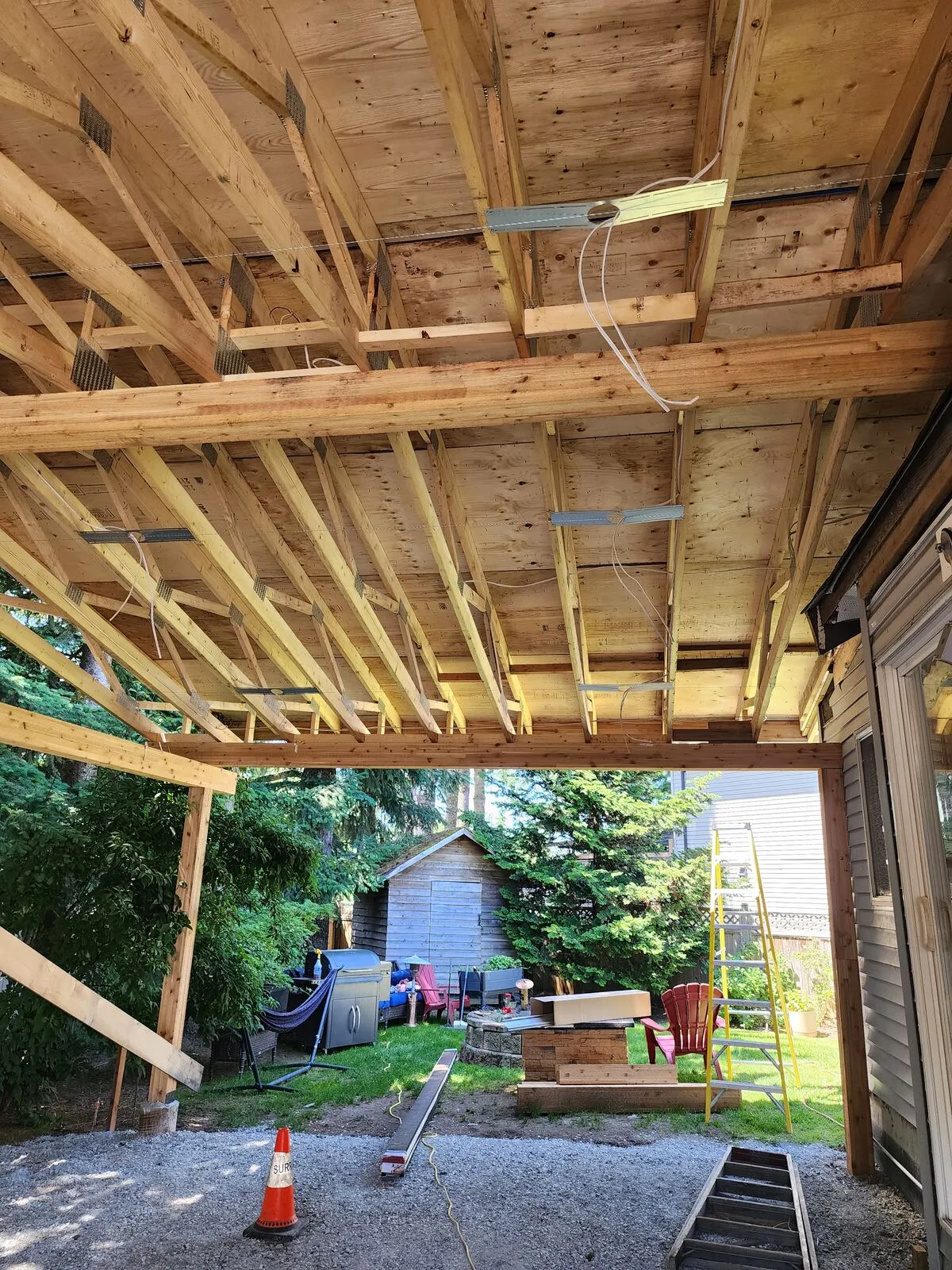
On top of the beams we set engineered open-web trusses to span the patio without intermediate posts. Trusses give you a strong, light roof structure and let us keep the underside open for a clean cedar ceiling. Once the trusses were tied down with hurricane ties, we sheathed the top in 5/8" plywood and ran a peel-and-stick underlayment so the structure was watertight before we touched the finish work.

Engineered trusses and roof deckEngineered trusses and roof deck

Cedar tongue-and-groove ceiling

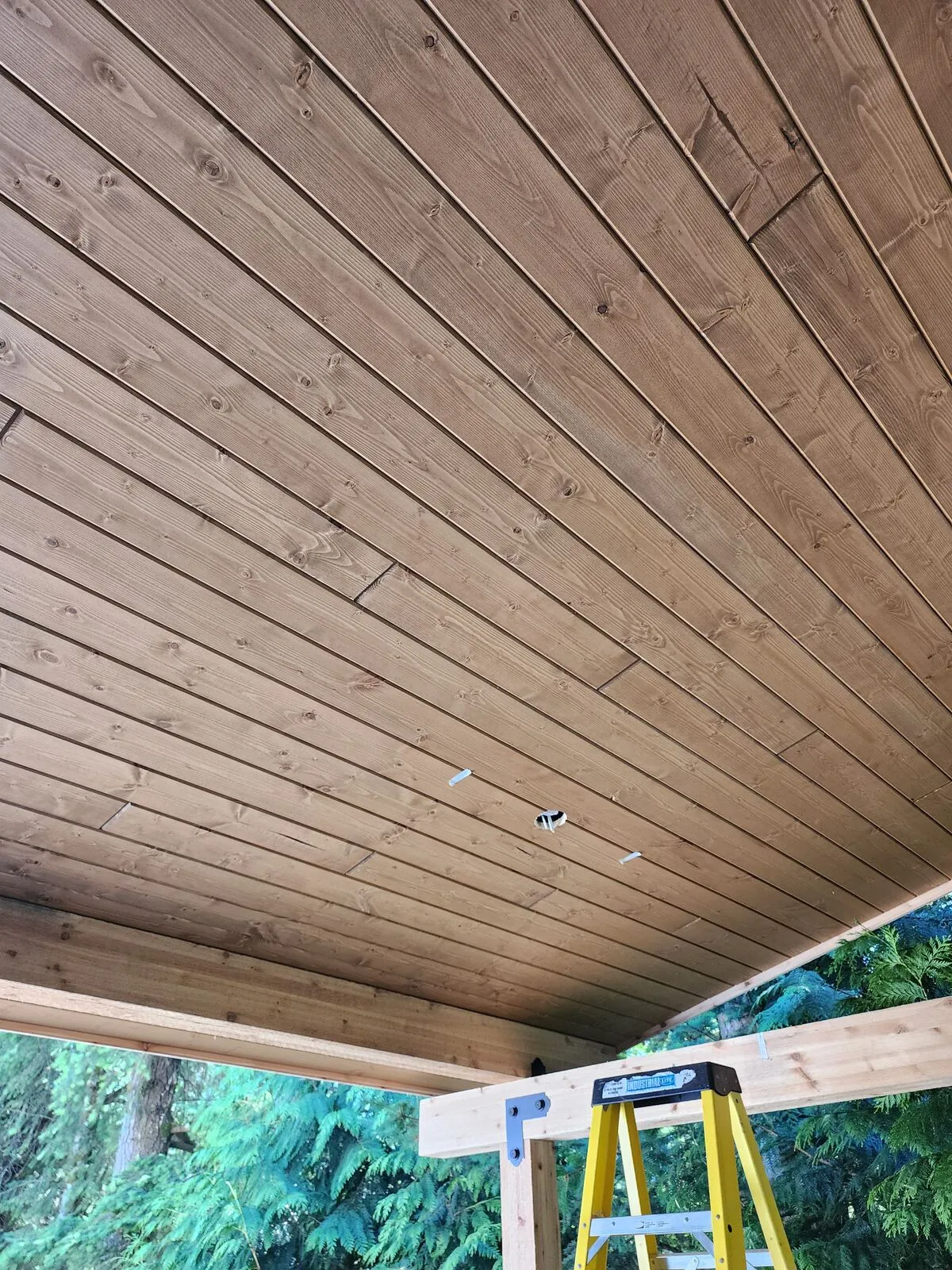
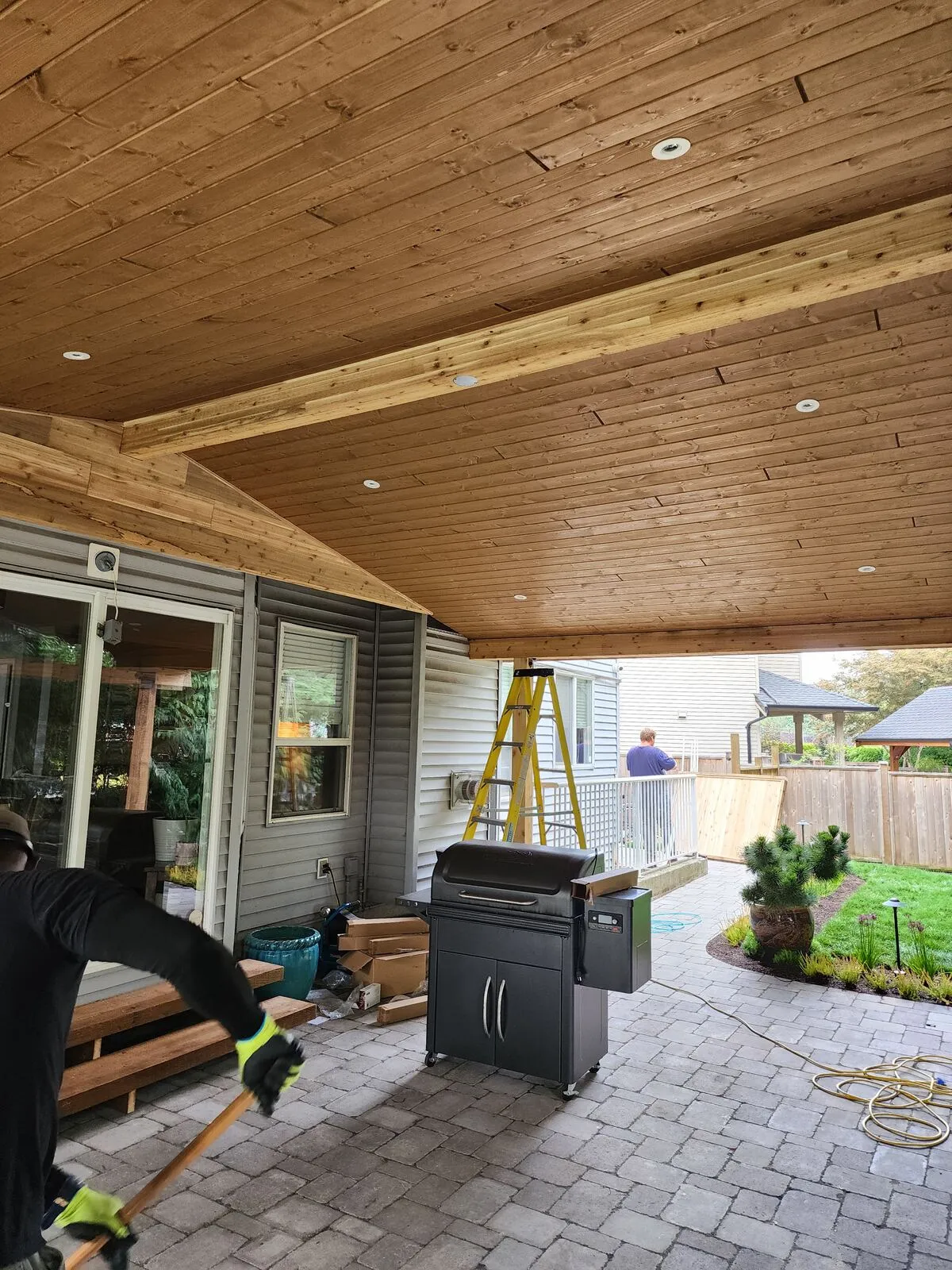
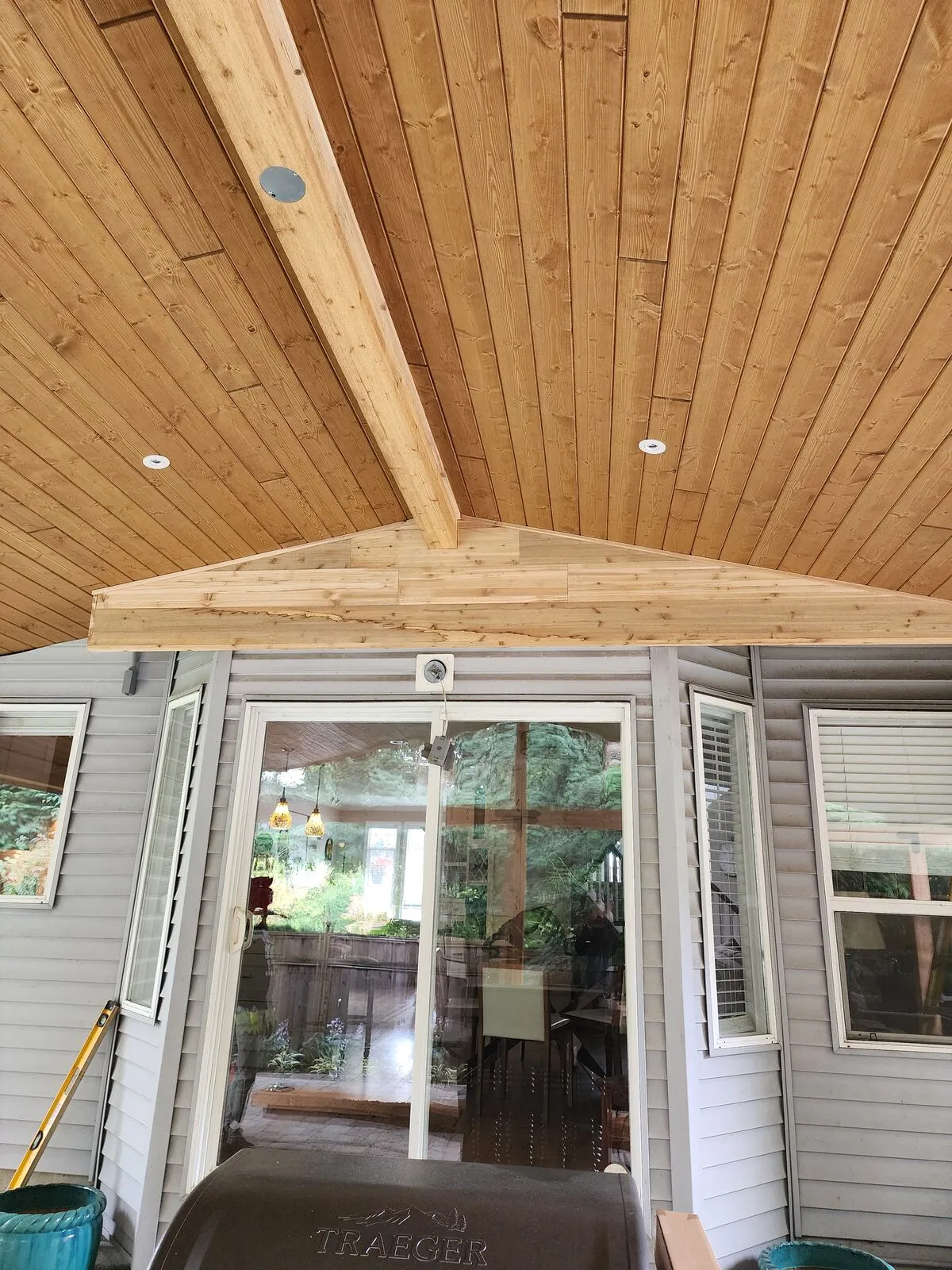
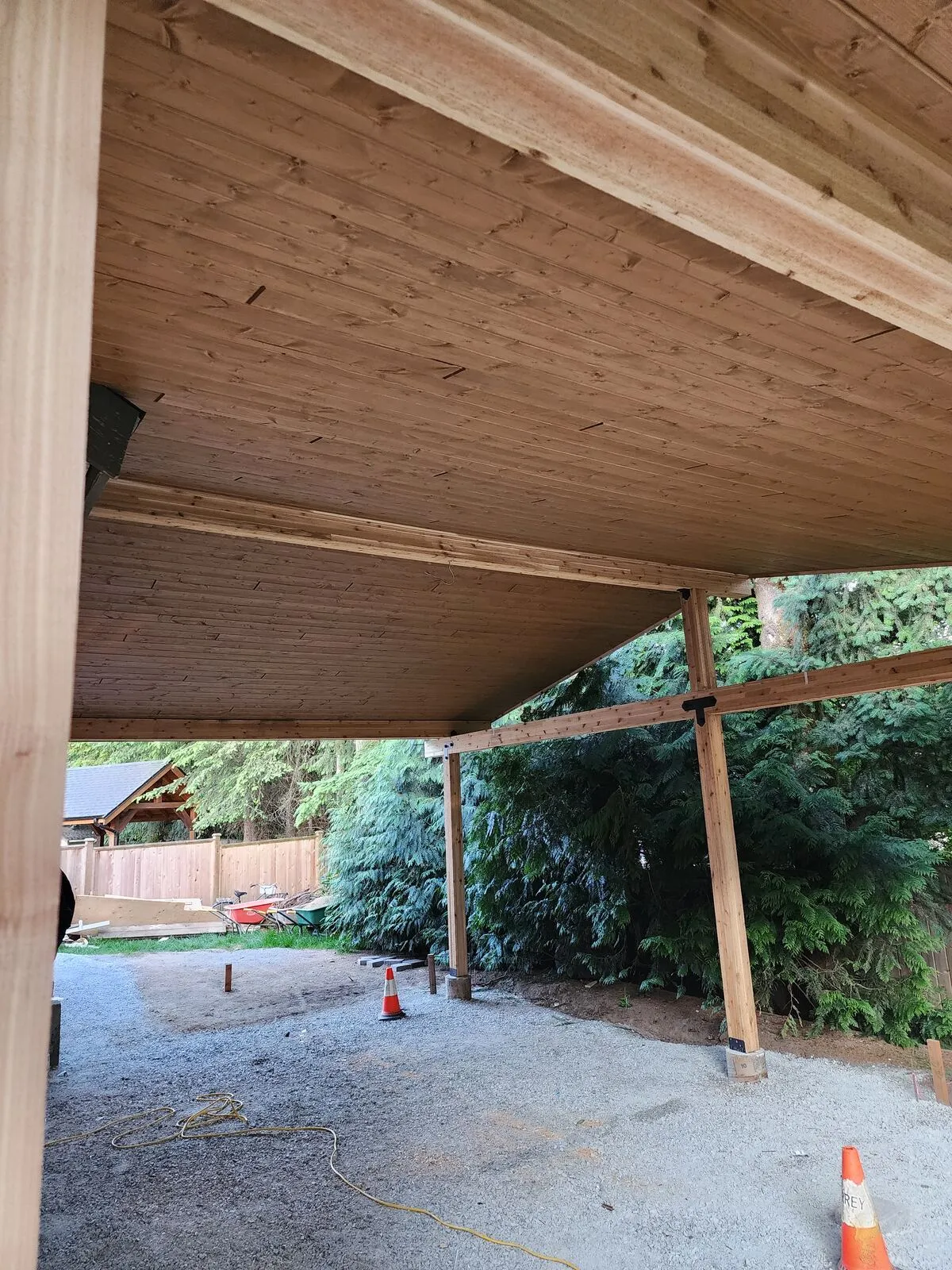
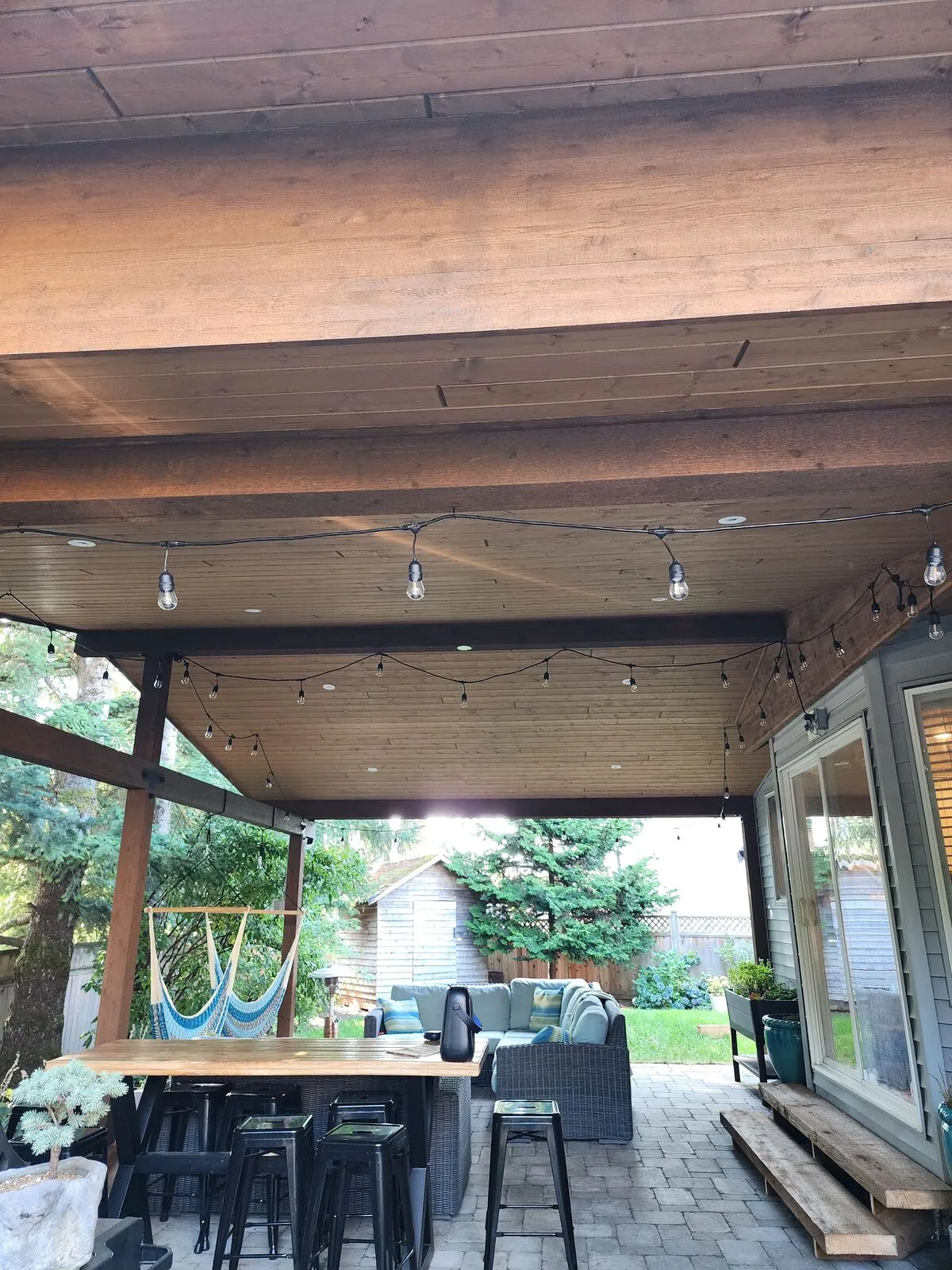
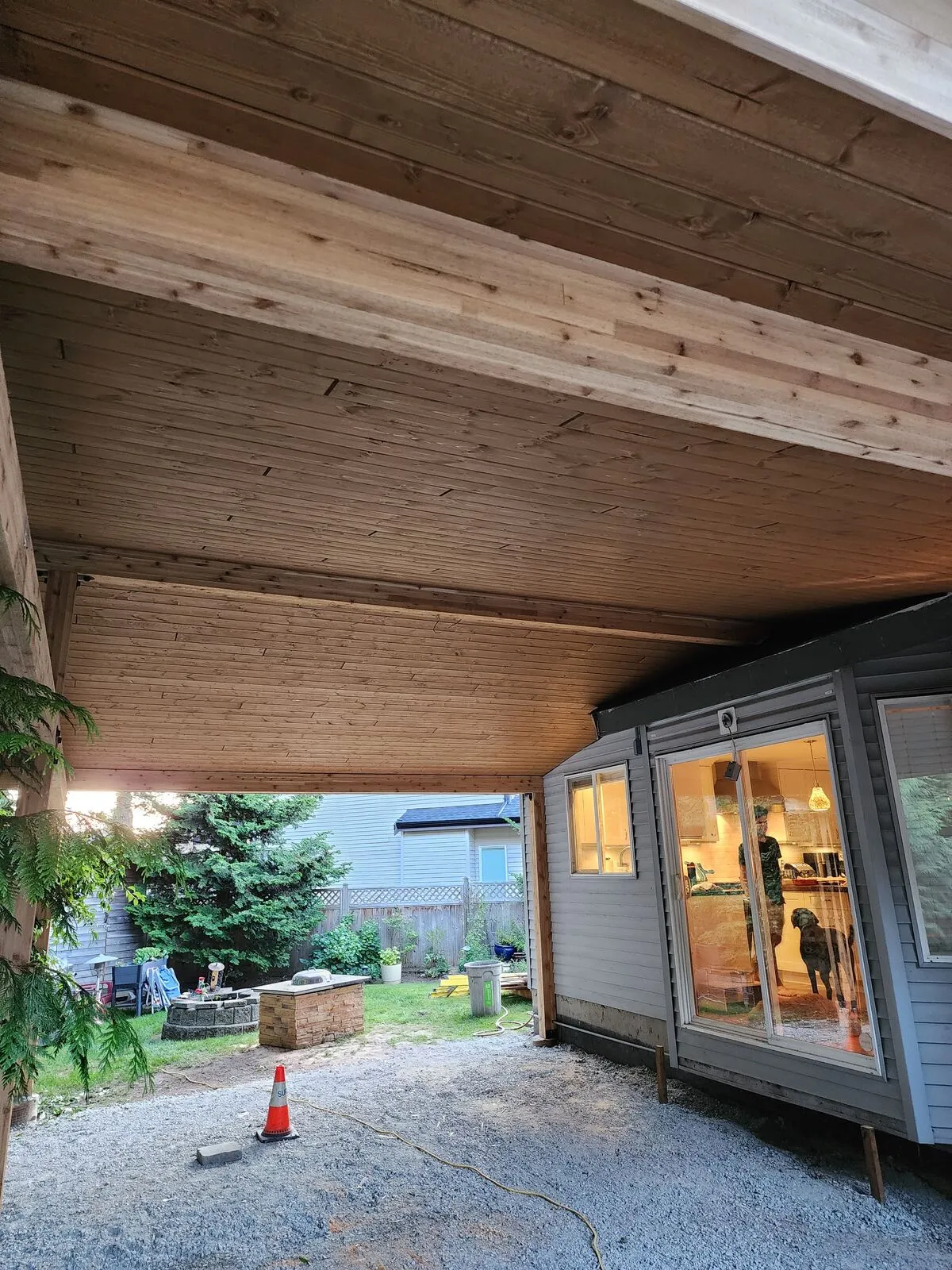
With the roof above watertight we worked from underneath, finishing the ceiling in western red cedar tongue-and-groove. Boards were blind-nailed through the tongue so no fasteners show on the finished face, and we picked the run direction to draw the eye out toward the yard. The hips and valleys where the ceiling planes meet get extra attention — every board ends on a clean mitre line so the geometry of the roof reads from underneath. Recessed LED pot lights were planned into the layout before any boards went up.

Cedar tongue-and-groove ceilingCedar tongue-and-groove ceilingCedar tongue-and-groove ceilingCedar tongue-and-groove ceilingCedar tongue-and-groove ceilingCedar tongue-and-groove ceiling

Custom solid-cedar bench steps off the slider

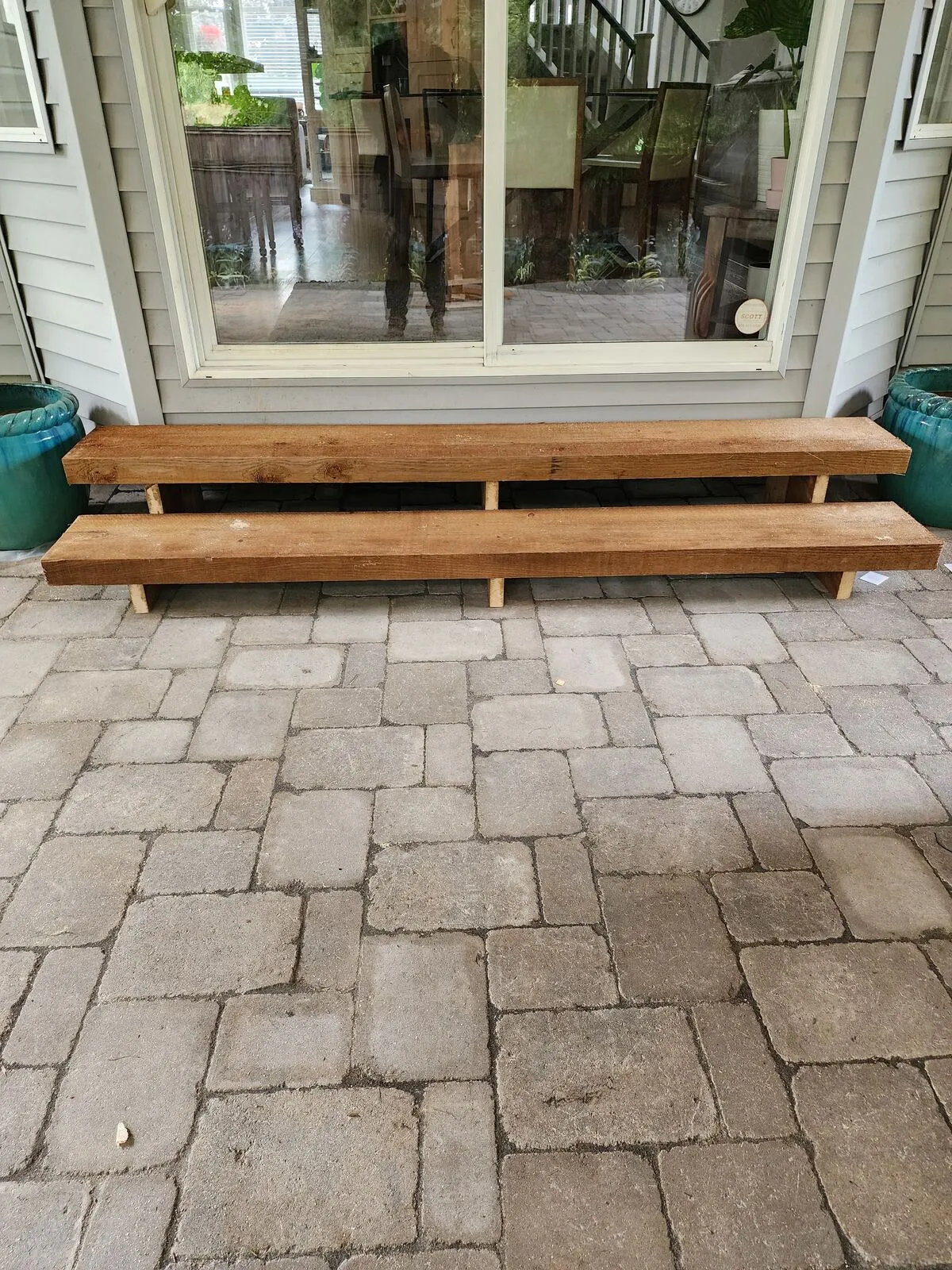
Rather than drop a stock pre-fab step at the slider, we built a pair of solid cedar timber bench steps from scratch — heavy 4×6 cedar treads on hidden cedar posts, sized to span the slider and double as casual seating. They sit free of the house so the pavers and slider flashing can drain properly, and they tie the door visually to the rest of the cedar in the structure.

Custom solid-cedar bench steps off the slider

Shingled roof, gutters and downspouts

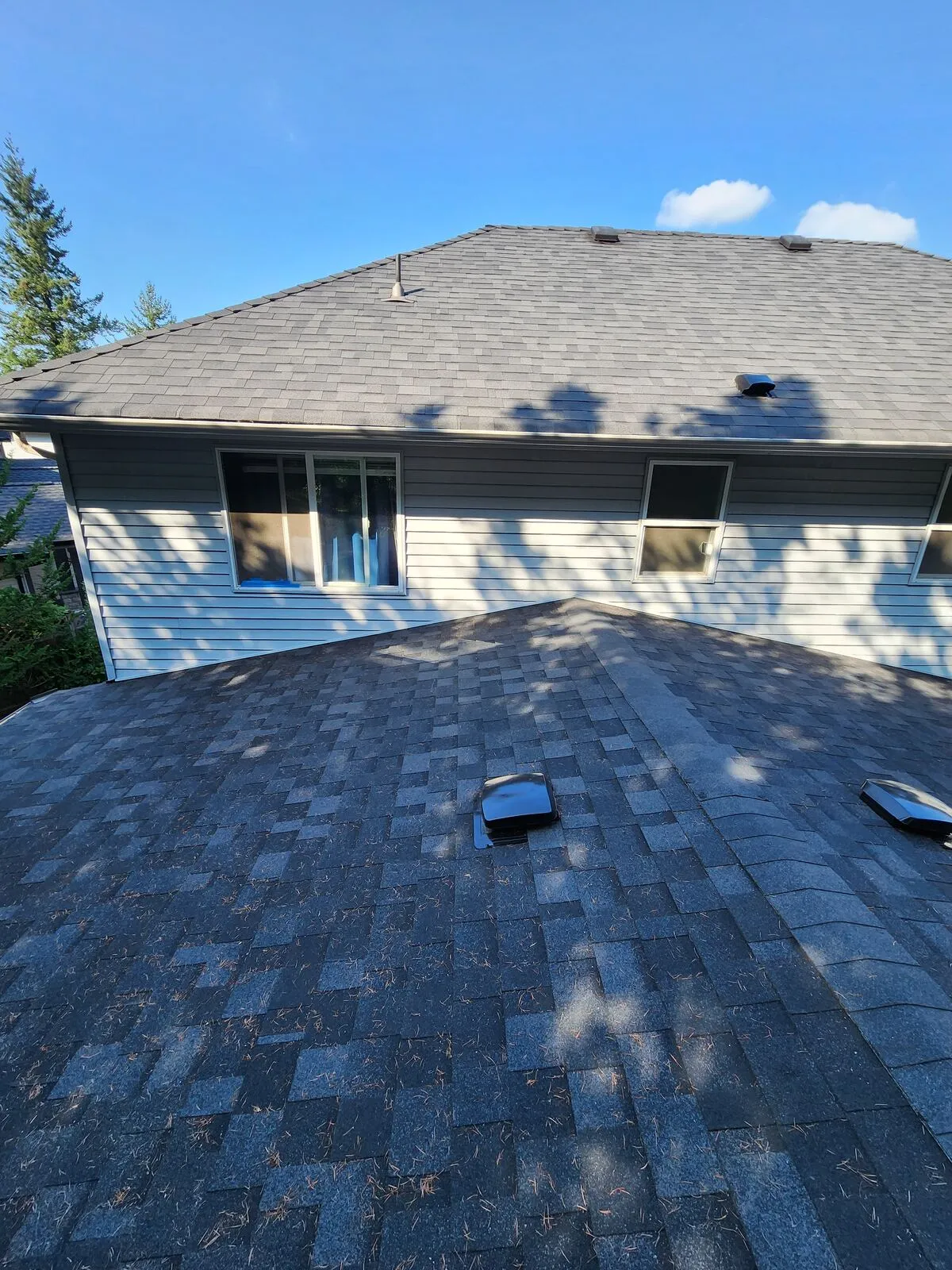
Above the cedar ceiling, the structure is a real weather-tight roof — architectural asphalt shingles laid over the underlayment, tied cleanly into the existing house roof line, with black aluminum gutters and downspouts running water away from the foundation. From the second-storey window upstairs the new roof reads as part of the original house rather than a bolt-on patio cover.

Shingled roof, gutters and downspouts

Stain, string lights and the finished outdoor room

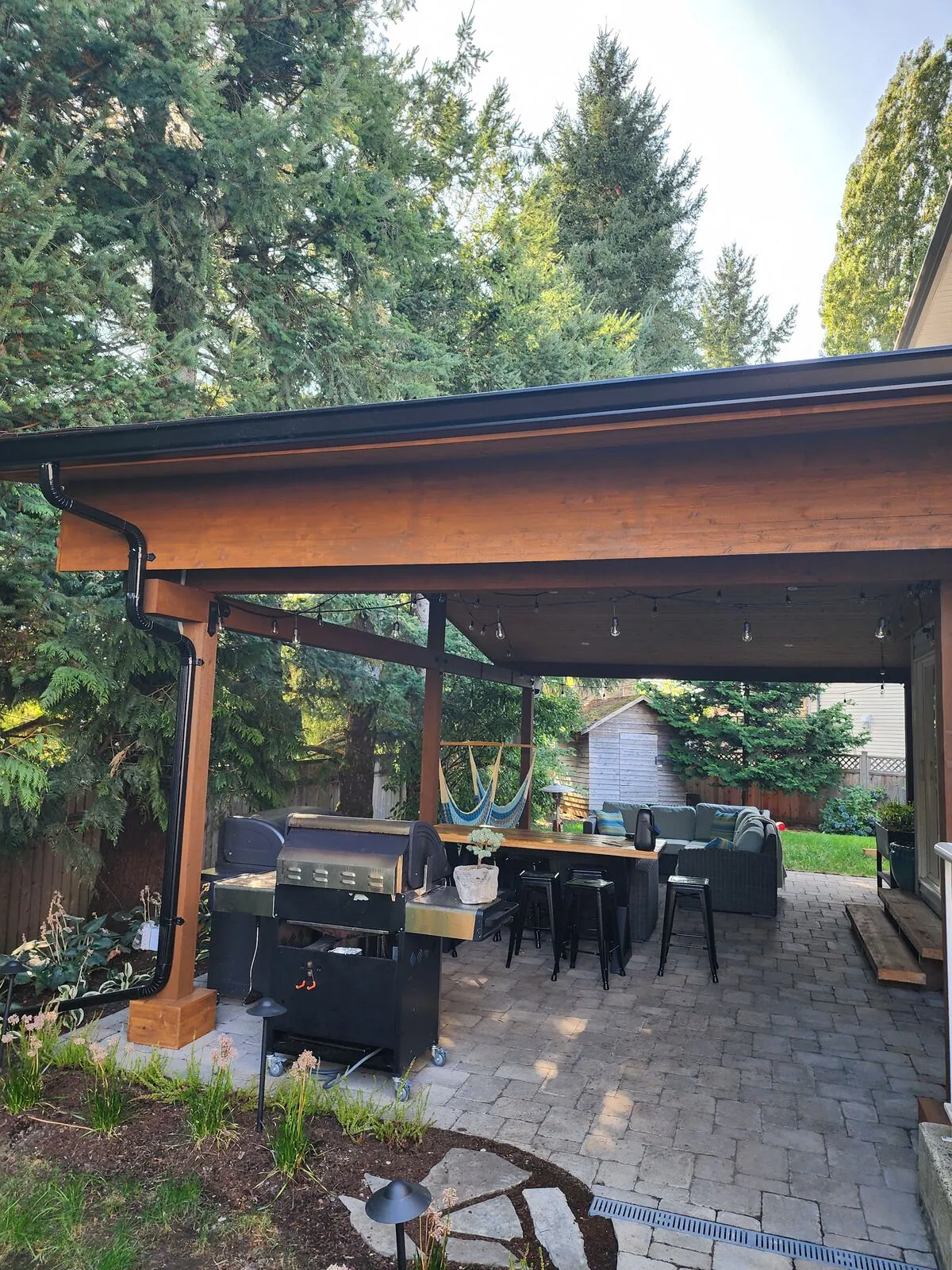
Once everything was structurally complete, the cedar got a warm amber semi-transparent stain — it deepens the natural tone, evens out the colour between the new cedar and the structural beams, and gives us a maintainable finish that protects against UV without hiding the grain. Recessed LED pot lights drop clean pools of light onto the dining and lounge areas, and Edison-bulb string lights swag across the lower beams for atmosphere. The family ended up with a full outdoor kitchen, dining bar, lounge and hammock corner — somewhere they actually live from May through October, and somewhere they can still sit out under cover in the wet months.

Stain, string lights and the finished outdoor roomStain, string lights and the finished outdoor roomStain, string lights and the finished outdoor roomStain, string lights and the finished outdoor roomStain, string lights and the finished outdoor roomStain, string lights and the finished outdoor roomStain, string lights and the finished outdoor roomStain, string lights and the finished outdoor room

Project Questions

FAQs about this build

Why use 6×6 cedar posts on metal bases instead of just sinking posts in concrete?

Sinking a wood post in concrete traps moisture against the end grain and the post will rot from the bottom up — usually within ten years on the wet coast. The engineered black metal post bases hold the cedar off the concrete with an air gap, so water drains away and the post stays dry. They're also structurally rated and let the engineer sign off on uplift and lateral loads. It costs a bit more in hardware, but the structure lasts a generation.

Did this need engineering and permits?

Yes. A free-standing or attached patio cover this size needs a building permit in Langley, and the township requires engineered drawings for the footings, posts, beams, and roof structure. We coordinated with the engineer up front, built to those drawings, and got it inspected at the framing and final stages. Permits and engineering are part of what protects the homeowner if anything ever comes up at resale or with insurance.

Why cedar tongue-and-groove instead of just painted plywood for the ceiling?

On a covered outdoor space, the ceiling is the surface you see most. Cedar T&G is dimensionally stable in our climate, naturally rot- and insect-resistant, and reads as a finished interior material — it makes the space feel like an outdoor room rather than a glorified carport. Blind-nailed through the tongue, there are no fasteners showing on the finished face.

Why stain the cedar instead of leaving it natural?

Left raw on a covered patio, cedar slowly fades to a patchy grey and the ceiling and beams drift apart in colour as the new wood ages at different rates from the structural timbers. A semi-transparent amber stain unifies the tone, blocks the UV that causes the greying, and gives us a finish we can maintain on a normal recoat schedule rather than having to refinish from scratch. The grain still reads through — it's a stain, not paint.

How long did the build take and how disruptive was it?

From clearing the old patio in May through the cedar ceiling, custom bench steps and final stain in early fall 2025. The work was all in the backyard so the family kept full use of the house throughout — the only disruption was the few days we opened up the wall to tie in the ledger, which we sealed up at the end of each day.

Want something similar?

If you've got a sloped yard, failing pavers or drainage issues, that's a project we'd be glad to look at. Free site visit and honest scope.

Get a Free Quote Call 778-229-9351