Laying out the new pad on a tired side yard
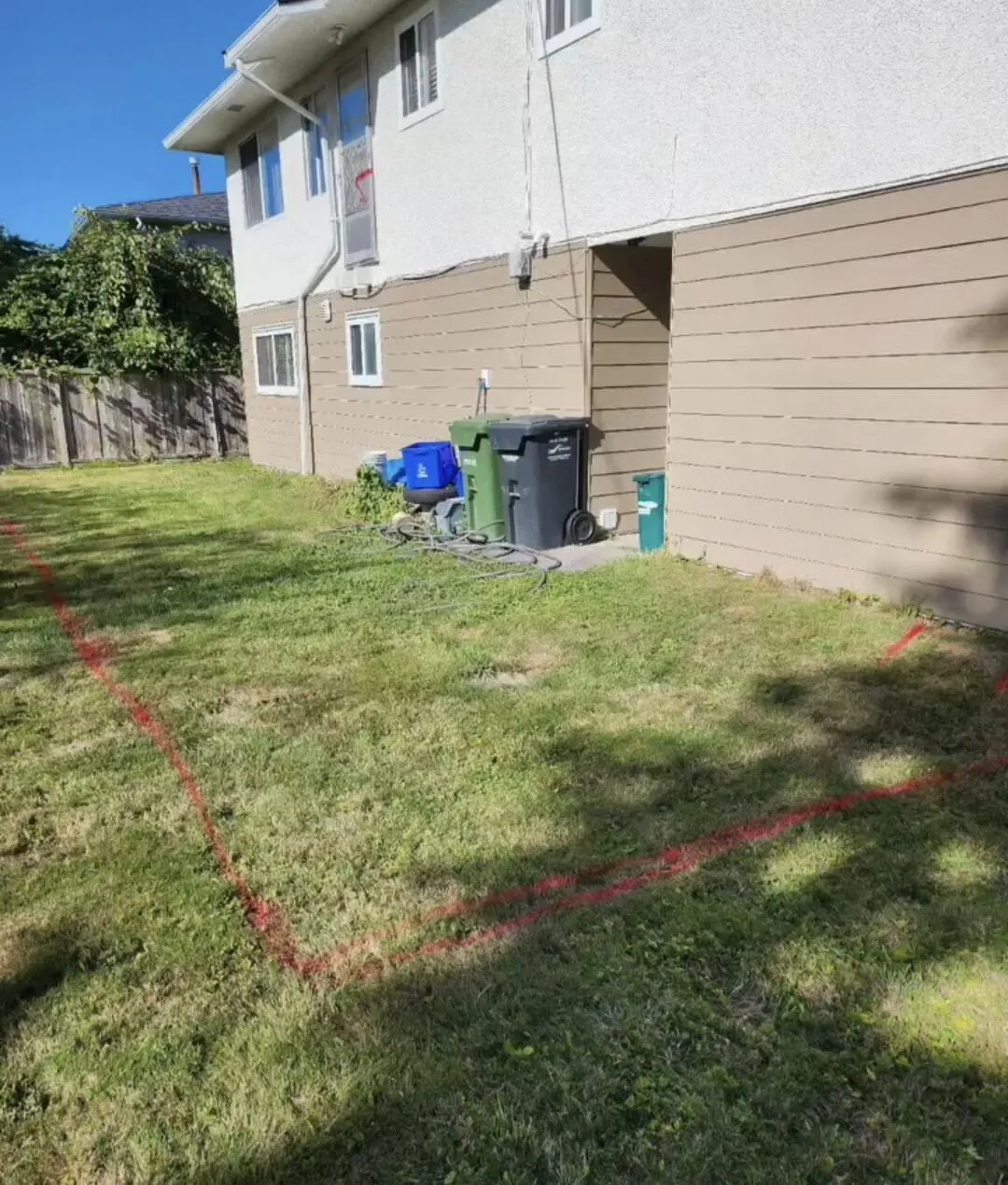
The starting point in Richmond was a tired side yard with patchy grass running down the gap between the house and the fence, and the upper deck off the back of the house overhanging an unfinished area below. We marked the full footprint of the new concrete in spray paint right on the lawn so the homeowners could walk the edges and confirm exactly how much usable patio they were going to get before we cut a single shovel of sod.
Excavating, gravel base and structural post footings
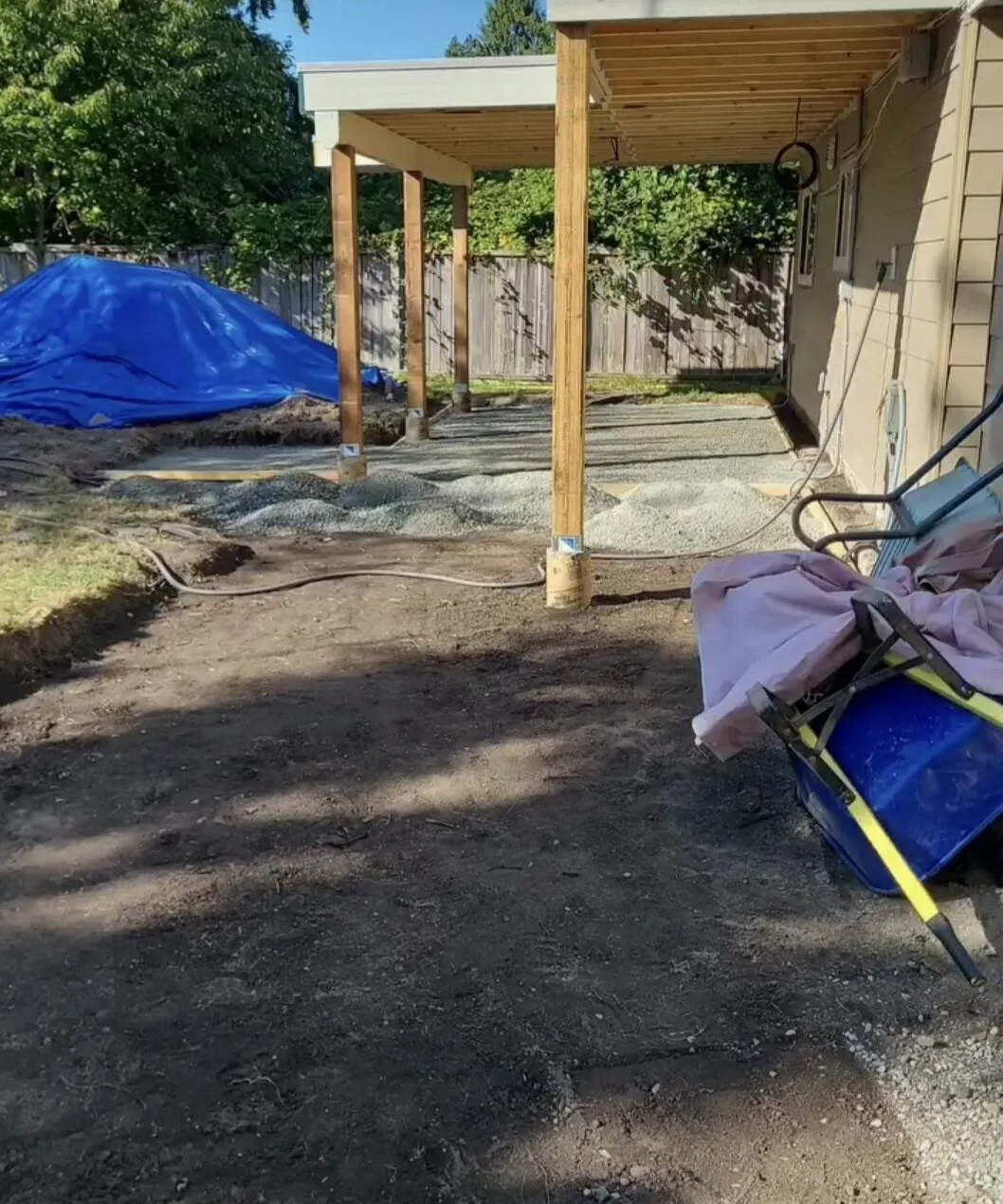
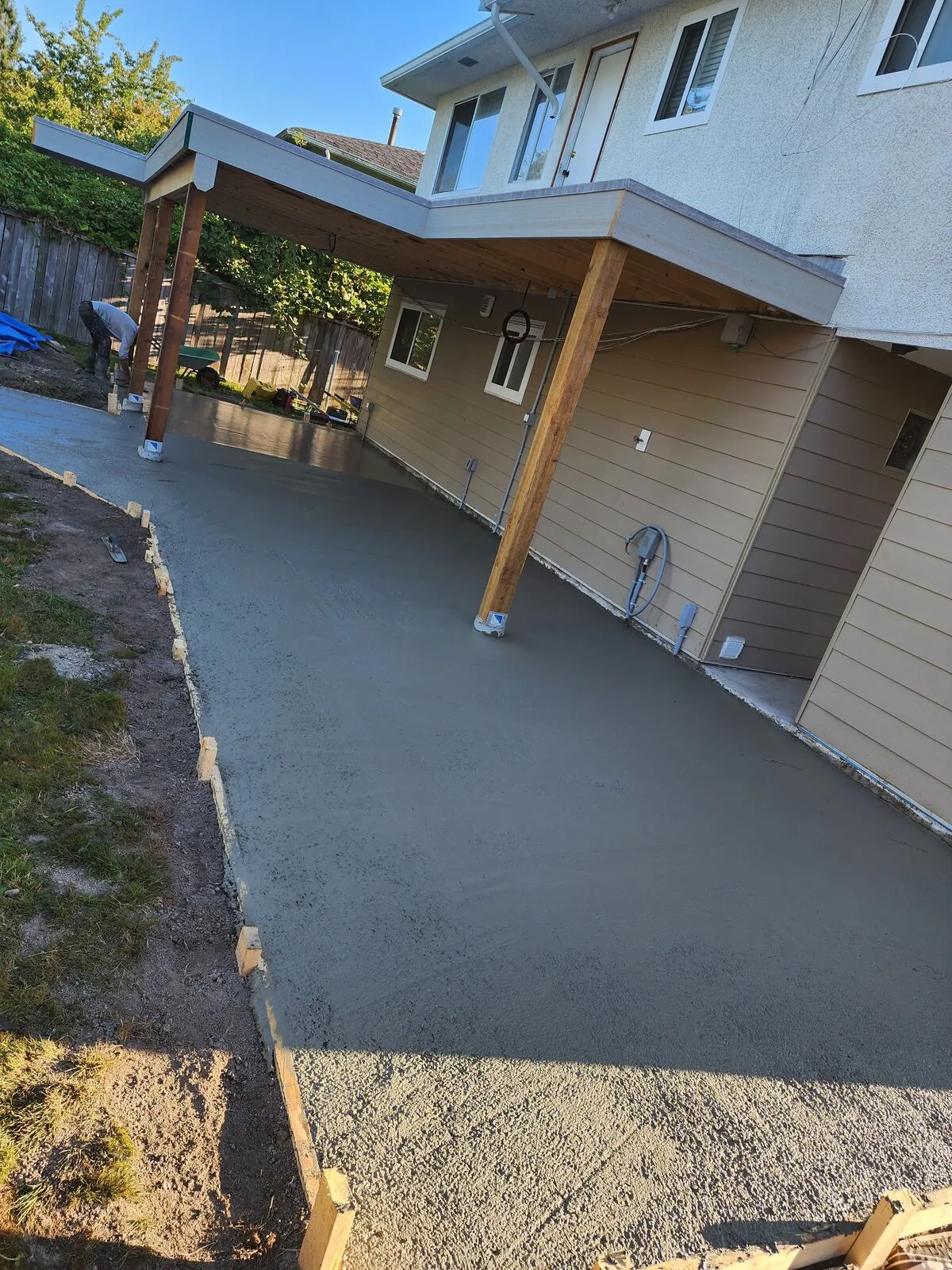
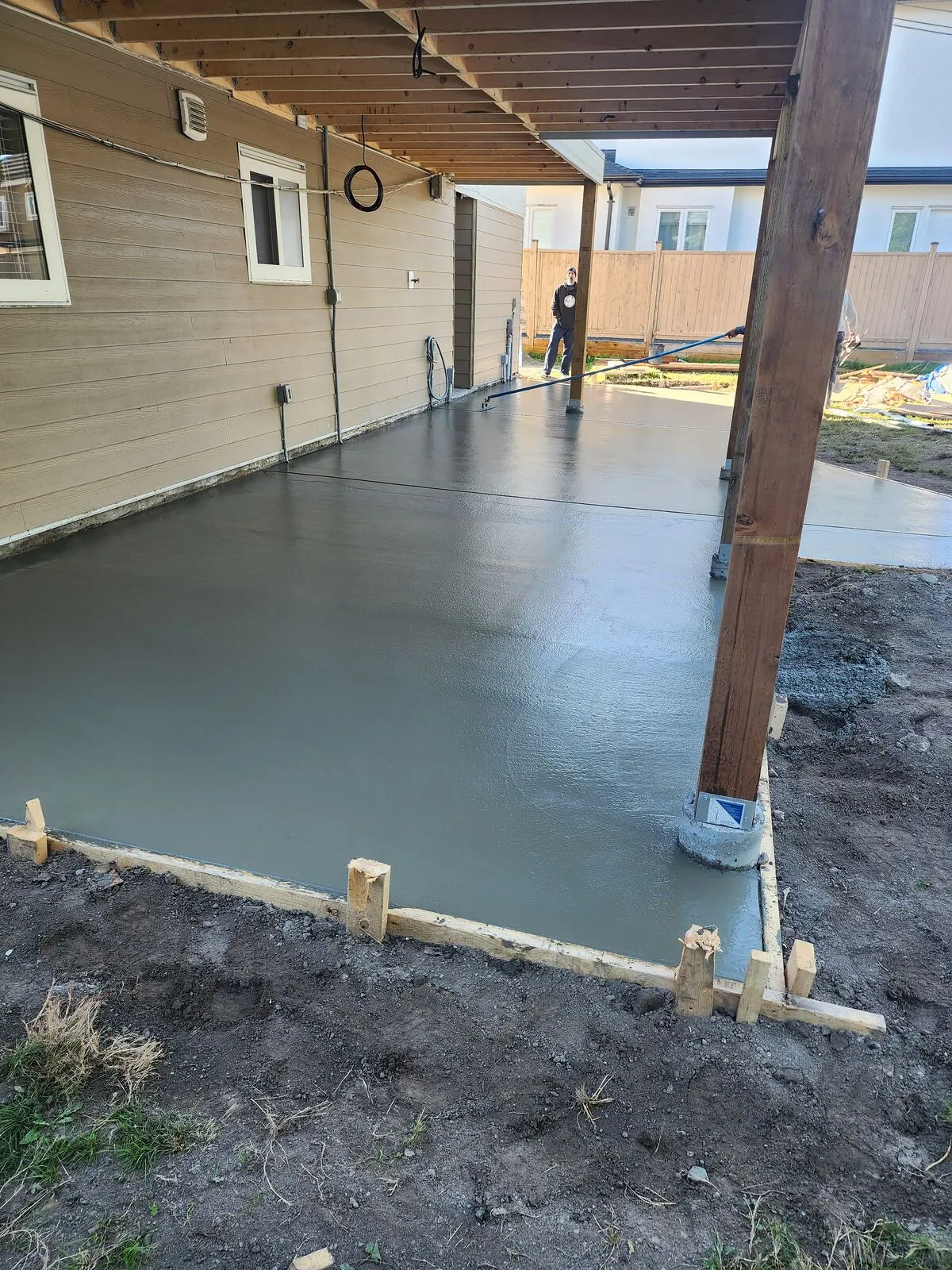
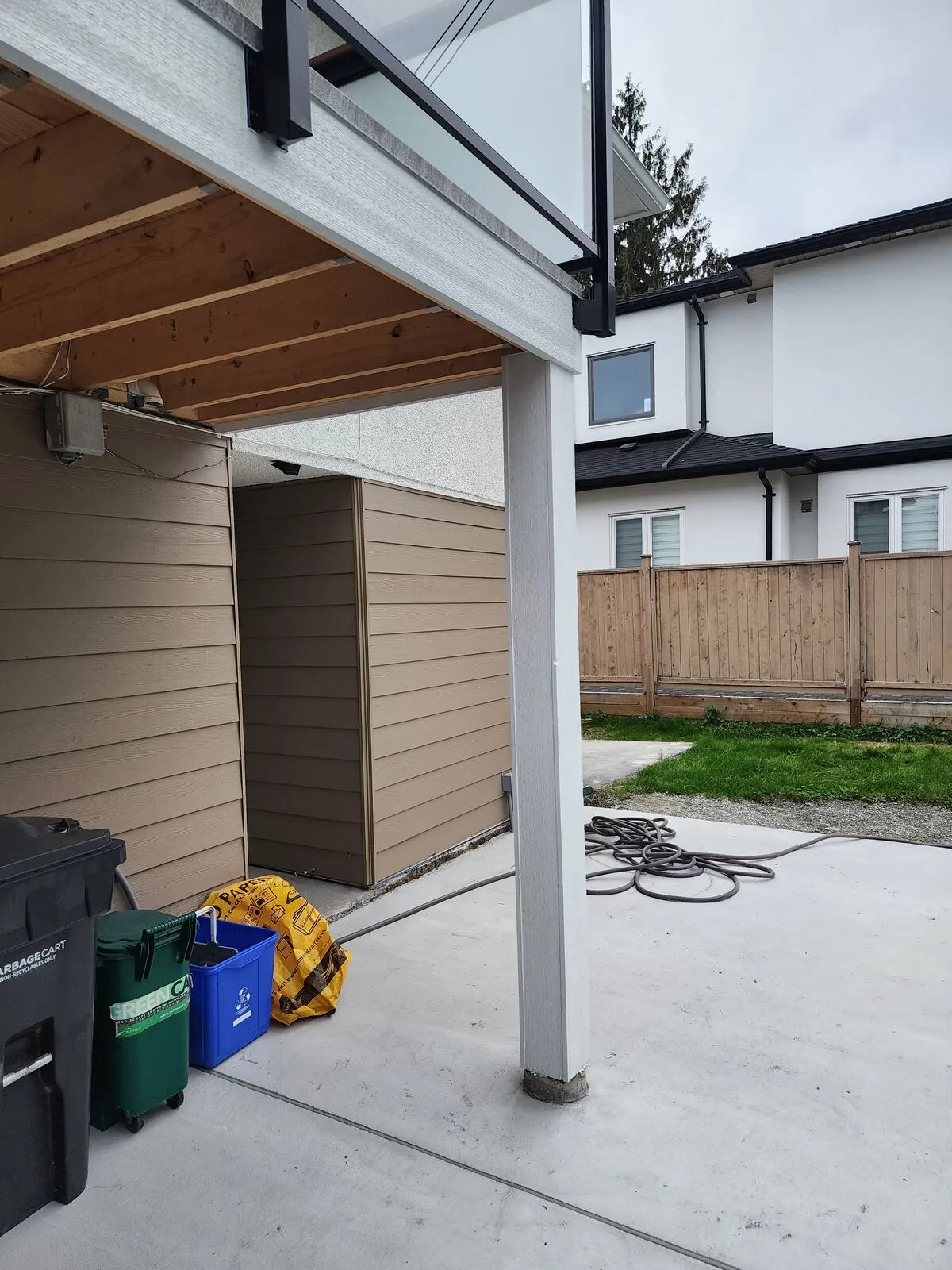
Once the layout was approved we stripped the sod and topsoil, dropped the grade, and brought in crushed gravel that we compacted in lifts to give the slab a stable, free-draining base. At the same time we set new structural footings for the posts that carry the existing upper deck — sonotube footings to frost depth with proper post bases, so the load path from the upper structure down to undisturbed soil is clean and inspectable instead of bearing on whatever was under the old support posts.
Forming and pouring the concrete patios
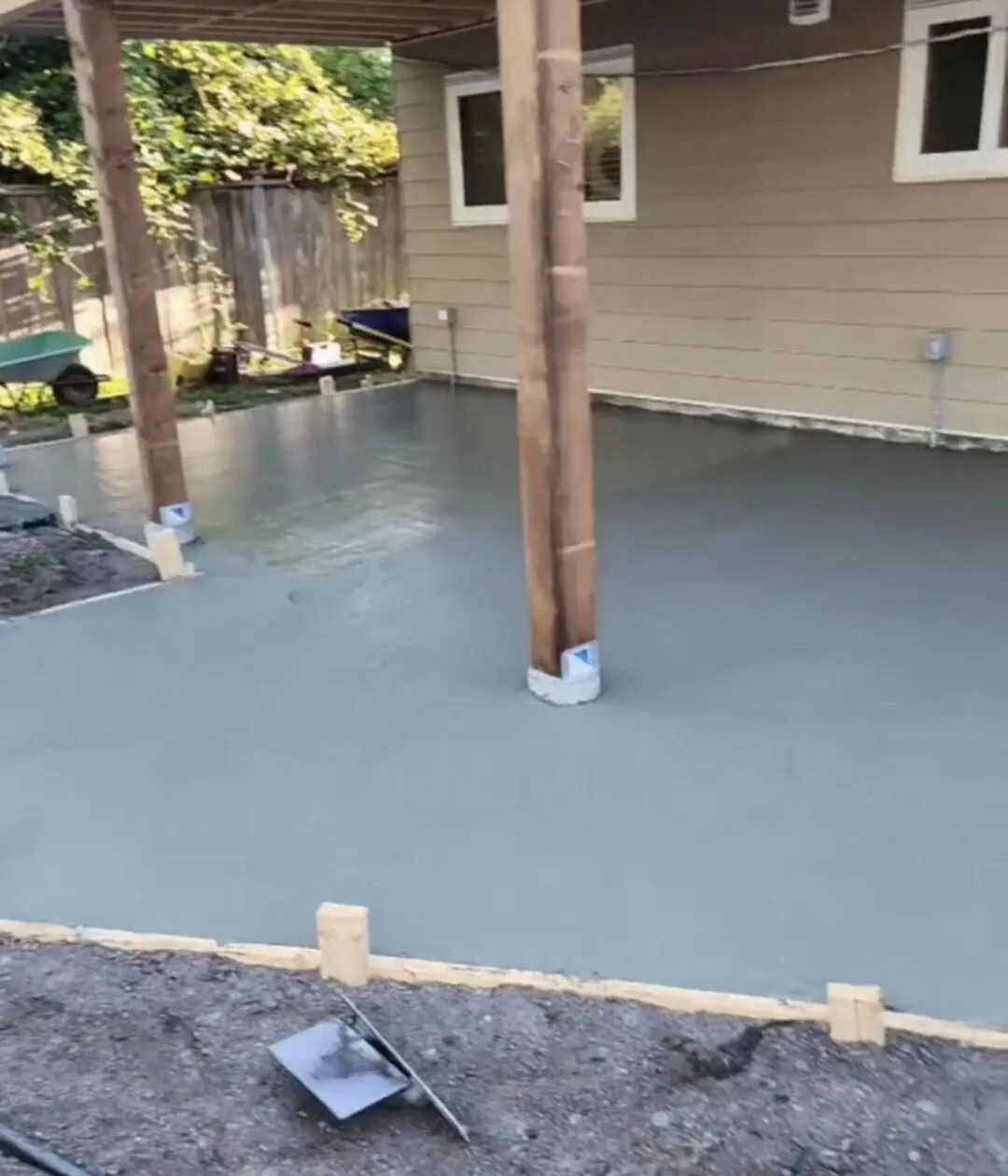
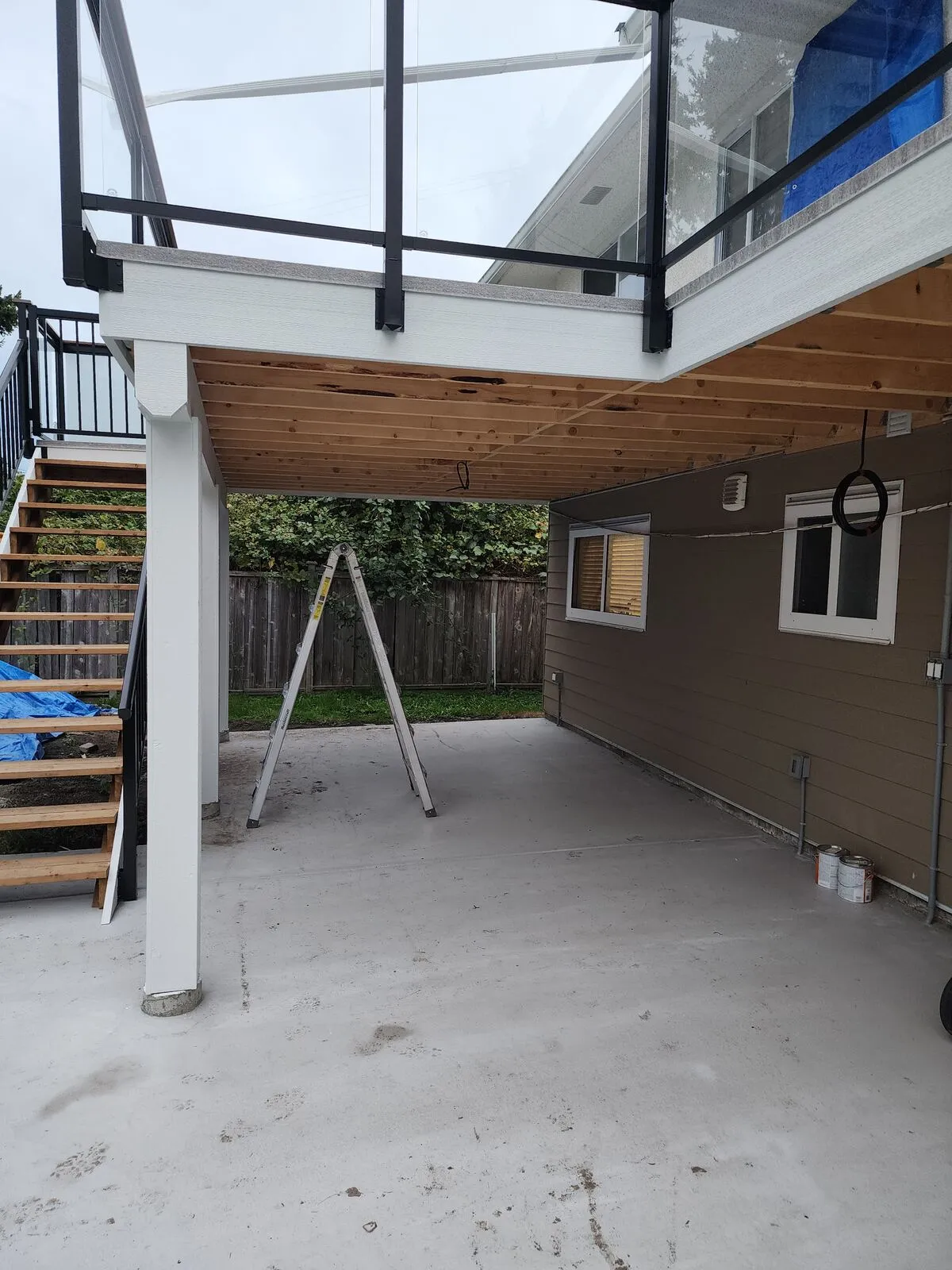
We formed up the slab with 2× lumber staked on edge, ran rebar through the field on chairs, and poured the concrete in one continuous pass. The pour wraps the side yard, turns the corner, and continues underneath the upper deck so the homeowners end up with one continuous walkable surface from the driveway all the way around to the back lawn. Finished with a broomed slip-resistant surface and clean saw-cut control joints so the slab cracks where we want it to, not where it wants to.
Rebuilding the upper deck with a vinyl waterproof membrane
Up top, we resurfaced the upper deck as a fully waterproof assembly using a welded vinyl membrane — every seam heat-welded into a continuous sheet that turns the deck into the roof of the patio below. That's the whole reason this project exists: the homeowners didn't just want a new deck, they wanted the space underneath it to stay dry so it could be used as a real outdoor living area year-round. The vinyl membrane is what makes that possible.
White Hardie post wraps and glass railings
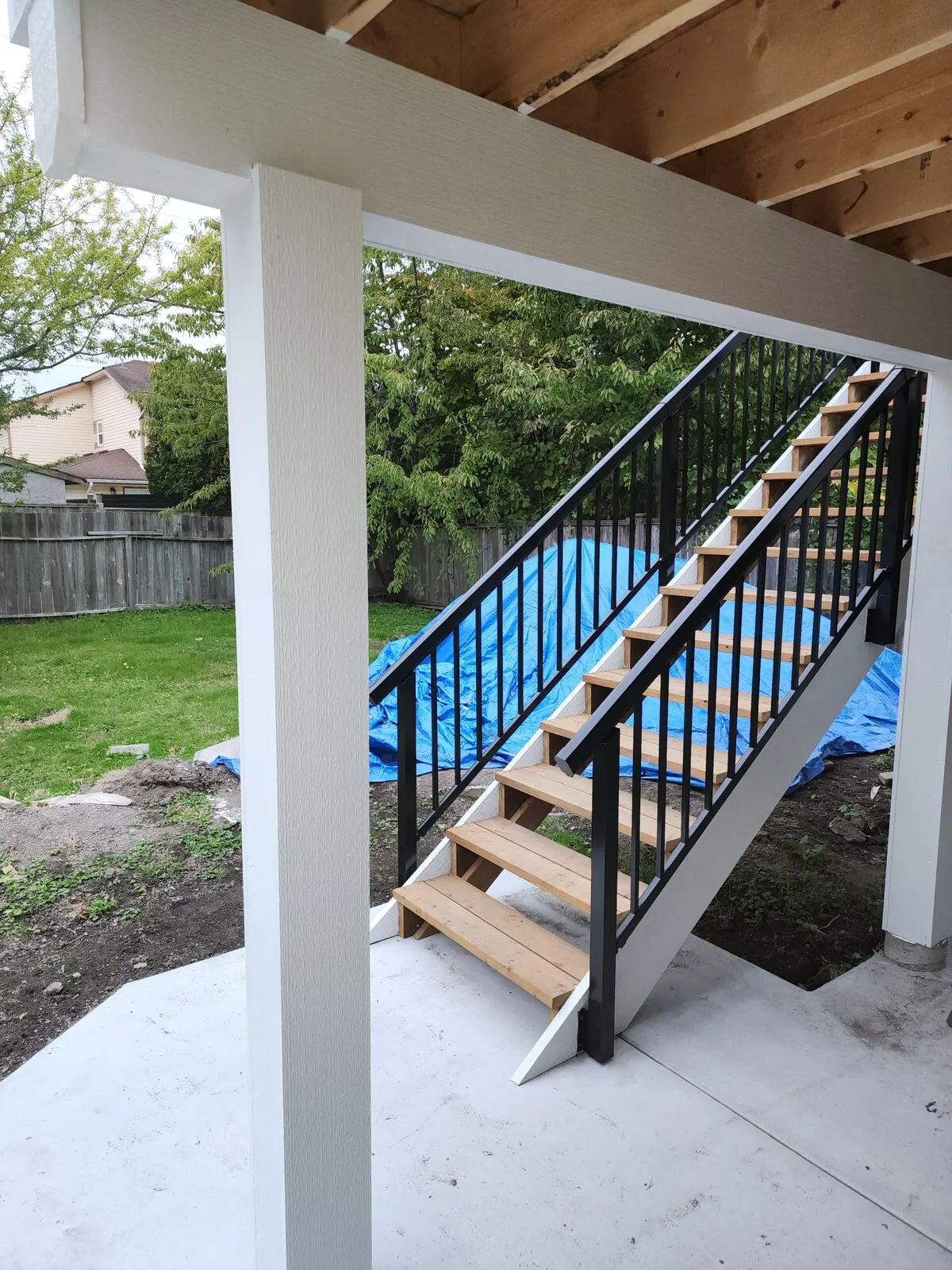
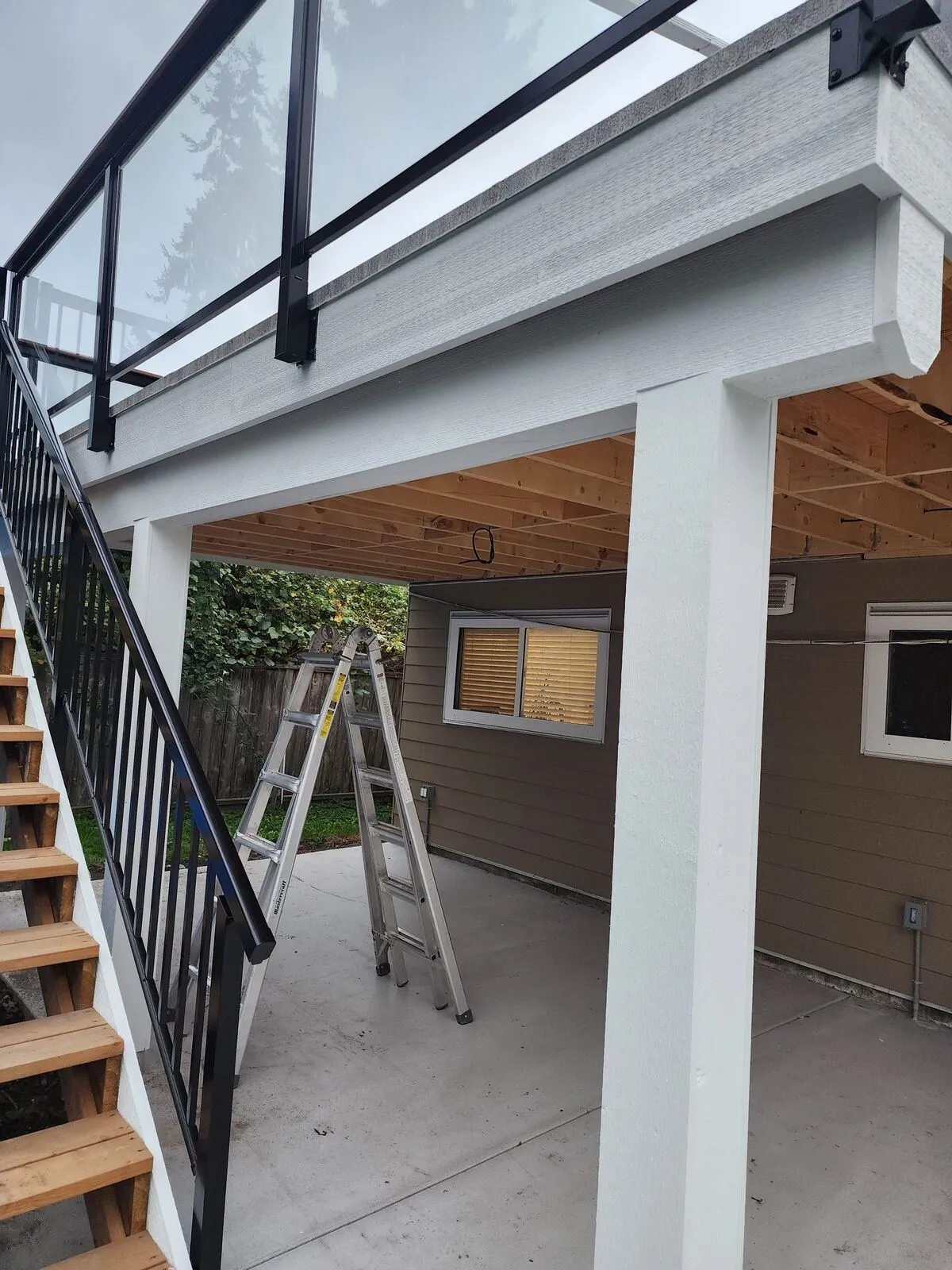
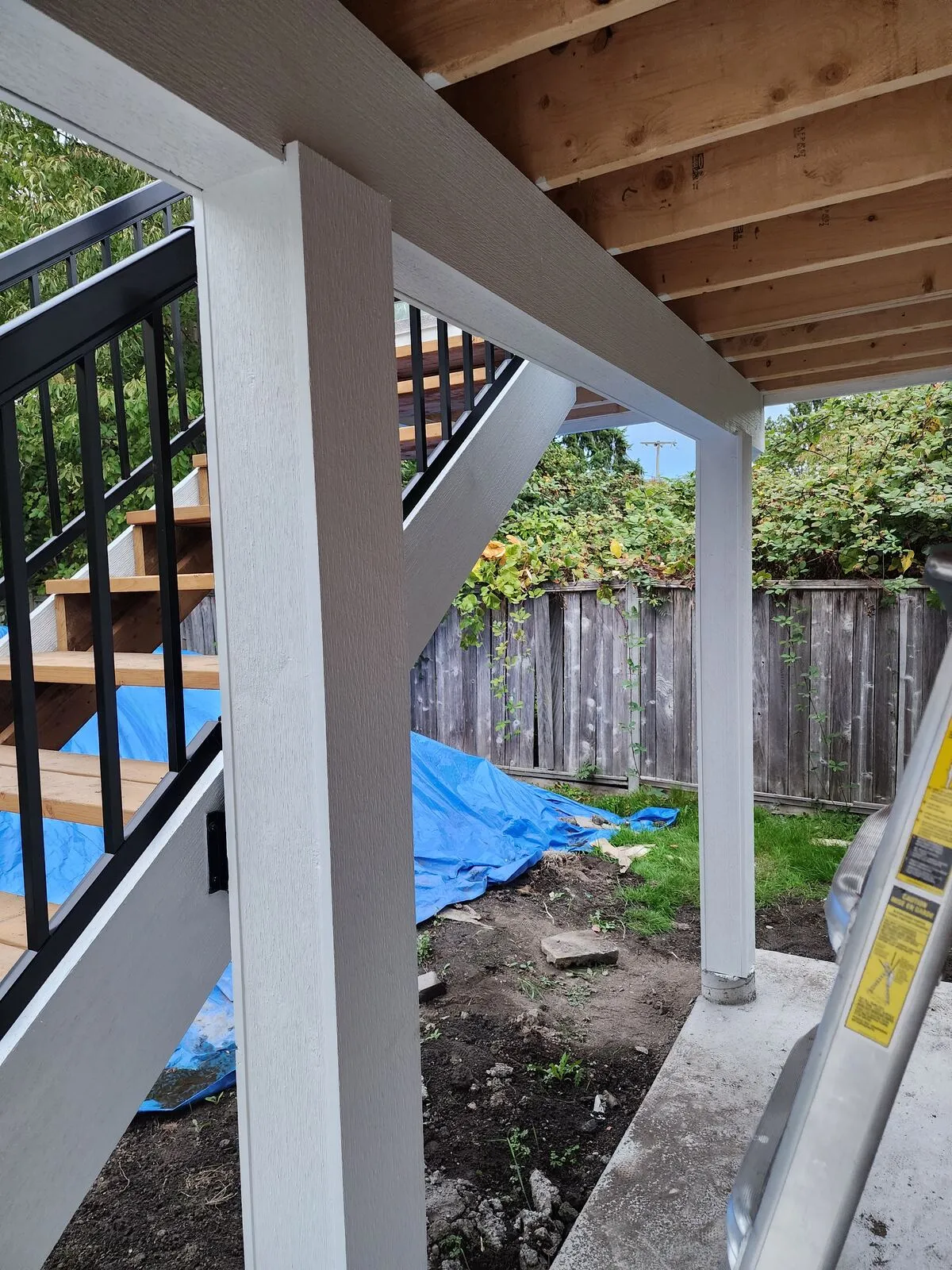
We wrapped the original pressure-treated 6×6 posts in white Hardie / PVC trim with mitered corners so what you see from below reads as clean white architectural columns rather than weathered timber. The upper guardrail is a black aluminum frame with full glass infill panels — open sightlines from the deck out to the yard, no slats to dust off, no painted spindles to repaint every few years. From the patio below, the underside of the deck framing was left clean and exposed: tidy PT joists, no sag, no insulation hanging down, ready for the homeowners to add a ceiling later if they want one.
Open-riser stair down to grade
The new stair from the upper deck down to the concrete is a modern open-riser run: solid cedar treads carried on welded black metal stringers, with matching black aluminum picket railings to tie back to the upper guardrail. Open risers let light through to the patio underneath instead of casting the stair as a solid shadow, and the contrast of warm cedar against black metal against white posts ties the whole back of the house together. The whole staircase lands on the new concrete with clean post bases anchored straight into the slab.