The brief: turn a builder-grade stair into a finish-carpentry feature
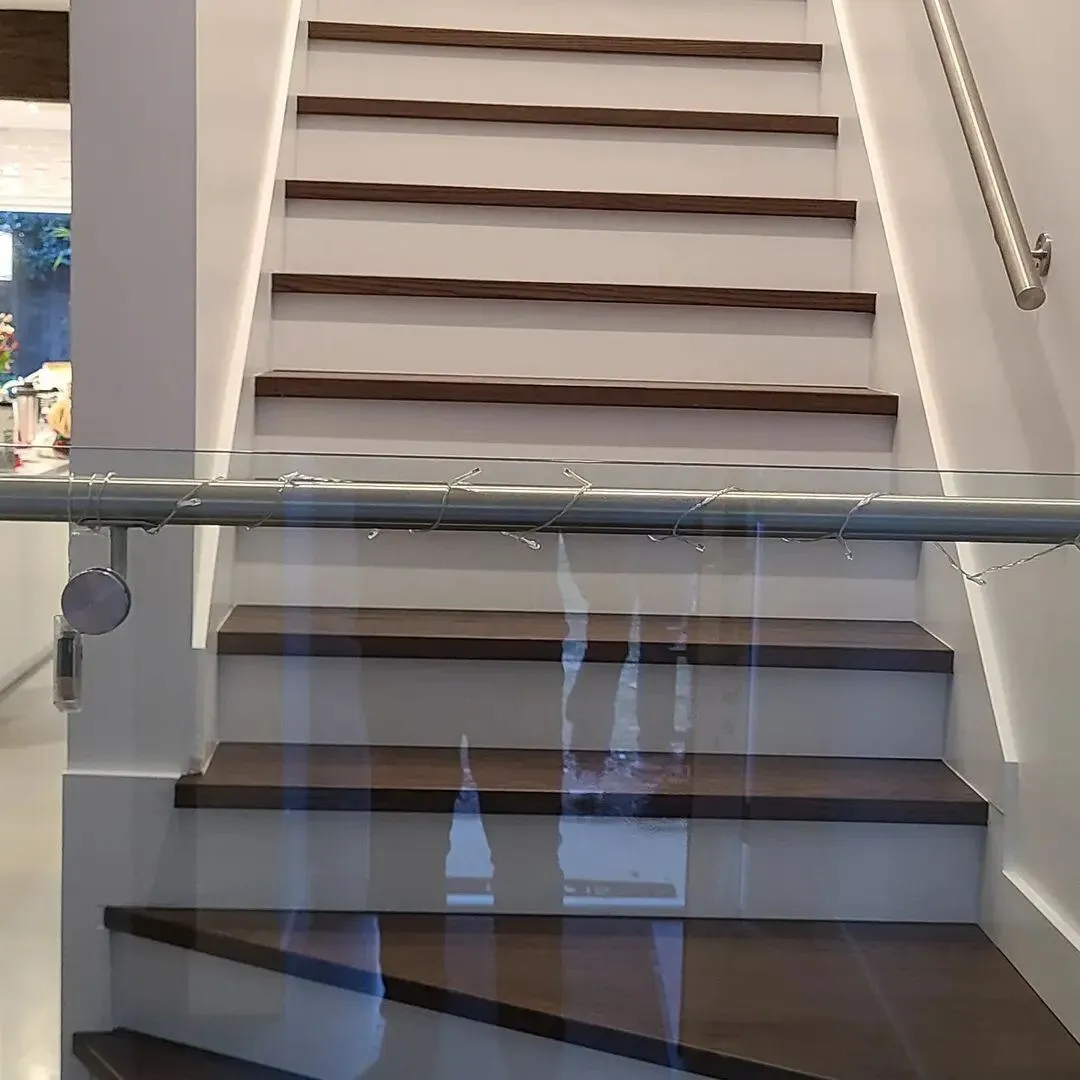
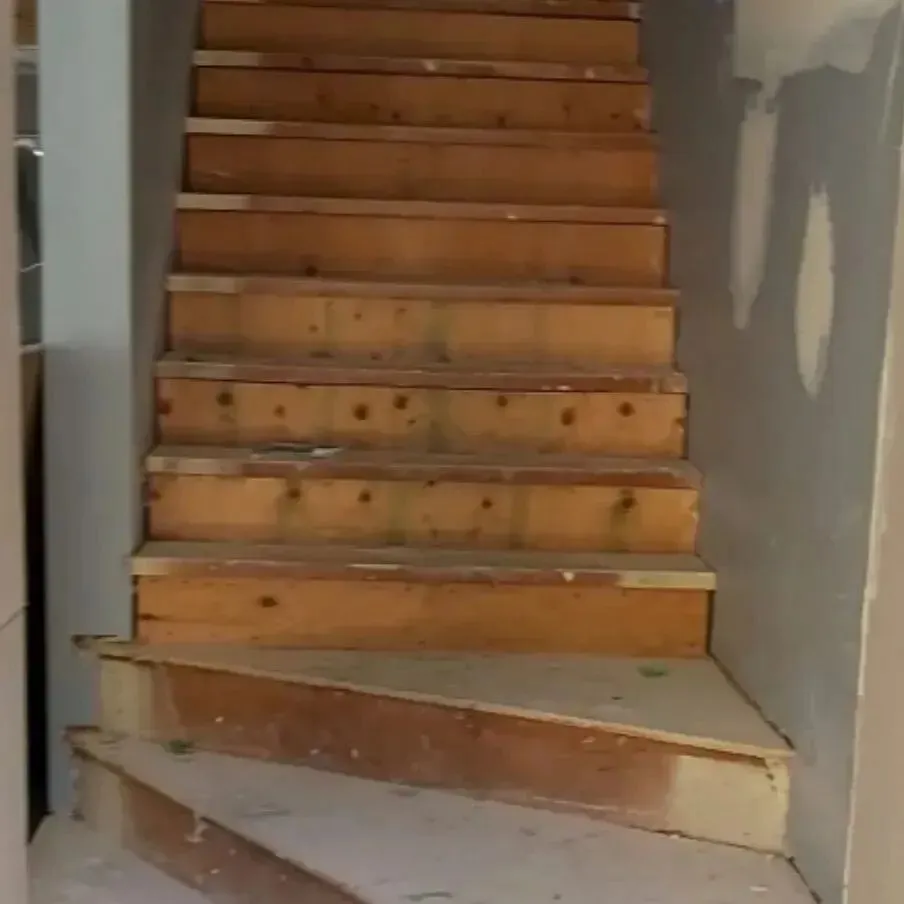
The homeowners had a brand-new home in Port Coquitlam, BC where every other surface had been finished to a high standard — engineered dark oak floors throughout, clean white walls, a modern open stairwell — but the stair itself was still in its construction state: bare plywood treads, rough pine risers, no skirt boards, and no railing. They wanted the stair to read as the same level of finish as the rest of the house: solid wood treads to match the floors, crisp white skirts and risers, and a railing that wouldn't visually block the open stairwell.
Closed stringers with a picture-frame skirt detail
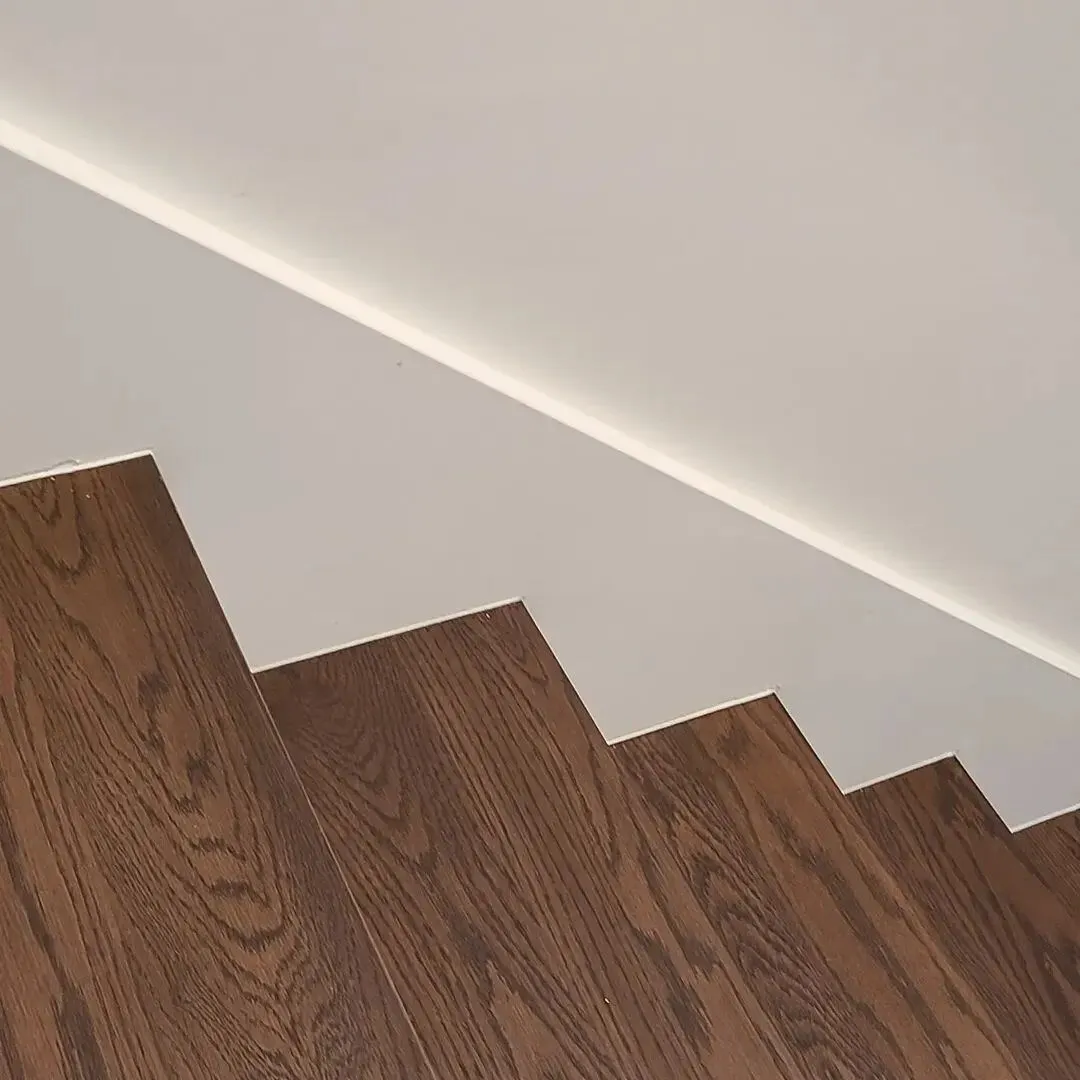
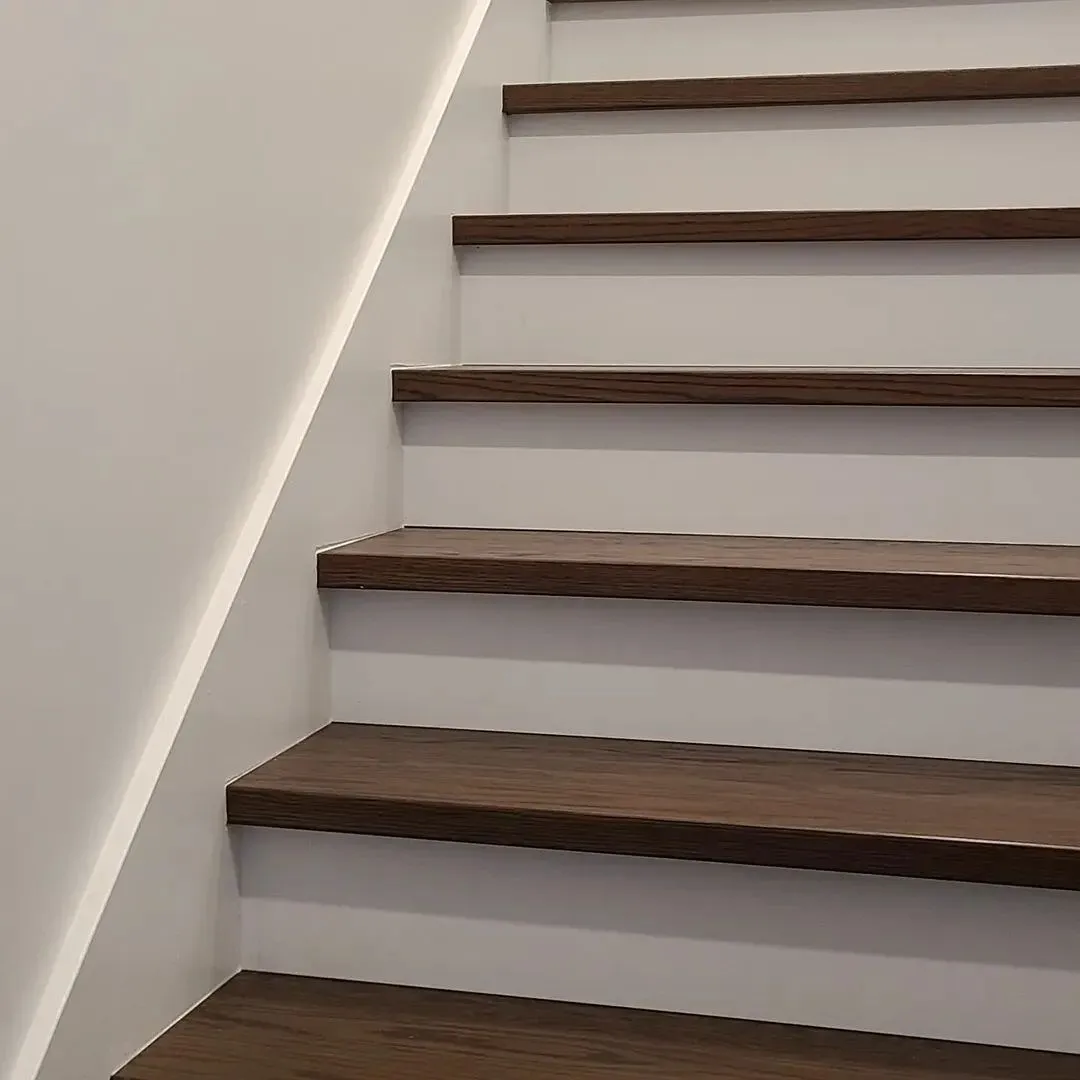
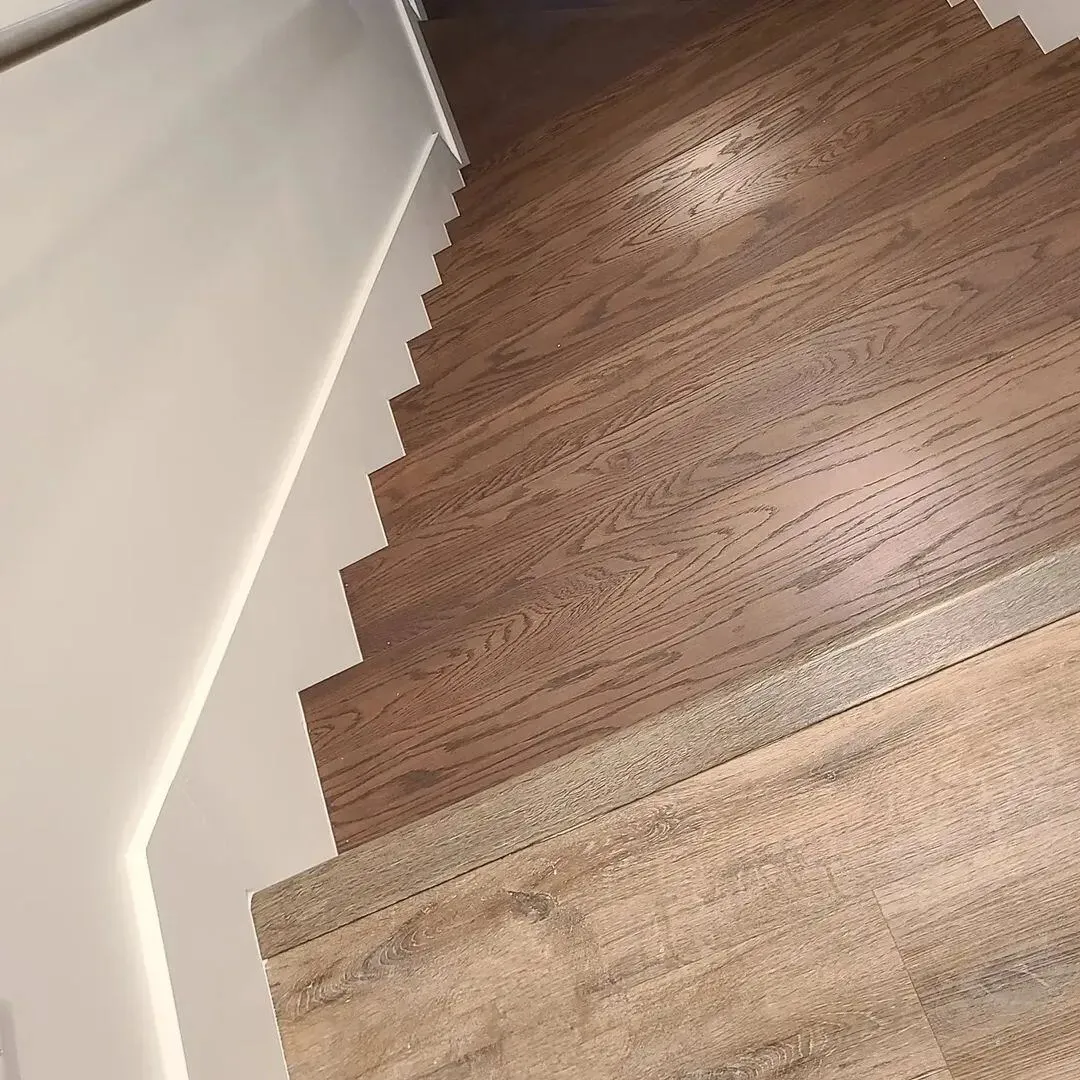
Before any of the visible finishes went on, we ran painted MDF skirt boards up both walls of the stair as closed stringers — one long board that zig-zags up the wall along the stair profile, capping every tread and riser joint with a clean line. We held the skirt off the wall with a narrow reveal so the joint reads as a deliberate shadow line rather than a caulked seam, and the homeowners later added a concealed LED strip into that reveal so the stair washes itself with light at night. Done right, the skirt board is what makes a stair look built rather than assembled.
Solid red oak treads, painted white risers
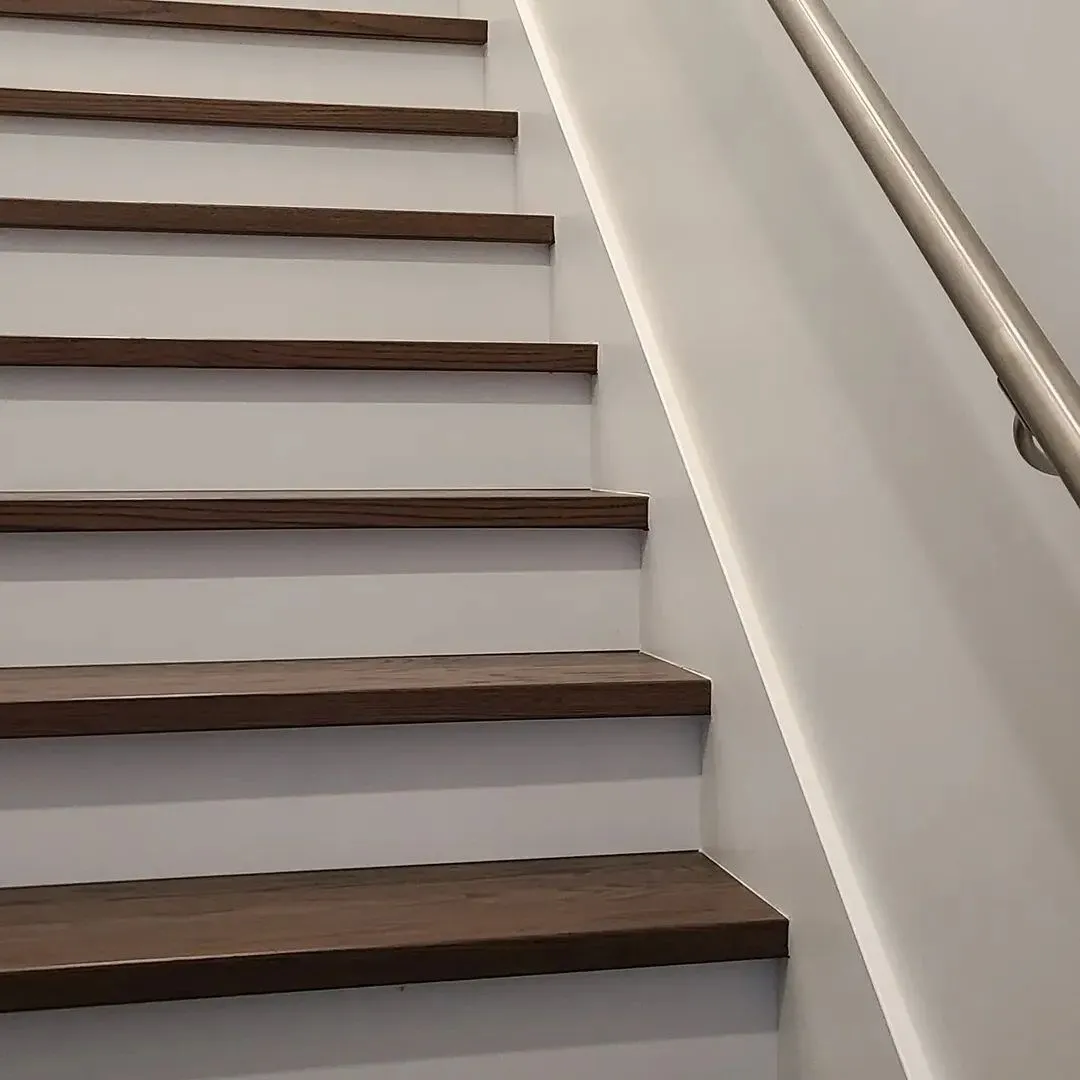
The treads themselves are solid red oak — full thickness, square-edge nosing, stained a dark walnut tone to match the engineered oak floor running into the landing. We glue-and-screw each tread down onto the existing stringer over a bed of construction adhesive so nothing squeaks, then filled and sanded the fasteners flush. The risers are painted MDF in the same crisp white as the skirt boards and the walls, which gives the stair the classic dark-tread / white-riser look without any visible nail holes or trim lines.
Brushed stainless handrail and tempered glass guardrail
On the wall side, a brushed stainless steel handrail runs the full length of the stair on matching wall brackets — graspable, code-compliant, and visually quiet against the white wall. At the top of the run, where the stair opens onto the main floor, we installed a tempered glass guardrail with a stainless steel top cap rather than a traditional picket railing, so the open stairwell stays visually open from above and below. The result is a stair you can walk safely while still seeing all the way down to the front door.