← All Projects

Project

Open-Concept Kitchen, Tiled Fireplace Wall & Exterior Deck Reno — Abbotsford

LocationAbbotsford, BC
Year2023
Duration10
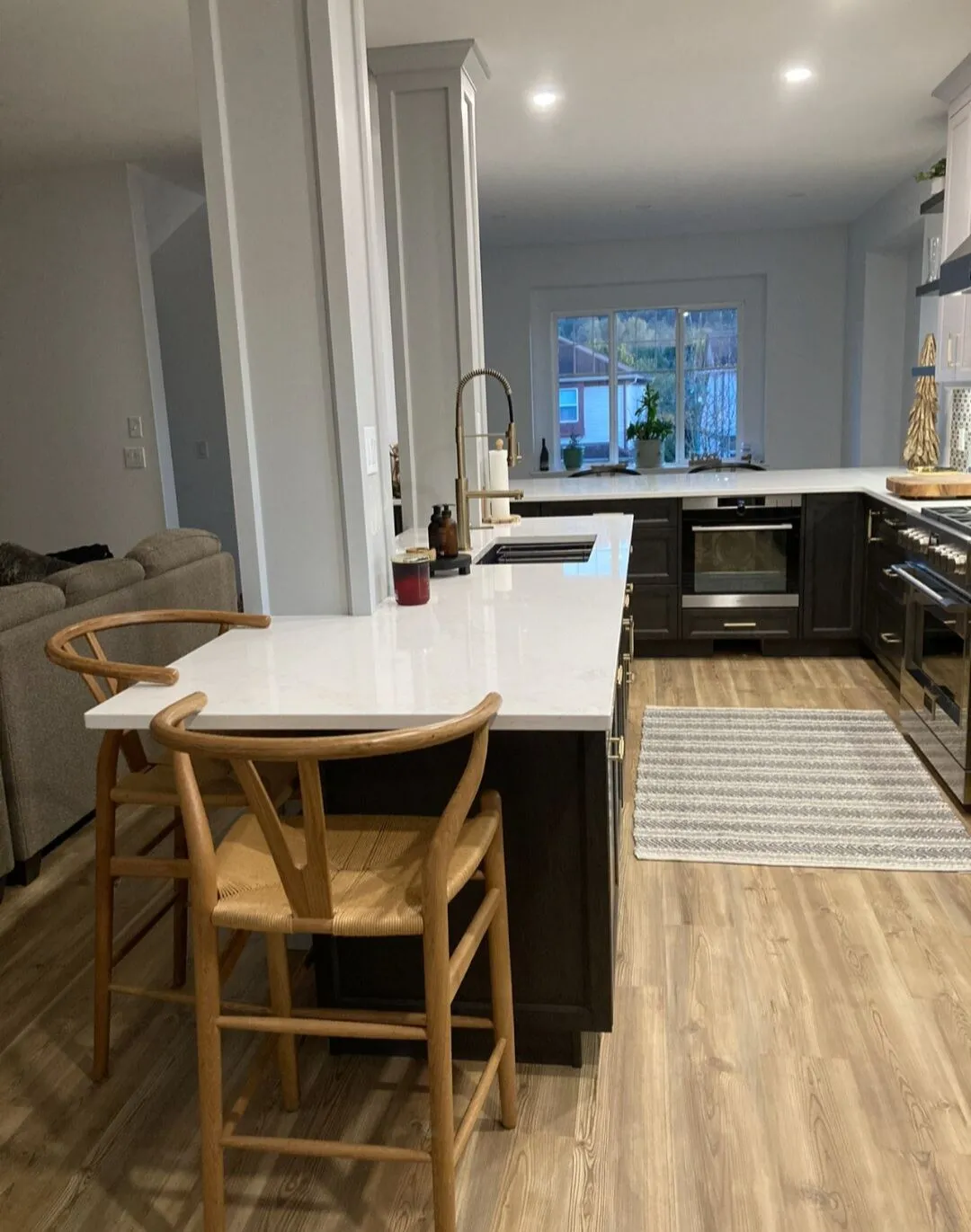
Finished open-concept main floor in Abbotsford — original closed-off kitchen replaced with a warm-grey Shaker kitchen, white quartz peninsula and black mosaic backsplash, with the load-bearing wall between kitchen and living room opened up and the support post wrapped as a finished column.

Overview

The project in one paragraph

A whole-house update for an Abbotsford, BC family — load-bearing wall opened up to turn a closed-off kitchen and living room into one open-concept main floor, the original kitchen pulled out and reinstalled downstairs in a new basement suite, a brand-new shaker kitchen with quartz peninsula and black mosaic backsplash installed in its place, the dated tile fireplace stripped and rebuilt as a floor-to-ceiling whitewashed plank-tile wall with 45° mitred corners around a linear gas insert, and outside the dated pony walls demoed with the posts wrapped in rough cedar, a vinyl-membrane deck installed on the upper deck and a composite landing at the entry.

The brief: three jobs in one house

The Abbotsford homeowners asked us to take on a whole-house update in a single mobilization. Inside, the original closed-off kitchen had to be opened up to the living room with a true open-concept feel, the existing kitchen carefully removed and reinstalled in the basement as a secondary suite kitchen, and a brand-new Shaker kitchen built in the original footprint. The living room's dated beige-tile fireplace was to be stripped and rebuilt as a floor-to-ceiling tiled feature wall with a linear gas insert. Outside, the dated pony walls on the upper deck were to come out, the structural posts wrapped in rough cedar, the upper deck waterproofed with vinyl membrane and a composite landing built at the front entry. One scope, one crew, sequenced so the family could keep living in the house.

The brief: three jobs in one houseThe brief: three jobs in one houseThe brief: three jobs in one houseThe brief: three jobs in one house

Opening the wall: load-bearing demo with services relocated inside

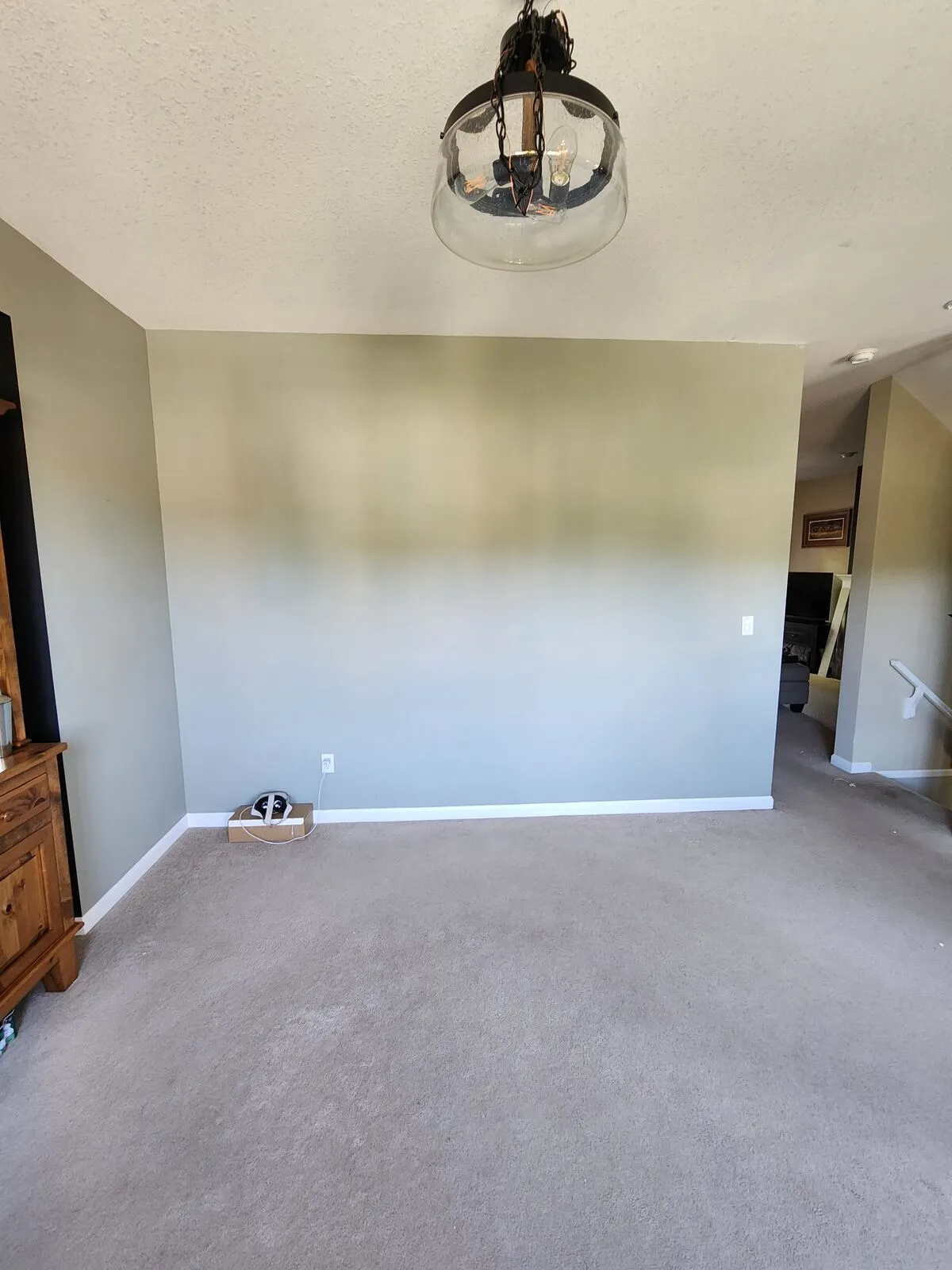
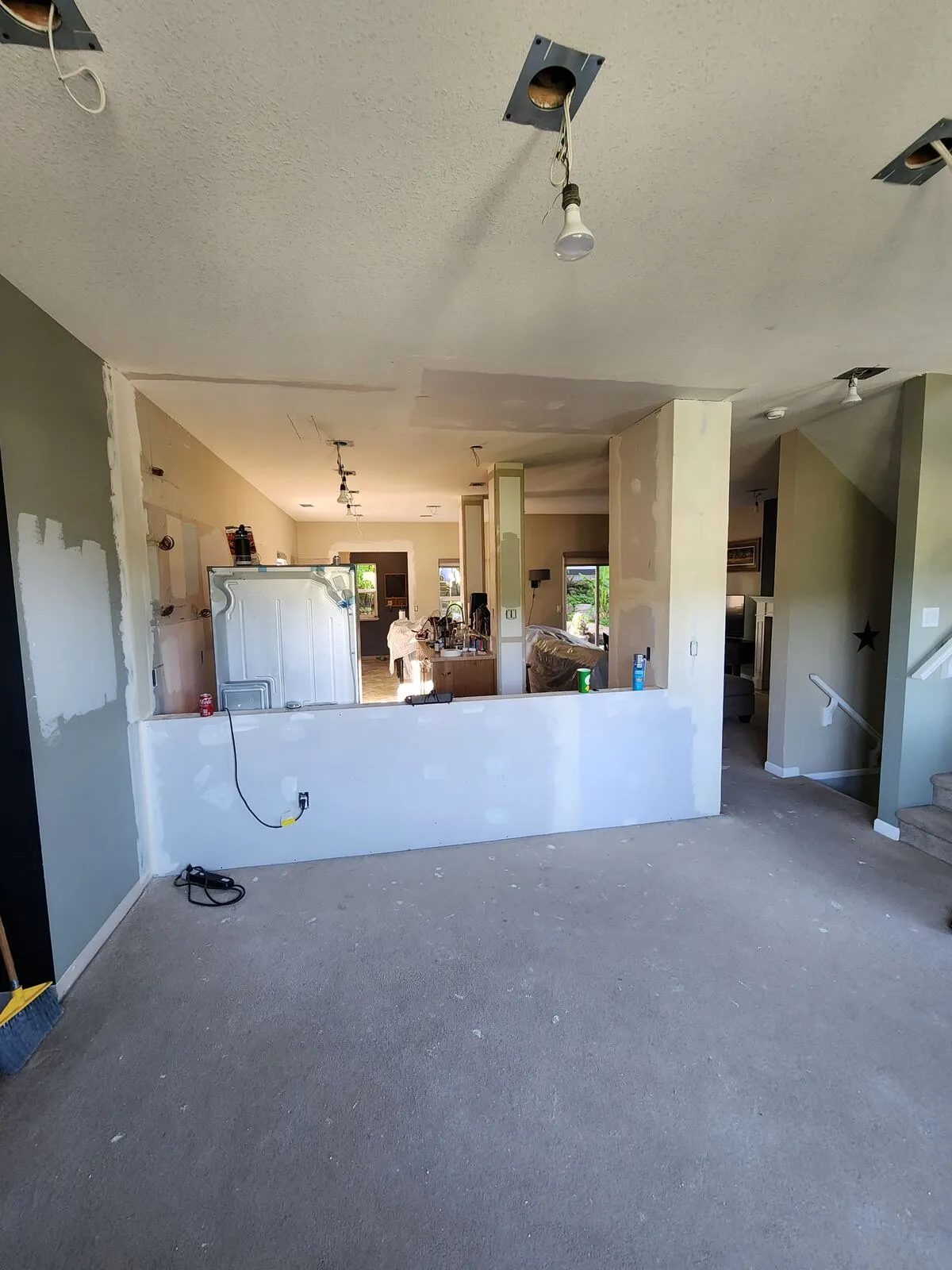
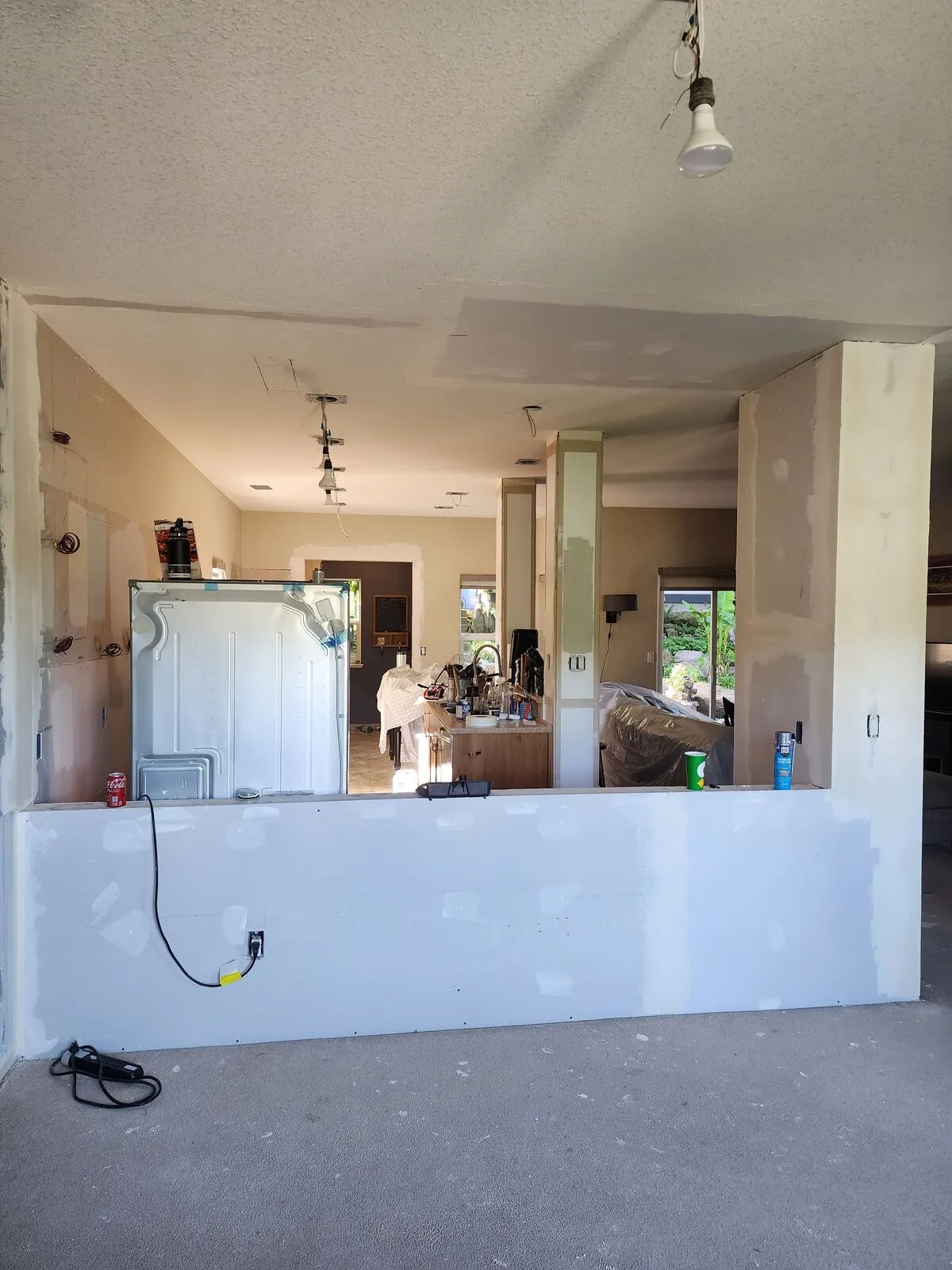
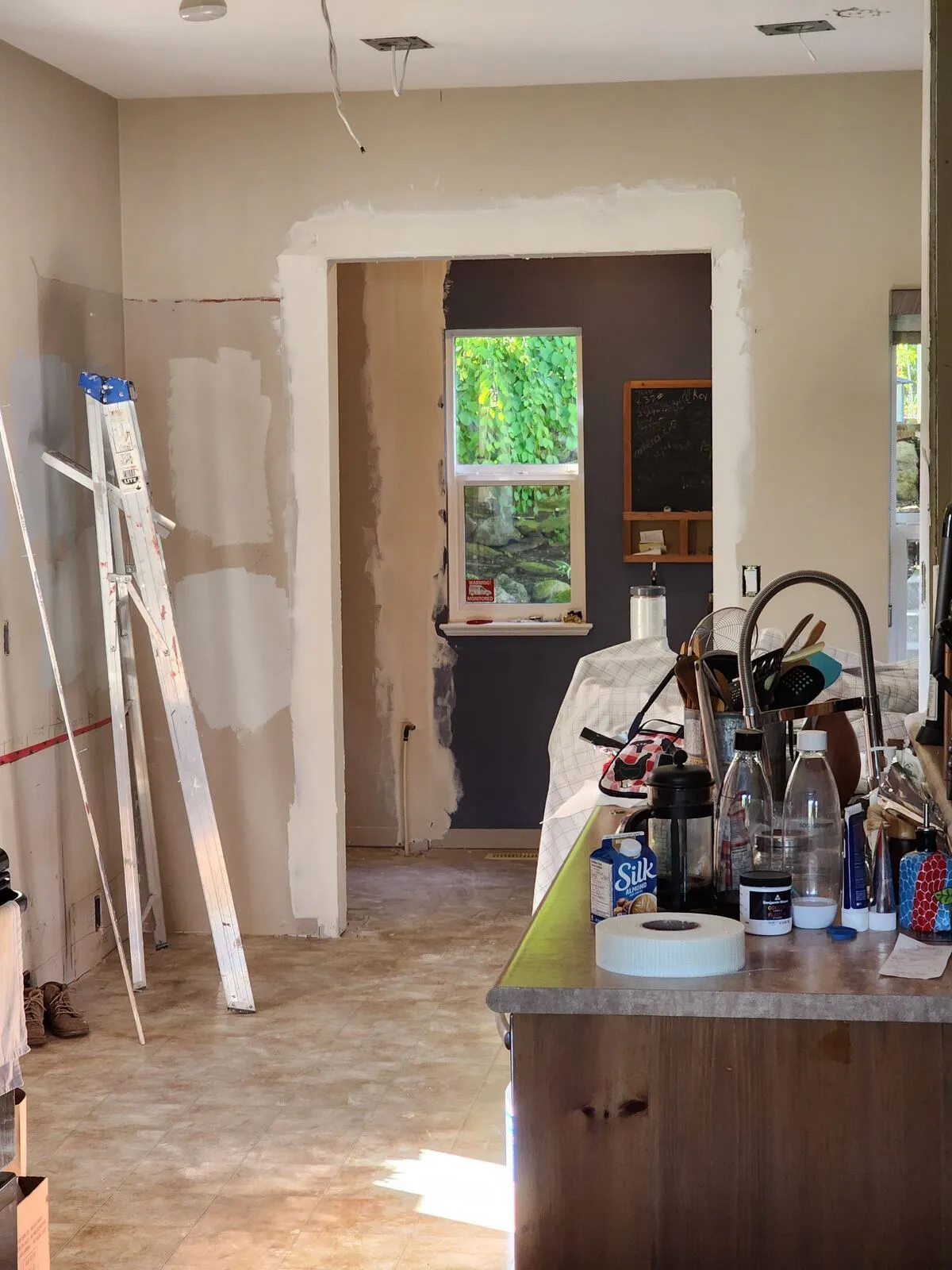
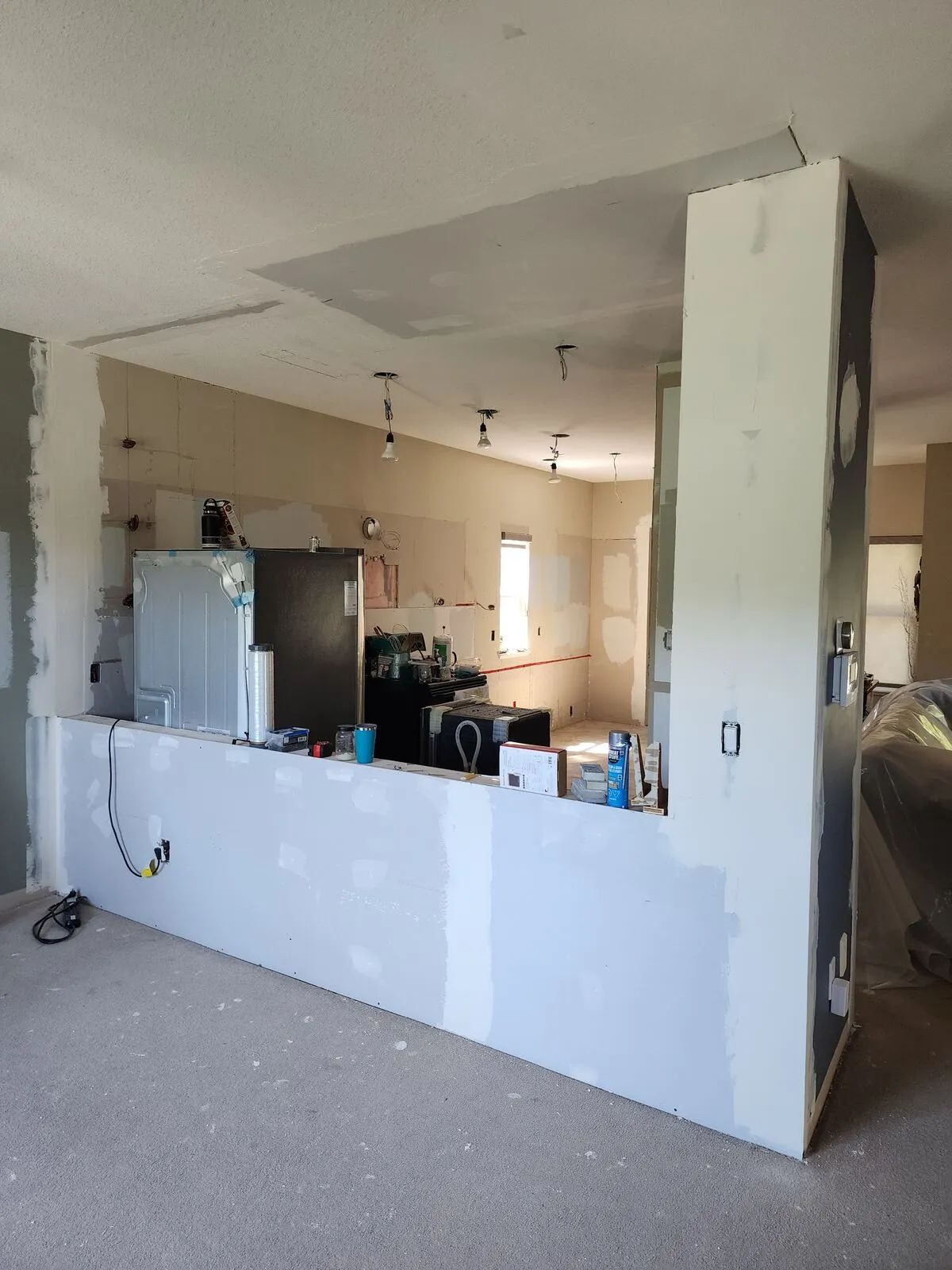
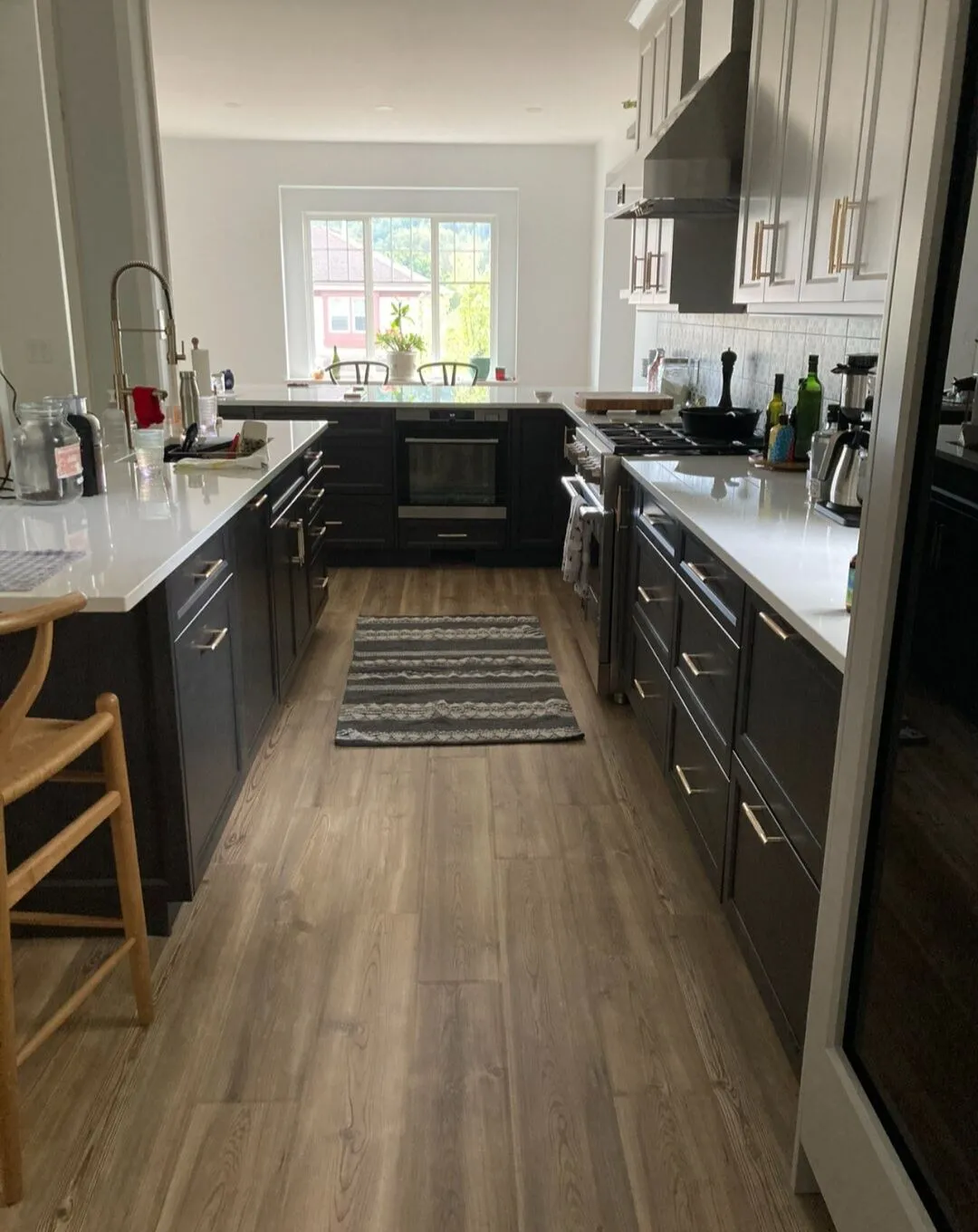
The wall between the original kitchen and the living room was load-bearing and carried plumbing drains, hot and cold supply lines and a full bundle of kitchen-circuit wiring inside it. We engineered and installed a flush beam to take the load, then carefully rerouted every wire and pipe inside the new framing — nothing was abandoned, nothing was surface-mounted on the finished side — so the finished opening reads as a clean header with a single wrapped support post, and you'd never know there used to be a full wall there.

Opening the wall: load-bearing demo with services relocated insideOpening the wall: load-bearing demo with services relocated insideOpening the wall: load-bearing demo with services relocated insideOpening the wall: load-bearing demo with services relocated insideOpening the wall: load-bearing demo with services relocated inside

Reusing the old kitchen downstairs

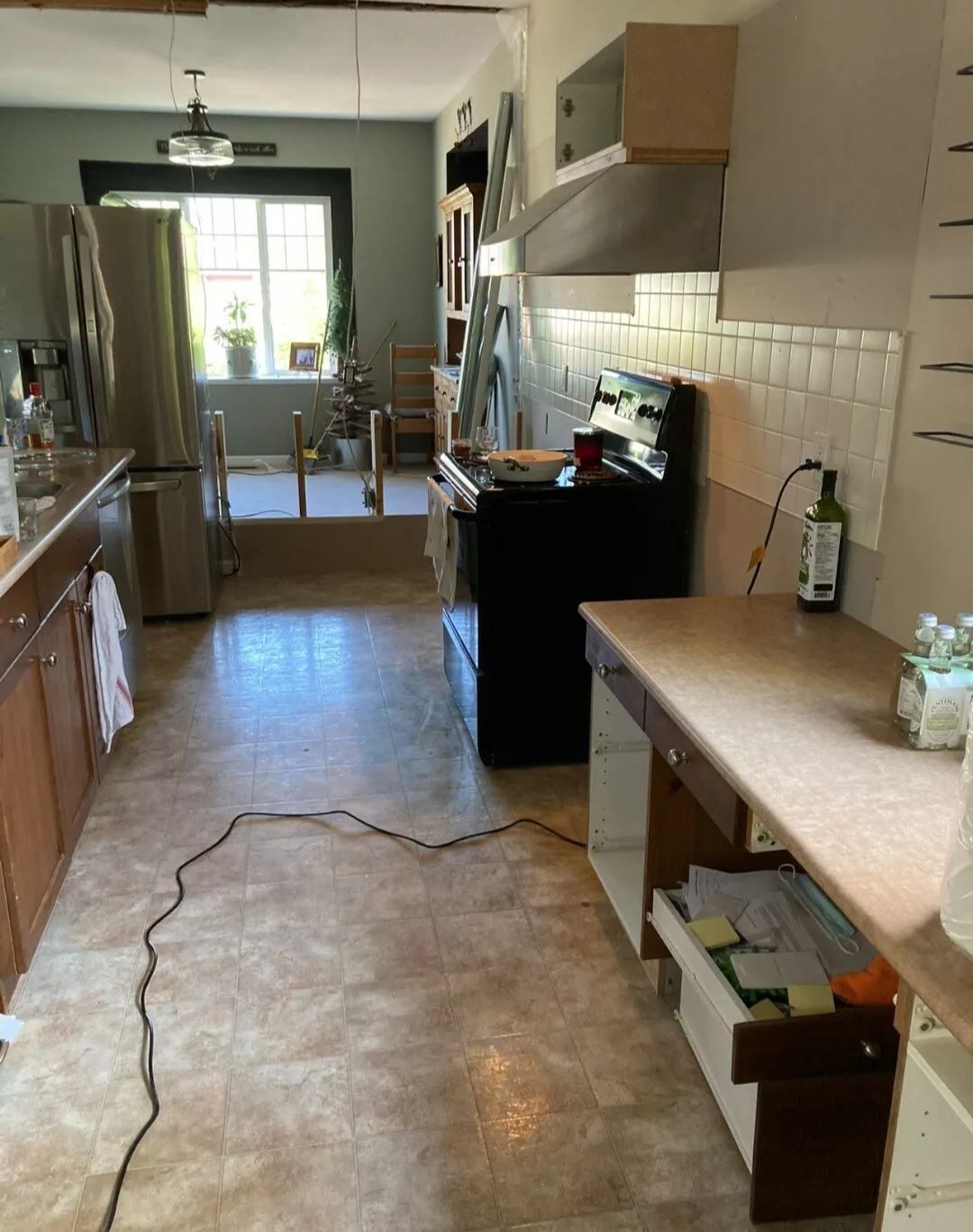
Rather than landfilling a kitchen that still had plenty of life left in it, the original uppers, lowers, countertop, sink and appliances came out in one piece at a time, were labelled, stored, and then reinstalled downstairs as a fully functional secondary suite kitchen in the basement. The original layout flexed slightly to fit the new room, but the cabinet boxes, doors and hardware all carried over — a real cost saving for the homeowner and the more sustainable end of the job.

Rebuilding the fireplace: linear gas, whitewashed plank tile, 45° mitred corners

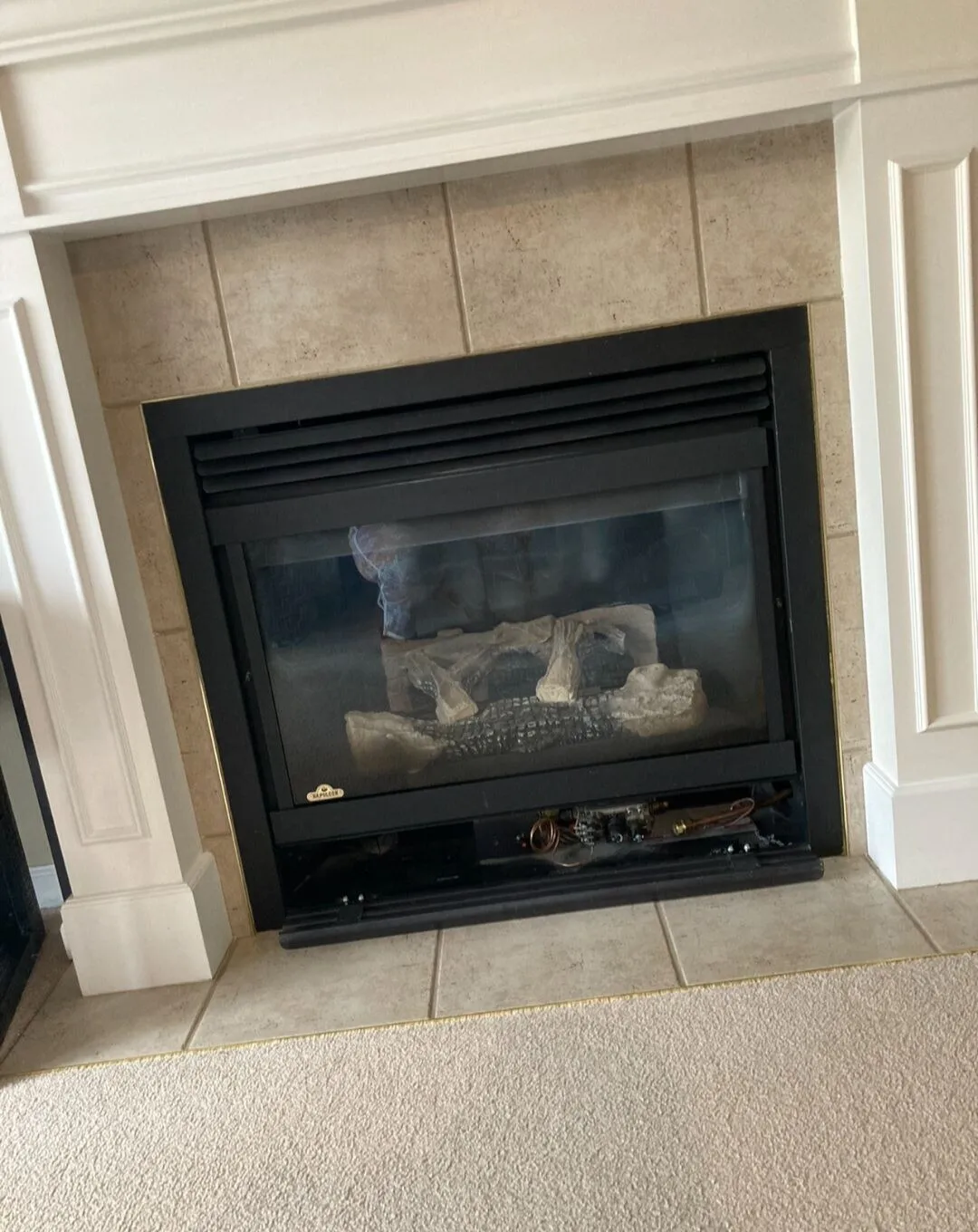
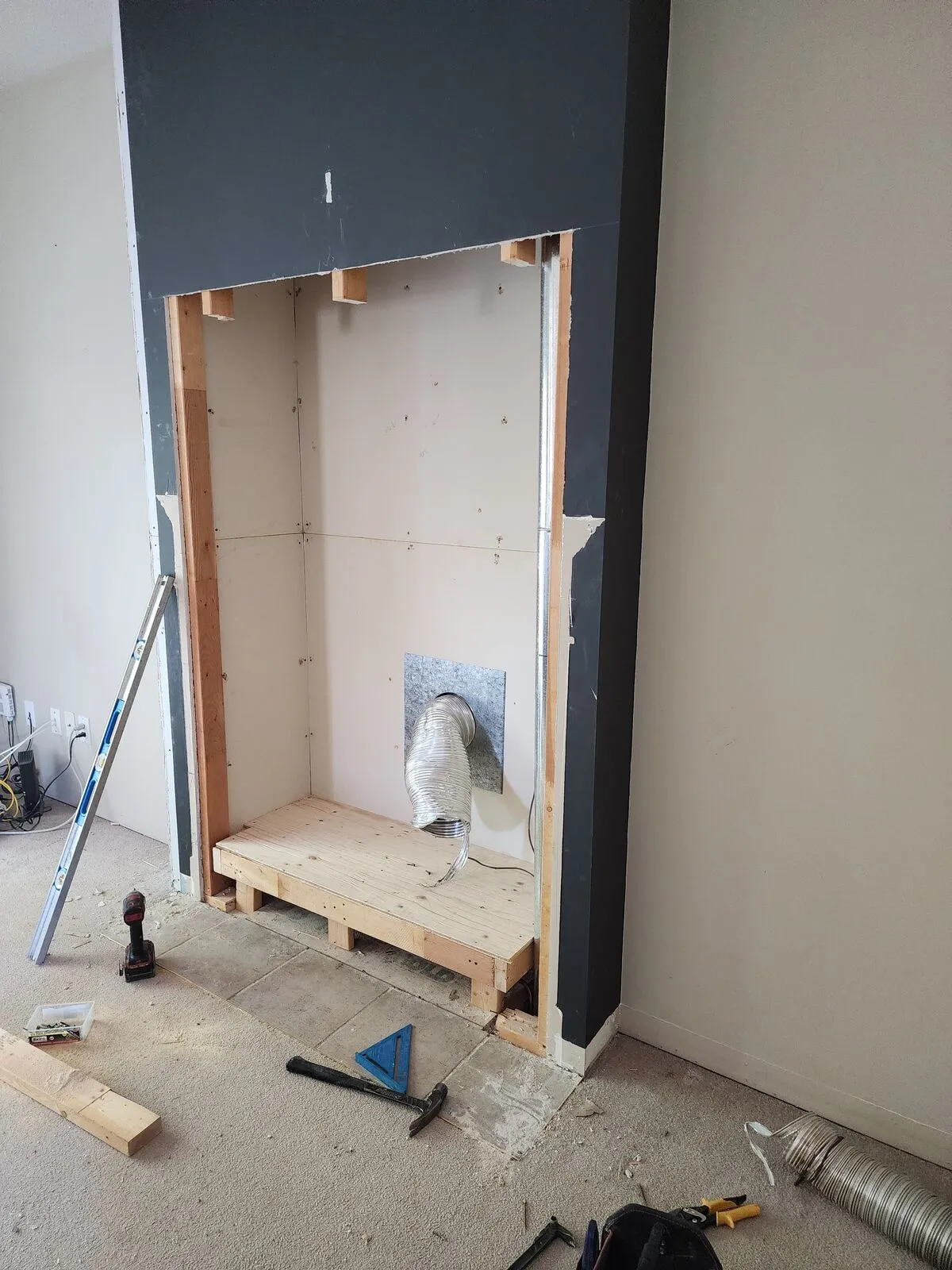
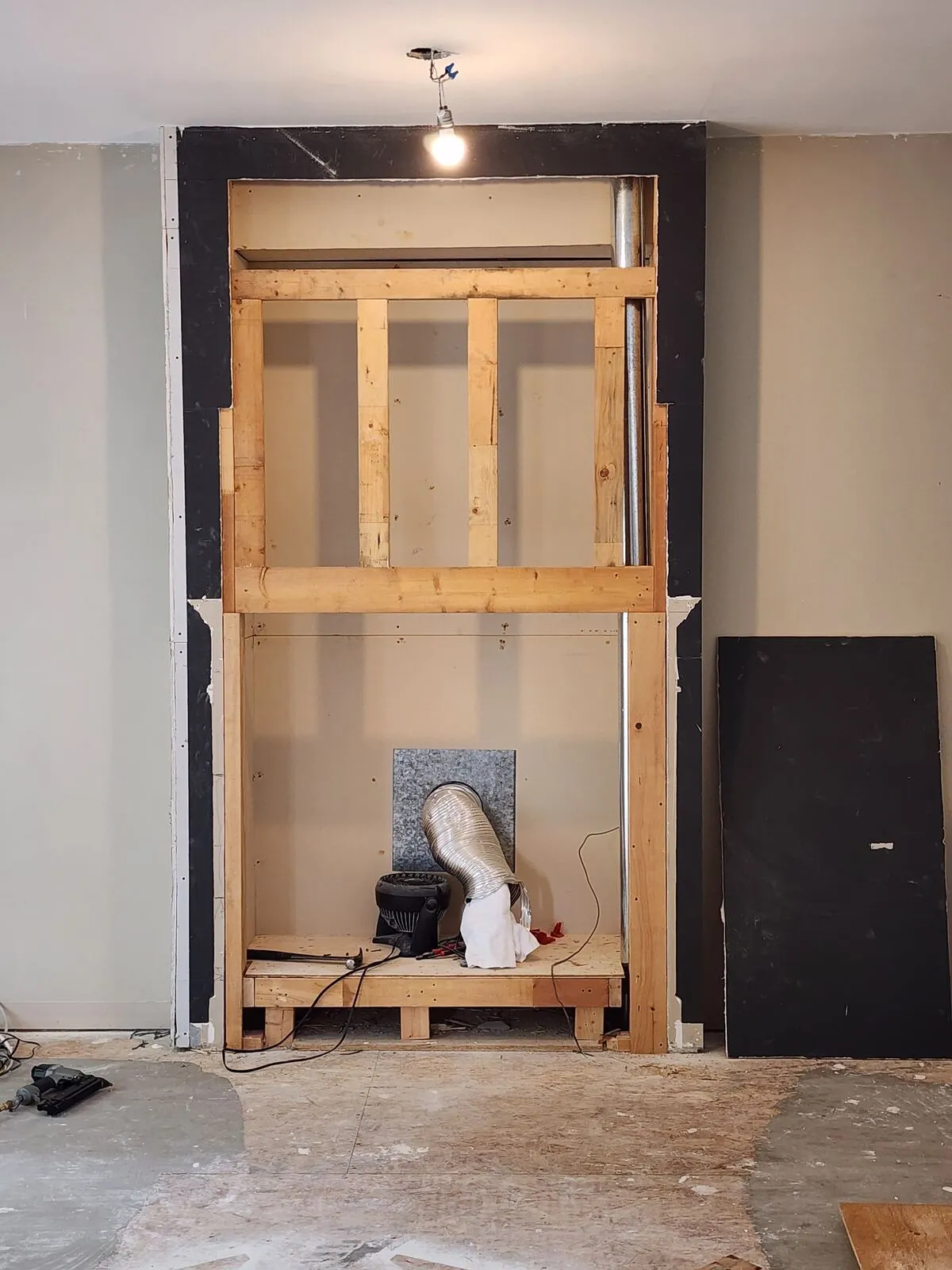
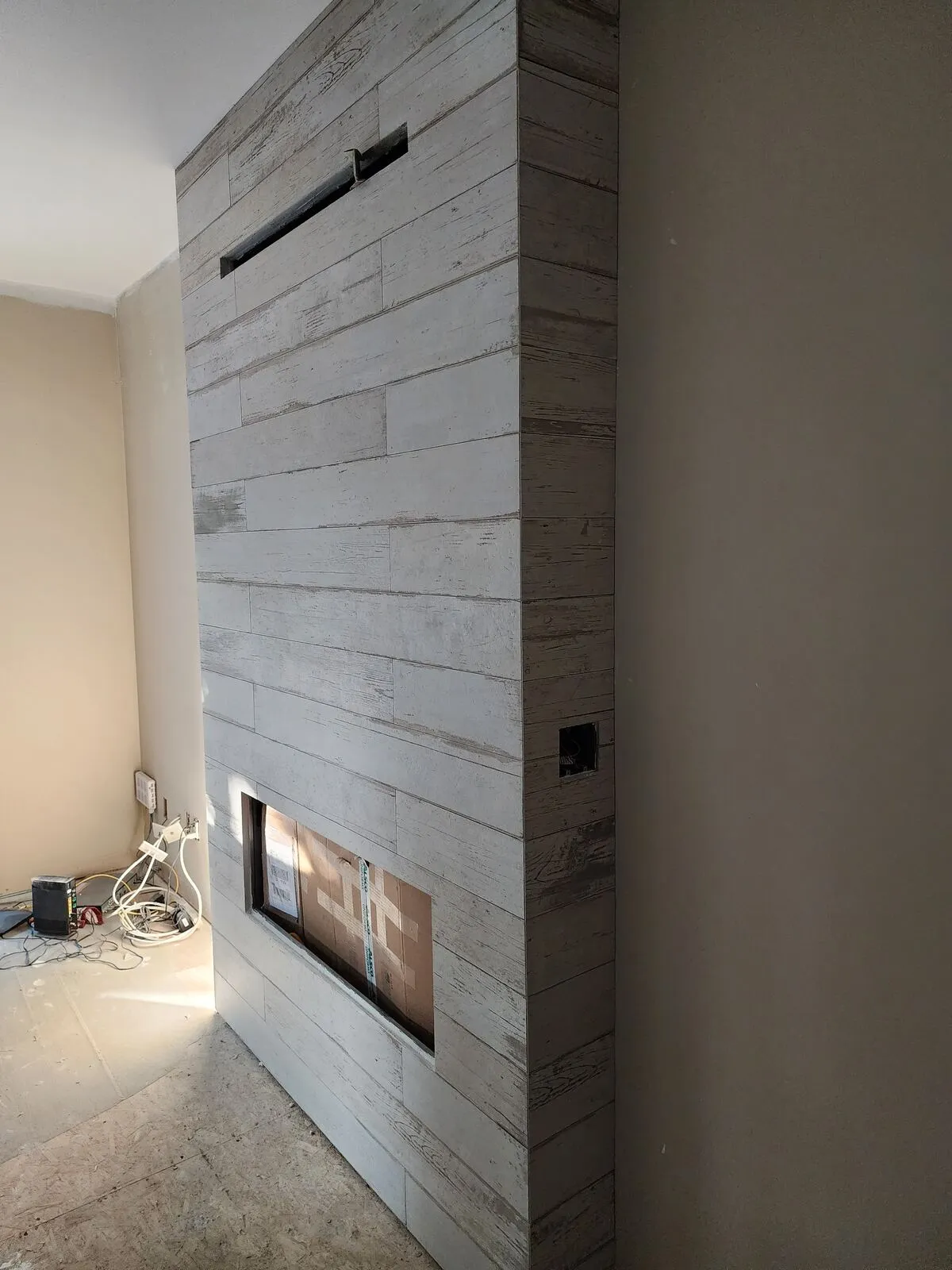
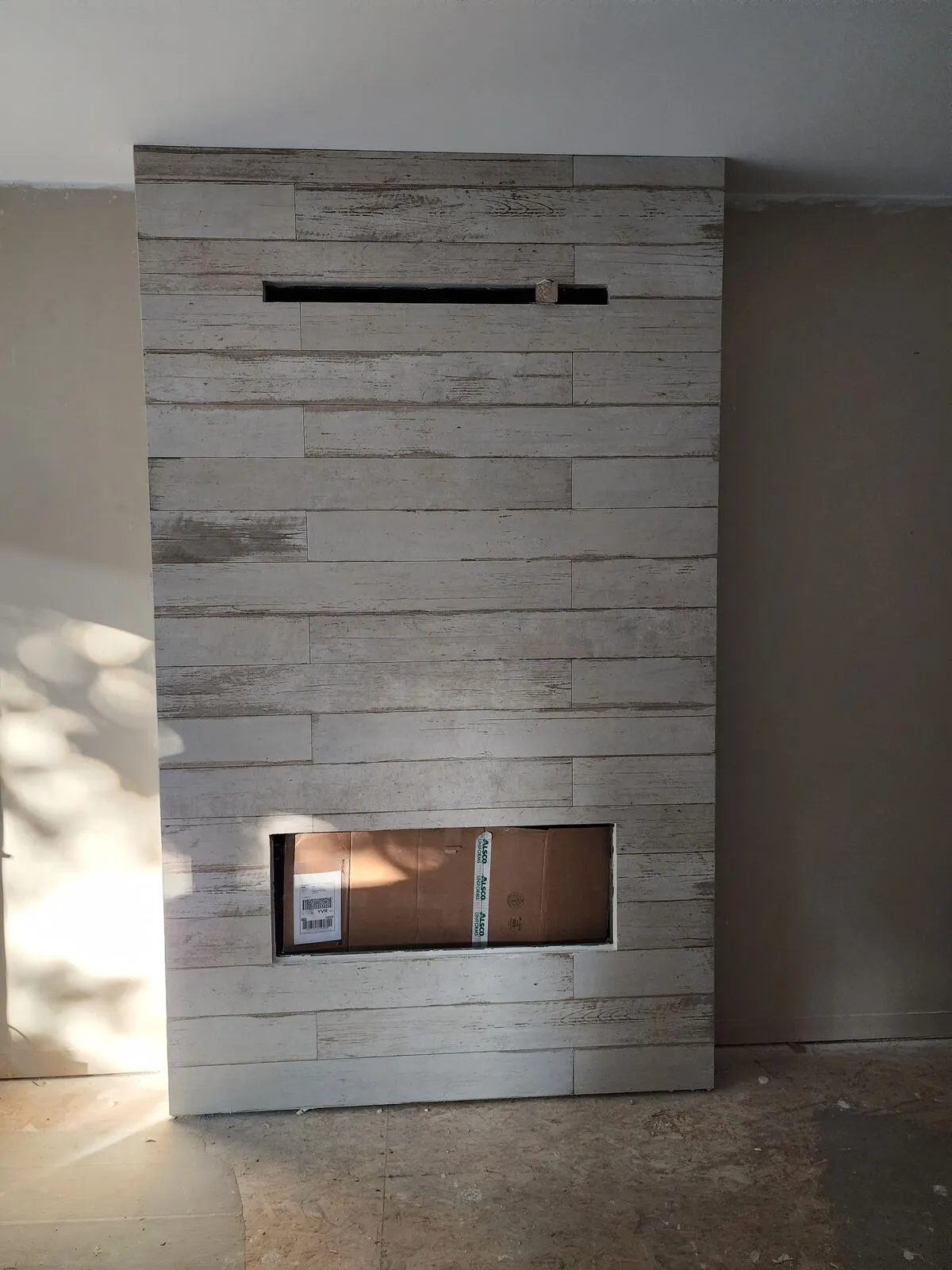
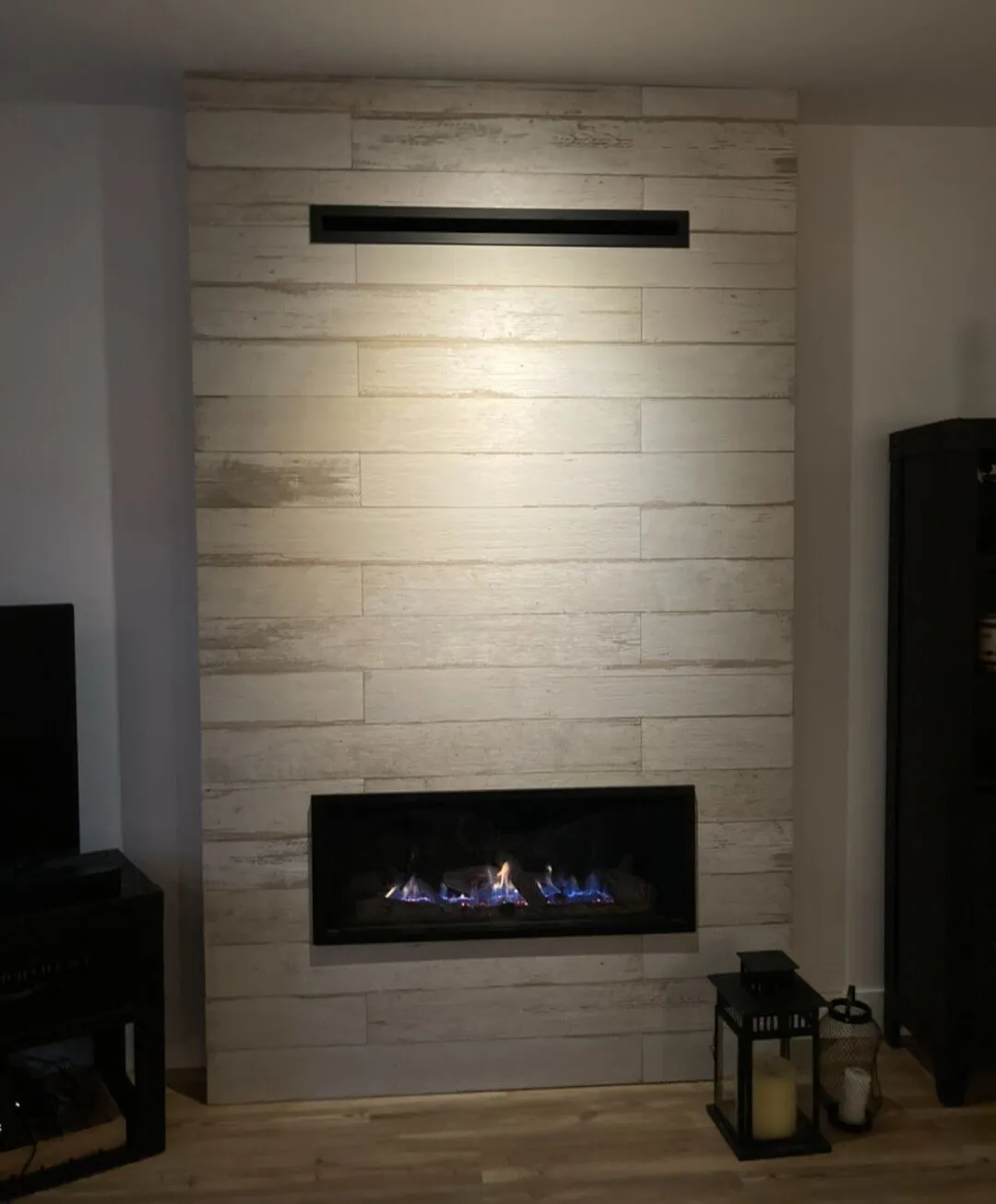
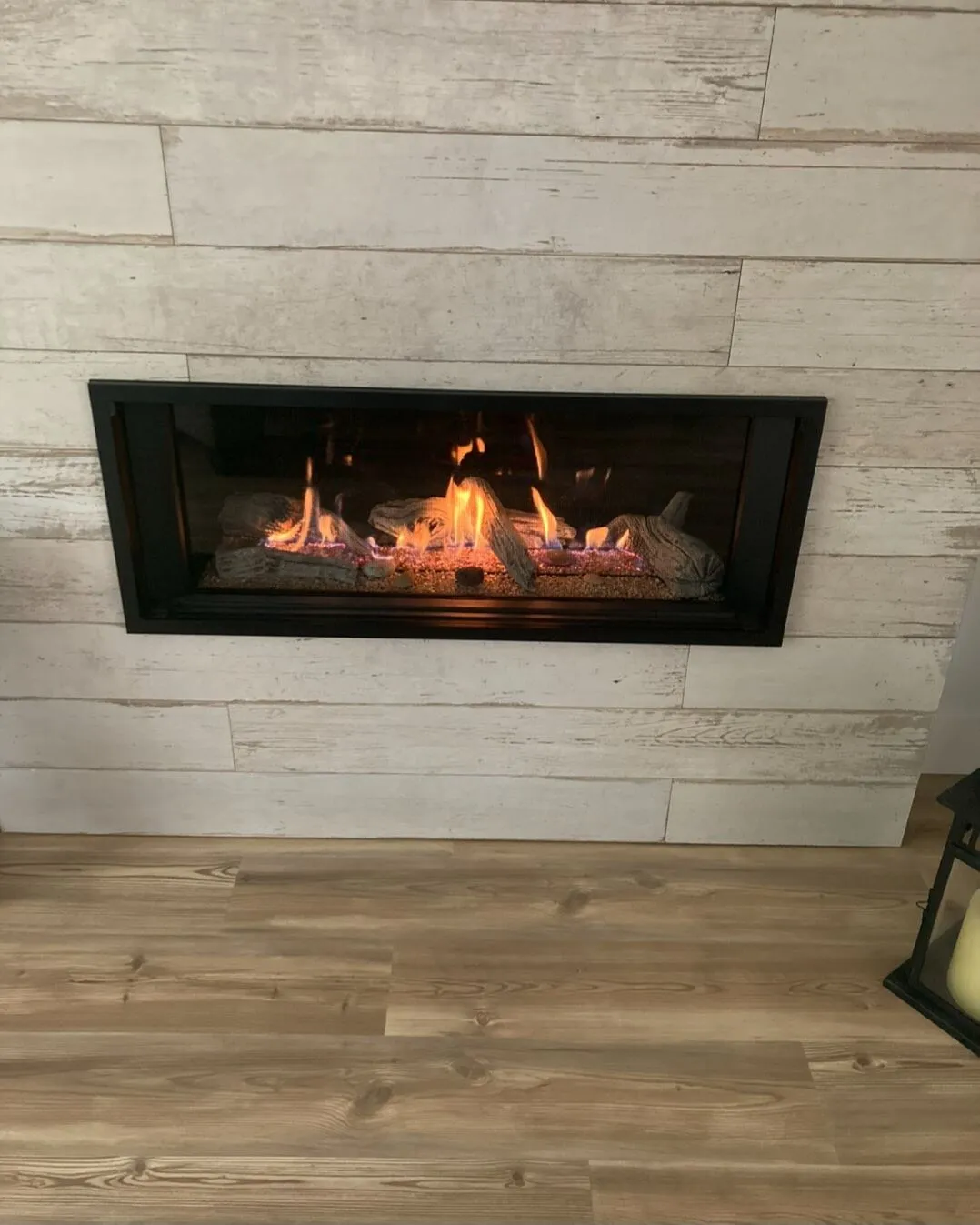
The dated beige-tile fireplace and painted mantel came off the wall in their entirety. In their place we framed a tall full-height cavity for a linear gas insert, ran a new gas line and fresh-air intake/vent through the rim joist, and built the surrounding wall out flat from floor to ceiling. The finish is a whitewashed wood-look porcelain plank tile run vertically, with each outside corner returned with a 45° mitred edge instead of a metal Schluter strip — the tile literally wraps the corner as a single seamless line. A continuous LED light bar above the insert reads as one clean horizontal slot, with no visible trim.

Rebuilding the fireplace: linear gas, whitewashed plank tile, 45° mitred cornersRebuilding the fireplace: linear gas, whitewashed plank tile, 45° mitred cornersRebuilding the fireplace: linear gas, whitewashed plank tile, 45° mitred cornersRebuilding the fireplace: linear gas, whitewashed plank tile, 45° mitred cornersRebuilding the fireplace: linear gas, whitewashed plank tile, 45° mitred cornersRebuilding the fireplace: linear gas, whitewashed plank tile, 45° mitred corners

The new kitchen: warm-grey Shaker, quartz peninsula, mosaic backsplash

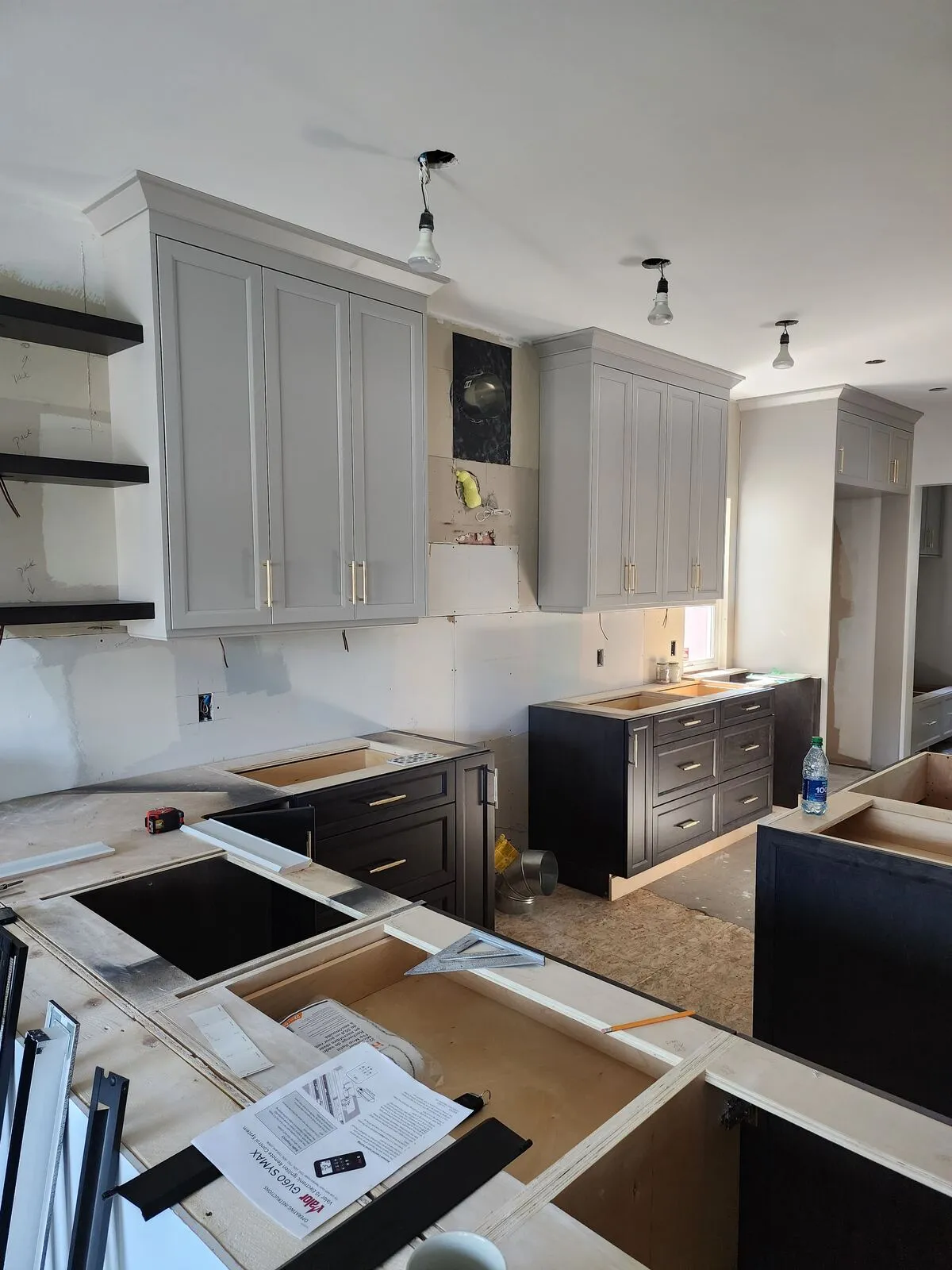
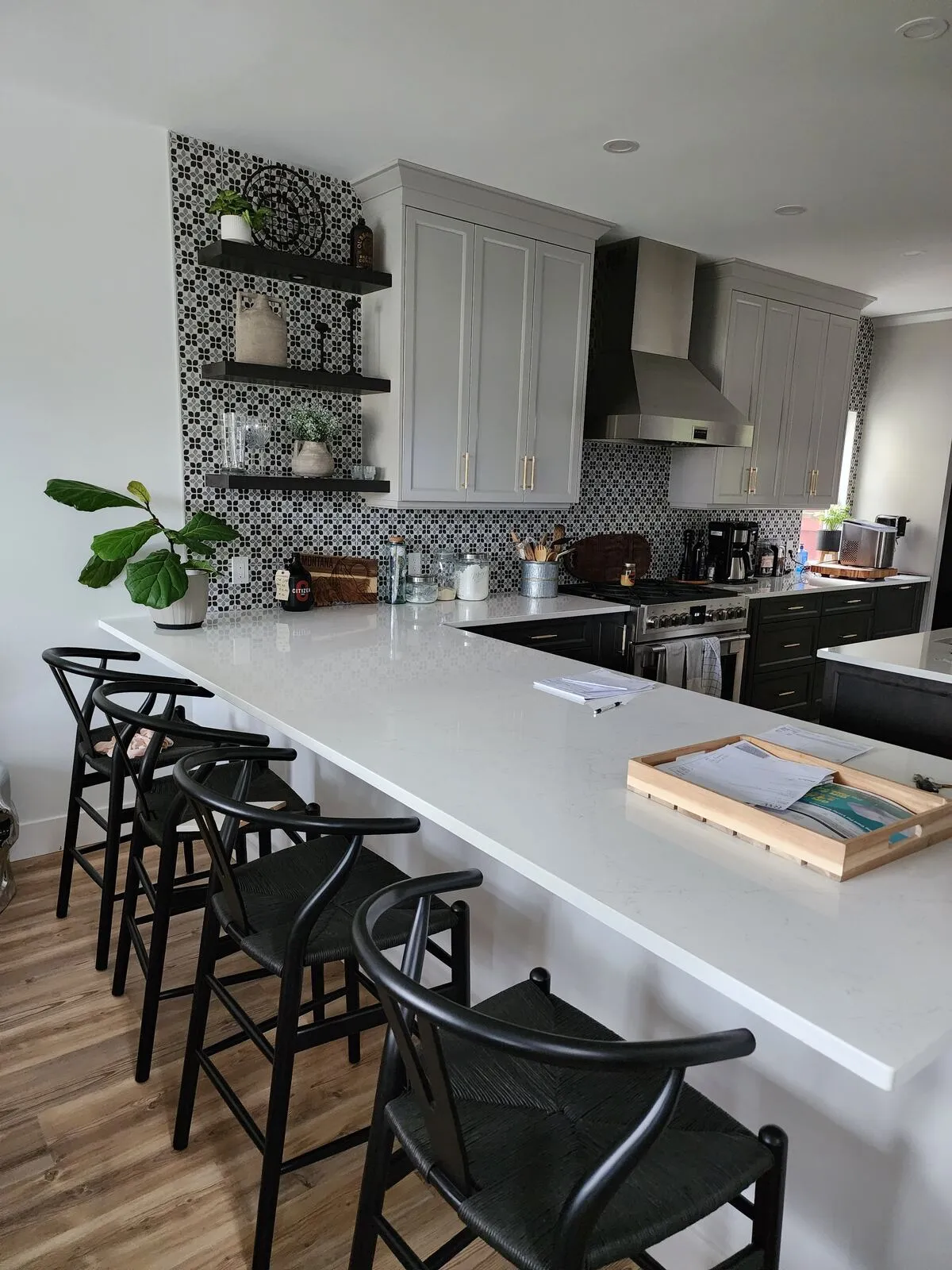
Once the wall was open and the new flooring was down, the new kitchen went in along the original kitchen footprint plus a new waterfall-edge peninsula extending into what used to be the wall line. Warm-grey Shaker uppers and lowers with brushed brass cup pulls, white quartz counters with a waterfall end on the peninsula, a single-bowl undermount stainless sink with a brushed brass pull-down faucet, and a black hex-and-dot mosaic tile backsplash anchored by two black floating shelves. The peninsula seats three on black wishbone-style stools — exactly the open-concept eat-in setup the family wanted.

The new kitchen: warm-grey Shaker, quartz peninsula, mosaic backsplashThe new kitchen: warm-grey Shaker, quartz peninsula, mosaic backsplashThe new kitchen: warm-grey Shaker, quartz peninsula, mosaic backsplashThe new kitchen: warm-grey Shaker, quartz peninsula, mosaic backsplash

Wrapping the new support post as a finished column

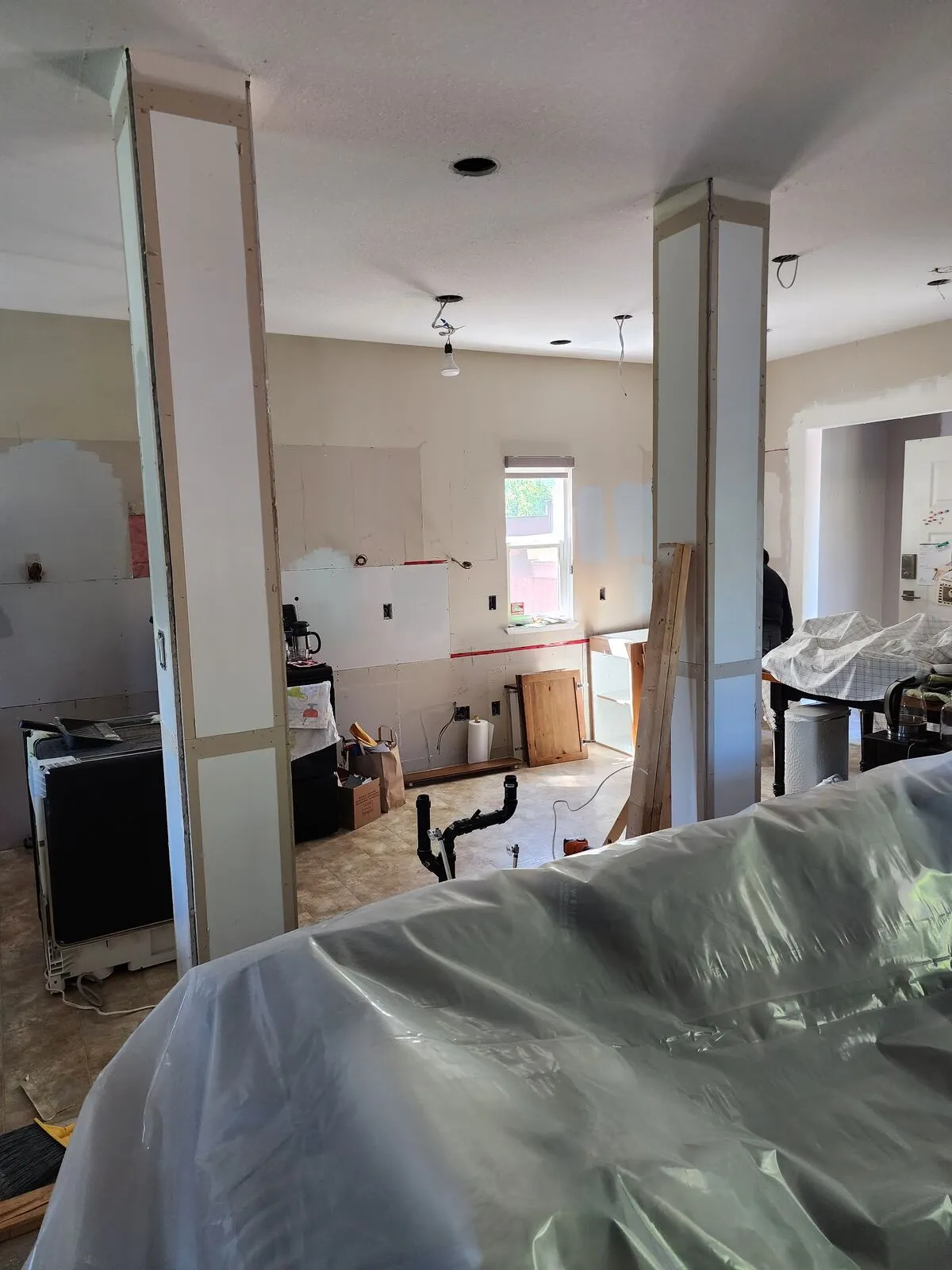
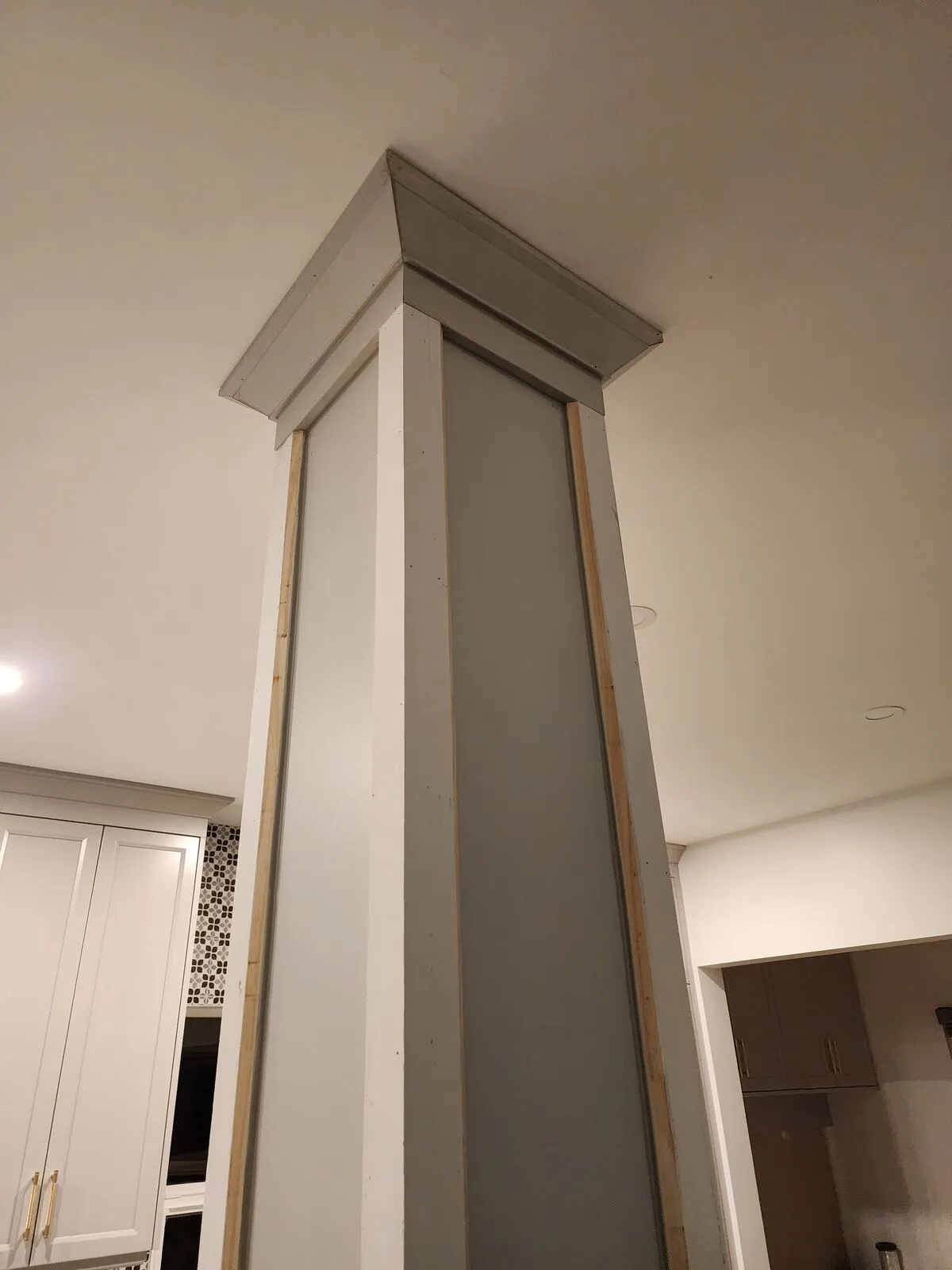
The structural post that landed inside the new opening was wrapped on site with mitred MDF, a crown cap and a base plinth so it reads as a finished interior column rather than a piece of leftover framing. Painted in the same crisp white as the trim and ceiling, it ties the new opening back into the living-room side and gives the eye a clean vertical anchor between the kitchen and the seating area.

Wrapping the new support post as a finished column

Outside: pony walls out, cedar-wrapped posts, vinyl deck and composite landing

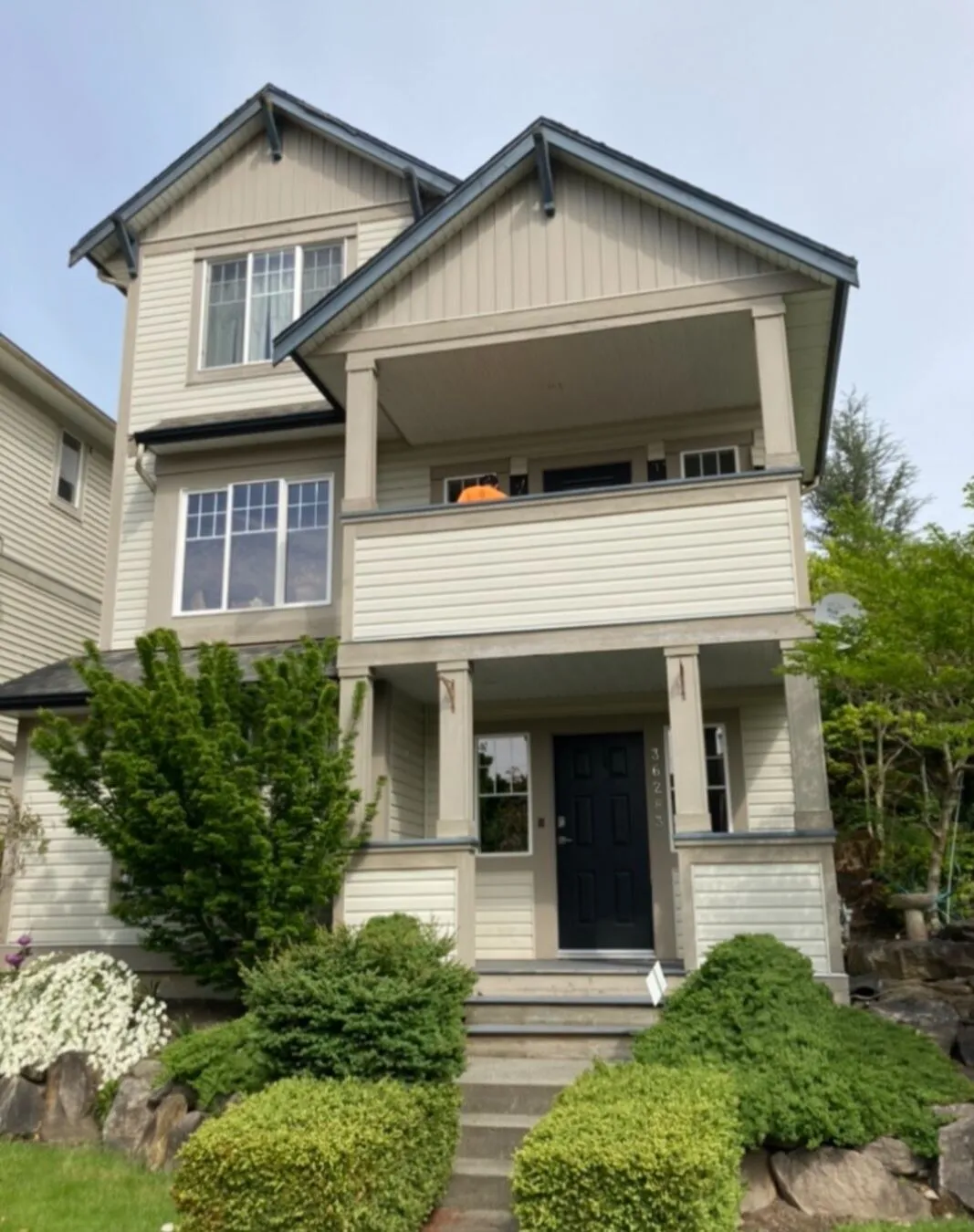
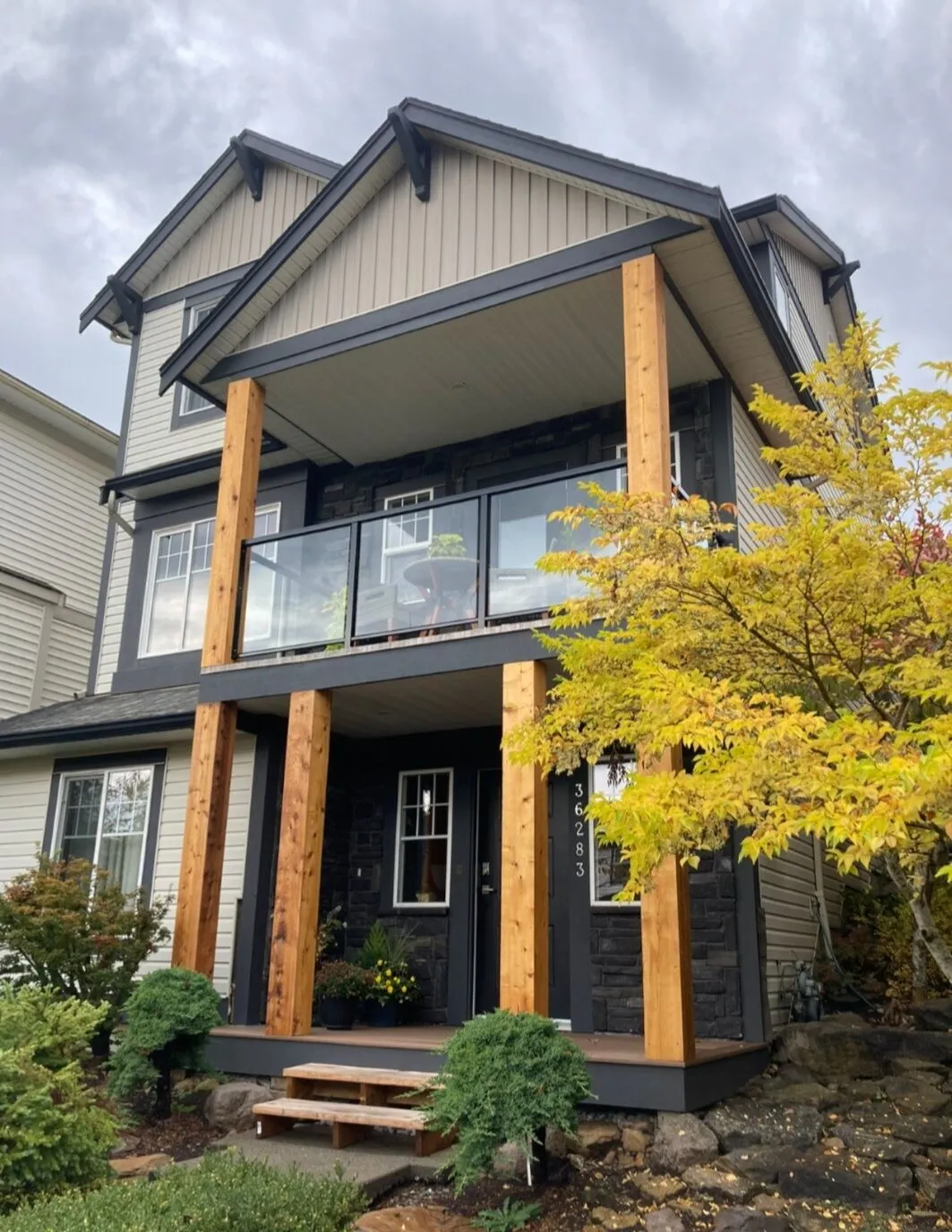
The exterior scope ran in parallel with the interior work. Before: a flat beige front elevation with white-painted wood pony walls on the upper deck and a plain concrete landing. After: the pony walls came out down to the structural posts, the posts were straightened, flashed and wrapped in rough-sawn cedar continuous from grade to soffit on both front columns, a frameless glass guardrail went in across the upper deck in place of the old wood railing, and a vinyl waterproof membrane was installed across the full upper deck surface — both a finished walking surface and the rain roof for the covered porch below. At the front entry, the original landing was rebuilt in composite decking with matching open-tread steps. The house was repainted in deep charcoal with black trim at the same time, so the natural cedar reads as a warm vertical accent against a dark backdrop.

Outside: pony walls out, cedar-wrapped posts, vinyl deck and composite landingOutside: pony walls out, cedar-wrapped posts, vinyl deck and composite landing

Project Questions

FAQs about this build

Why reinstall the old kitchen in the basement instead of just disposing of it?

Two reasons. First, the homeowners were planning a basement suite anyway, and the original cabinets, sink and appliances were in good shape — reusing them avoided buying a second set of cabinets and a second appliance package. Second, it's the better environmental choice: a typical kitchen tear-out fills a bin with melamine boxes, MDF doors and laminate counters that all end up in landfill. Lifting it carefully, storing it, and reinstalling it downstairs took longer than ripping it out, but it gave them a fully functional suite kitchen for the price of the labour to move it.

Why mitre the tile at 45° instead of using a metal trim strip on the corners?

Most tilers will tuck a Schluter or similar metal edge strip into outside corners because it's faster and more forgiving. On a feature wall where the tile is the whole point, that metal line reads as a visible seam. Mitring the tile at 45° lets the wood-grain pattern wrap the corner as a single continuous plank, so from any angle in the room the fireplace reads as a solid tiled volume rather than a panel with edges. It's slower and demands a perfectly square wall behind it, but on a focal wall it's worth it.

What's the difference between the vinyl deck on top and the composite at the entry?

The upper deck doubles as the roof of the space below, so it needs a continuous waterproof membrane — vinyl decking is heat-welded sheet that drains as one surface and stops water getting into the structure underneath. The front-entry landing is just an exterior platform at grade, with nothing to protect below it, so it didn't need a membrane — composite decking gave the look the homeowners wanted, with the gaps and texture of a real deck board, and no annual staining.

How long did the full job take?

Around ten weeks on site total, run as one continuous scope. The first couple of weeks were demo, structural work and the load-bearing opening; the middle stretch was new framing, drywall, the fireplace build and the kitchen install, with the exterior crew working in parallel on the deck membrane, post wraps and composite landing; the last weeks were trim, paint, tile, hardware and the cleanup phase. Because the homeowners stayed in the house throughout, the kitchen was sequenced so they were only without a working sink for a short window, and the basement suite kitchen actually came online before the main one — they cooked downstairs for the final stretch.

Want something similar?

If you've got a sloped yard, failing pavers or drainage issues, that's a project we'd be glad to look at. Free site visit and honest scope.

Get a Free Quote Call 778-229-9351